Warehouse mistakes are costly, and by 2026, companies can no longer afford slow receiving processes or shipping errors. For UAE construction suppliers and logistics providers, even small errors in receiving or shipping can delay entire projects, trigger penalties, or damage client trust.
Delayed deliveries, wrong inventory counts, and damaged orders quickly turn into lost profits. In today’s fast-paced supply chains, warehouse automation is becoming a serious topic for companies trying to improve speed without losing accuracy.
The shift is not about replacing people with machines overnight; instead, it focuses on minimizing costly mistakes before products leave the loading dock and reach customers.
That’s why it’s important for all types of warehouse automation to work together to provide visibility across receiving, storage, packing, and shipping.
In this guide, you'll find the answer to the question, "What is warehouse automation?" and receive practical tips on how to automate a warehouse.
What Is Warehouse Automation?
Warehouse automation is the use of advanced technologies such as robotics, barcode scanners, conveyor systems, and
warehouse management software to streamline inventory handling and fulfillment processes. It’s a smarter way to reduce manual tasks and improve operational accuracy.
Modern automated facilities rely on real-time data tracking and intelligent systems to ensure inventory moves efficiently from inbound receiving to outbound shipping. Automated receiving tools can scan, verify, and route products instantly, helping businesses avoid inventory discrepancies and shipping delays.
What is warehouse automation designed for? It helps companies maintain productivity, reduce operational costs, and deliver a better customer experience through faster and more accurate order fulfilment.
According to research, the benefits of warehouse automation include faster decision-making, greater operational accuracy, and improved responsiveness across increasingly complex global supply chains. [?]
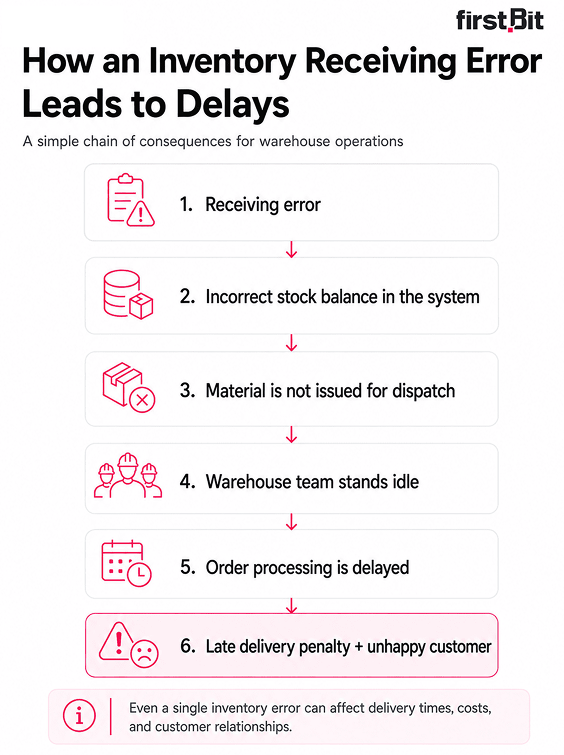
Consequences of errors in warehouse operations
Even a single mistake in the warehouse can trigger a chain reaction of delays at the construction site.
6 Types of Warehouse Automation
Warehouse automation includes a wide range of technologies designed to streamline inventory management, order fulfillment, and material handling. From software-driven systems to robotics and smart scanning tools, these solutions help storage facilities improve speed, accuracy, and operational efficiency while reducing manual labor.
It’s common to combine several types of warehouse automation to create a more connected and productive workflow. However, most UAE contractors don’t need a fully automated warehouse — they need smart, targeted automation that solves real pain points.
Businesses can choose from systems that automate picking, transportation, tracking, and inventory management based on their operational needs, facility size, and fulfillment goals.
Robotic Picking Systems
Robotic picking systems help construction storage facilities handle heavy tools, fasteners, and building materials with greater speed and accuracy. These systems use robotic arms, sensors, and AI software to identify and pick products automatically.
In construction supply chains, robotic picking reduces manual labor and helps prevent delays on job sites. Automated picking also lowers the risk of damaged inventory and improves order fulfillment during busy project periods.
Pro tip: Use robotic picking for high-volume construction items like bolts, pipes, and electrical supplies to improve warehouse productivity of the facility.
Automated Guided Vehicles (AGVs) and Autonomous Mobile Robots (AMRs)
AGVs and AMRs move materials throughout construction storage facilities without constant human operation. AGVs follow fixed routes, while AMRs use sensors and mapping technology to navigate freely around obstacles.
These automated robots improve material flow and reduce worker travel time inside large storage facilities. Construction companies use them to transport pallets, concrete tools, and heavy equipment safely and efficiently.
Pro tip: AMRs work best in changing facility layouts because they can adapt routes automatically.
Barcode and RFID Scanning
Barcode and RFID scanning systems help construction storage facilities track inventory in real time. Workers can quickly scan materials, tools, and shipments to update stock information instantly.
RFID technology improves visibility by allowing multiple items to be tracked at once without direct scanning. This reduces inventory errors and helps construction teams avoid missing materials on projects.
Pro tip: RFID tags are especially useful for tracking expensive construction equipment across multiple sites.
Pick-to-Light and Voice-Picking Systems
Pick-to-light systems use illuminated displays to guide workers to the correct inventory location. Voice-picking systems provide spoken instructions through headsets, allowing hands-free operation.
These technologies increase picking speed and reduce mistakes in busy storage facilities. Workers can complete orders faster while handling large quantities of building materials and hardware.
Pro tip: Voice-picking works well in storage facilities where employees wear gloves or handle bulky construction materials.
Goods-to-Person (GTP) Systems
Goods-to-Person systems automatically bring inventory to workers instead of requiring them to walk long distances. Robots, conveyors, and automated storage systems handle the movement of materials.
For construction suppliers, GTP systems improve efficiency and reduce physical strain on workers. Faster picking times also help companies meet tight construction deadlines and large contractor orders.
Pro tip: GTP systems are ideal for storage facilities storing thousands of small construction components and spare parts.
Warehouse Management Systems (WMS)
WMS controls inventory, order processing, and logistics operations from one platform. It helps construction companies manage stock levels, shipments, and worker tasks more effectively.
FirstBit ERP includes
warehouse management capabilities that help businesses track inventory, manage storage locations, and improve operational efficiency through integrated ERP workflows.
Modern WMS platforms integrate with robotics, scanners, and mobile devices to improve accuracy and inventory visibility. This helps construction businesses reduce delays, control costs, and improve supply chain coordination.
Pro tip: Choose a WMS that integrates with mobile devices so workers can update inventory directly from the facility floor.
Always have the right materials on site
Track inventory in FirstBit ERP
Request a demo
Benefits of Warehouse Automation
Warehouse automation provides businesses with faster operations, greater accuracy, and improved overall efficiency. Automation also helps storage facilities adapt to growing customer demands and higher order volumes with greater consistency and reliability.
Key benefits of warehouse automation include:
-
Improved operational efficiency. Automated systems speed up picking, packing, sorting, and shipping processes, allowing logistics facilities to process more orders in less time.
-
Higher inventory accuracy through real-time barcode and RFID tracking. These technologies reduce manual entry errors and ensure up-to-date stock visibility across all warehouse operations.
-
Faster order fulfillment. Automation reduces delays in order processing, enabling faster shipping and supporting same-day or next-day delivery expectations.
-
Scalability and flexibility. Automated warehouses can handle increased inventory levels and order volumes more effectively as businesses grow.
-
24/7 operations. Automated systems can operate continuously with minimal downtime, improving productivity during peak demand periods.
-
Better data and analytics. Automation systems collect operational data that helps managers identify bottlenecks, forecast demand, and improve decision-making.
Warehouse automation is becoming an essential investment for modern supply chains. It improves productivity, reduces operational costs, and increases customer satisfaction. As technology continues to evolve, automated logistics facilities will play an even greater role in supporting efficient and scalable logistics operations.
Challenges of Warehouse Automation
Despite the many benefits of warehouse automation, businesses may encounter several challenges during its implementation and operation. Automated systems often require significant investment, technical expertise, and ongoing maintenance. Companies must carefully plan their automation strategies to ensure smooth integration with existing logistics processes and long-term operational success.
Common challenges of warehouse automation include:
-
High initial investment costs. Purchasing automated equipment, robotics, software systems, and infrastructure upgrades can require substantial upfront capital.
-
Complex system integration. Automated solutions must integrate with existing operational workflows, which can create technical difficulties. Integrated platforms like
FirstBit ERP help reduce these challenges by centralizing warehouse management, inventory control, procurement, and
accounting operations within a single system.
-
Compatibility with legacy systems. Older logistics infrastructure and software may not support modern automation technologies, making upgrades more challenging and expensive.
-
Maintenance and downtime risks. Automated systems require regular maintenance and technical support. Unexpected system failures can disrupt logistics operations and reduce productivity.
-
Data accuracy and cybersecurity concerns. Automated logistics facilities depend heavily on accurate real-time data and secure digital systems. Poor data quality or cyberattacks can negatively impact operations.
-
Scalability limitations. Some automation systems may struggle to adapt quickly to changing business demands, seasonal fluctuations, or facility expansions.
Despite these challenges, warehouse automation continues to grow across the logistics industry. Careful planning and proper employee training can reduce many implementation risks. Businesses that successfully manage these challenges can achieve long-term operational improvements and increased efficiency.
Maximize resource efficiency across every site with real-time tracking
Request a demo
How To Automate a Warehouse
In this section, we will present a step-by-step plan to eliminate receiving errors and shipping mistakes.
Businesses exploring how to automate a warehouse often focus on creating smoother workflows across receiving, storage, picking, packing, and shipping. Automation solutions can include digital systems that manage inventory in real time, barcode and RFID tracking, and smart tools that reduce human error while increasing productivity.
A successful warehouse automation strategy combines software, connected equipment, and data-driven decision-making. Instead of relying entirely on manual processes, companies can streamline operations through integrated systems that improve coordination, optimize storage space, and enhance order accuracy.
1. Start With a Warehouse Assessment
Before implementing automation, businesses should assess their current facility operations. This includes analyzing workflows, inventory movement, labor costs, bottlenecks, and order fulfillment speed. A detailed assessment helps identify which tasks create the most delays and where automation can deliver the highest return on investment.
Important areas to assess include:
2. Implement a Warehouse Management System (WMS)
WMS is usually the foundation of warehouse automation. A WMS helps track inventory, manage orders, optimize storage locations, and coordinate logistics activities in real time.
Modern WMS platforms can automate:
-
Inventory tracking
-
Barcode scanning
-
Order routing
-
Stock replenishment
-
Shipping coordination
Cloud-based ERP systems can provide real-time visibility across multiple storage locations. If you’re still not sure which ERP system is the best, you can read more about them in this
ERP comparison guide.
Research highlights that when WMS integrates with ERP systems, RFID, IoT, QR codes, AI, and machine learning, it improves warehouse productivity and inventory accuracy. These technologies enable real-time monitoring, automated identification, optimized order picking, and faster decision-making. [?]
3. Automate Inventory Tracking
Inventory automation reduces manual counting errors and improves stock accuracy. Storage facilities increasingly use barcode systems, RFID tags,
IoT sensors, and AI-powered monitoring tools to track products automatically.
Real-time inventory visibility helps reduce stock shortages and improve order fulfillment speed. Common inventory automation technologies include:
-
RFID inventory tracking
-
Barcode scanning systems
-
Smart shelves
-
IoT sensors
-
Automated cycle counting
Pro tip: Integrate inventory tracking software with your project management ERP system. Connected platforms provide better visibility into material usage, purchasing needs, and stock levels, helping teams avoid shortages and improve operational planning across every project stage.
4. Introduce Robotics and Automated Equipment
Robotics is becoming a key part of warehouse automation in 2026. Autonomous mobile robots, robotic arms, and automated guided vehicles help move products faster and reduce repetitive manual tasks. Many logistics facilities now combine robotics with AI systems that optimize routes and task assignments in real time.
Pro tip: Start by automating repetitive tasks such as site surveying, material handling, or grading. Small-scale automation allows construction teams to test new technology, train workers gradually, and achieve measurable productivity improvements before expanding into larger robotic systems.
Automated equipment can support:
-
Picking and packing
-
Pallet transport
-
Sorting operations
-
Loading and unloading
-
Conveyor movement
5. Use AI for Warehouse Optimization
AI-powered inventory optimization helps construction companies manage materials, tools, and equipment with greater accuracy and speed. Smart systems can track inventory in real time, reduce waste, and improve storage layouts. This allows project teams to avoid delays caused by missing materials and improve overall operational efficiency.
Artificial intelligence can also predict demand and automate inventory planning across construction sites. By analyzing historical usage patterns, AI helps businesses stock the right materials at the right time. This reduces over-ordering, prevents shortages, and lowers storage costs while keeping projects moving smoothly.
AI-driven inventory systems improve picking routes,
equipment tracking, and workforce productivity. Construction firms can use machine learning to organize materials based on usage frequency, helping workers locate items faster and minimize downtime. These improvements create safer, more organized storage environments with better throughput.
6. Improve Picking and Packing Processes
Efficient picking and packing processes help construction teams reduce delays, prevent material shortages, and improve productivity on-site. Organizing materials by project phase and labeling inventory clearly allows workers to find the right items faster and avoid unnecessary downtime during daily operations.
Creating dedicated packing zones for tools, equipment, and materials can streamline loading and transportation processes. Organized packing areas reduce handling mistakes, improve safety, and ensure materials arrive on-site in the correct sequence for faster installation and project execution.
Training workers on standardized picking and packing procedures improves consistency across projects. Clear workflows minimize wasted movement, reduce material damage, and help teams complete orders more efficiently. Even small improvements in storage organization can lead to major cost and time savings.
Pro tip: Use color-coded labels and pre-packed kits for common construction tasks such as electrical, plumbing, or framing work. This reduces picking time, improves accuracy, and helps crews start work immediately without searching for missing materials.
7. Monitor Performance and Scale Gradually
Warehouse automation works best when implemented in phases. A phased approach reduces operational risks and allows teams to adapt to new technologies more effectively. Businesses should monitor key performance indicators after each automation upgrade and scale systems gradually based on operational needs.
Key metrics to track include:
-
Order accuracy
-
Fulfillment speed
-
Labor productivity
-
Downtime
-
Inventory accuracy
Research indicates that successful warehouse automation requires strategic and human-centered planning. Organizations should implement automation gradually, measure performance continuously, involve frontline employees early, and focus on improvements that reduce physical strain and repetitive work. [?]
How FirstBit ERP Streamlines Inventory and Warehouse Management
Efficient inventory and
warehouse management are critical for construction companies that need to control material costs, avoid project delays, and maintain accurate stock visibility across multiple job sites.
Performing these operations manually can result in stock inaccuracies, delayed deliveries, increased operational costs, and inefficient workflows.
FirstBit ERP helps businesses address these challenges by automating inventory control, storage tracking,
procurement coordination, and reporting within a single, integrated platform.
With real-time inventory visibility, businesses can monitor stock levels, material movement, and logistics activity across multiple locations without relying on spreadsheets or disconnected systems. This enables faster decision-making, better inventory accuracy, and improved operational efficiency.
Key ways FirstBit ERP Contracting streamlines inventory and warehouse automation & management:
-
Warehouse automation workflows that reduce manual data entry and human errors
-
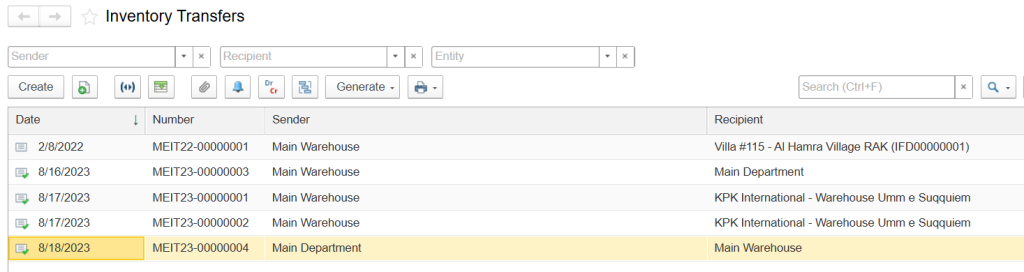
Real-time inventory tracking across multiple project sites, and storage facilities
Inventory transfers in FirstBit ERP Contracting
-
Barcode scanning for faster material receiving, issuing, and tracking
-
Expiry date tracking for controlled inventory handling
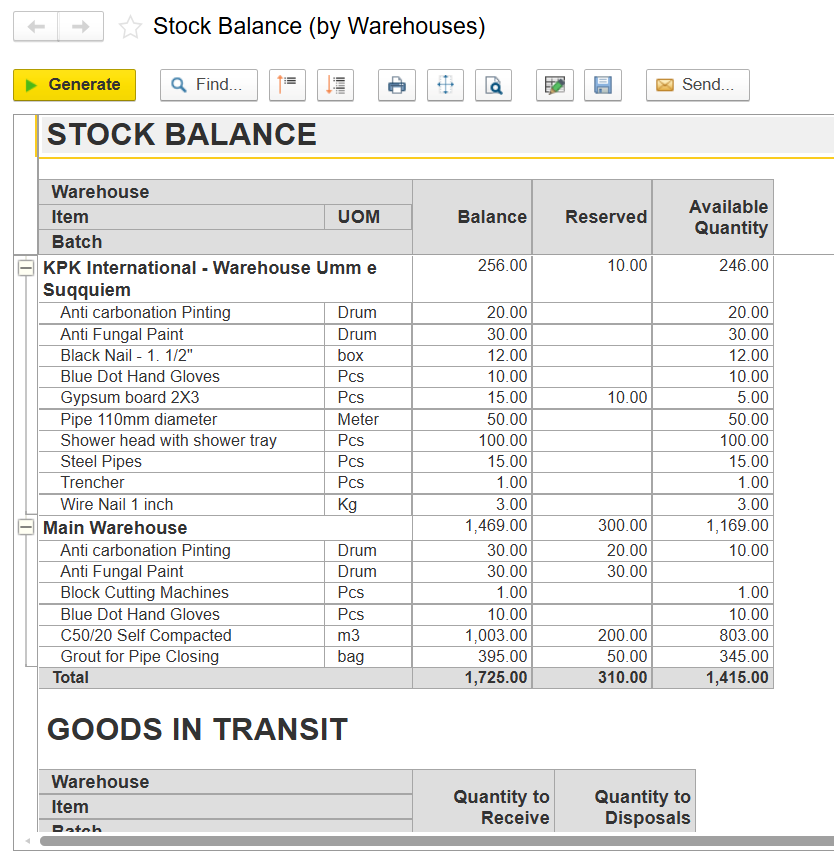
-
Automated reports on stock balances
Stock balance in FirstBit ERP Contracting
-
Centralized multi-warehouse management for large-scale construction operations
-
Inventory reconciliation tools that reduce discrepancies and improve stock accuracy
-
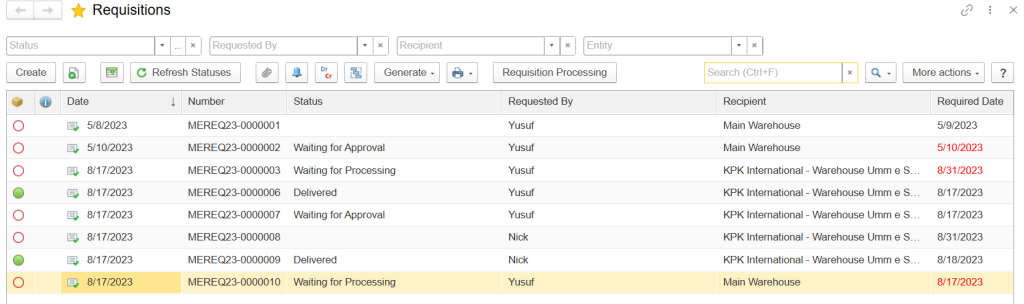
Faster fulfillment of material requests from project teams and site engineers
Material requisitions in FirstBit ERP Contracting
Keep all supplies organized
Manage warehouses via FirstBit ERP
Request a demo
Are You Ready for Warehouse Automation?
This quick checklist helps you determine whether your current material management processes have reached the point where warehouse automation could make a significant impact.
Please check the statements that apply to your operations:
-
You have a unified material tracking system (not Excel)
-
You regularly experience errors when issuing materials to job sites
-
You need real-time inventory visibility across your operations
-
You manage multiple warehouses or construction sites
If two or more of these apply, it’s time to consider a WMS with built-in automation support.
Conclusion
In the end, warehouse automation is becoming a necessity for businesses that want to reduce costly receiving and shipping errors. Automated systems improve inventory accuracy, speed up operations, and provide real-time visibility across the storage facilities, helping UAE construction and logistics businesses ensure on-time order fulfillment for their clients.
However, successful automation is not only about investing in robotics or software. Businesses must focus on integrating people, processes, and technology into one connected workflow. When implemented strategically, automation supports employees, reduces repetitive tasks, and creates a safer, more efficient logistics environment built for long-term growth.
As supply chains continue to evolve, companies that embrace warehouse automation early will be better prepared to handle rising customer expectations, labor shortages, and increasing operational complexity.
Prevent shortages and costly delays
Request a demo
FAQ
Why should I consider automating my warehouse?
Automating your warehouse can improve efficiency, reduce errors, lower labor costs, and speed up order fulfillment. It also enhances inventory accuracy, worker safety, and scalability as your business grows. By streamlining repetitive tasks and providing real-time operational insights, warehouse automation helps businesses operate faster, smarter, and more competitively.
What types of warehouse automation are most effective for reducing errors?
The most effective warehouse automation tools for reducing errors include barcode and RFID scanning, WMS, automated storage and retrieval systems (AS/RS), and voice or light-directed picking. These technologies improve inventory accuracy, automate data capture, and guide workers through tasks, reducing mistakes in picking, packing, and shipping while increasing overall efficiency.
How does warehouse automation integrate with ERP systems?
Warehouse automation integrates with ERP systems by connecting logistics technologies —such as robotics, barcode scanners, and WMS — to a central business platform. This integration enables real-time data sharing for inventory, orders, shipping, and financials, helping businesses improve accuracy, streamline workflows, and gain better visibility across the entire supply chain.
Is it possible to automate only part of the warehouse?
Yes, many businesses choose to automate only part of their storage facilities rather than the entire operation. Companies often start with high-impact areas such as inventory tracking, picking, packing, or conveyor systems, then expand automation over time. This phased approach reduces upfront costs, minimizes disruption, and allows businesses to scale automation based on operational needs and budget.












'%3e%3cg%20clip-path='url(%23clip1_6548_6055)'%3e%3cpath%20d='M13.974%2015.6195C14.2724%2016.0185%2014.6532%2016.3487%2015.0905%2016.5876C15.5278%2016.8265%2016.0114%2016.9686%2016.5084%2017.0042C17.0055%2017.0398%2017.5043%2016.9681%2017.9712%2016.7939C18.4381%2016.6198%2018.8621%2016.3472%2019.2143%2015.9948L21.2994%2013.9098C21.9324%2013.2544%2022.2827%2012.3766%2022.2747%2011.4654C22.2668%2010.5543%2021.9014%209.68269%2021.257%209.03839C20.6127%208.39408%2019.7412%208.02862%2018.83%208.0207C17.9189%208.01278%2017.0411%208.36305%2016.3857%208.99606L15.1902%2010.1845M16.754%2014.2295C16.4555%2013.8305%2016.0747%2013.5003%2015.6374%2013.2614C15.2002%2013.0225%2014.7166%2012.8804%2014.2196%2012.8448C13.7225%2012.8092%2013.2237%2012.8809%2012.7568%2013.0551C12.2899%2013.2292%2011.8659%2013.5018%2011.5136%2013.8542L9.42861%2015.9392C8.7956%2016.5946%208.44534%2017.4724%208.45326%2018.3836C8.46117%2019.2947%208.82664%2020.1663%209.47094%2020.8106C10.1152%2021.4549%2010.9868%2021.8204%2011.898%2021.8283C12.8091%2021.8362%2013.6869%2021.4859%2014.3423%2020.8529L15.5308%2019.6645'%20stroke='%235F7896'%20stroke-width='1.39002'%20stroke-linecap='round'%20stroke-linejoin='round'/%3e%3c/g%3e%3c/g%3e%3crect%20x='0.438953'%20y='0.438953'%20width='28.9709'%20height='28.9709'%20rx='14.4855'%20stroke='%235F7896'%20stroke-width='0.877907'/%3e%3cdefs%3e%3cclipPath%20id='clip0_6548_6055'%3e%3crect%20width='29.8488'%20height='29.8488'%20rx='14.9244'%20fill='white'/%3e%3c/clipPath%3e%3cclipPath%20id='clip1_6548_6055'%3e%3crect%20width='16.6802'%20height='16.6802'%20fill='white'%20transform='translate(7.02344%206.58435)'/%3e%3c/clipPath%3e%3c/defs%3e%3c/svg%3e)