Behind every successful construction project is a skilled construction manager. It's easy to assume that this role is about checking off daily tasks or approving invoices. However, it's so much more than that.
Construction managers oversee the entire project from start to finish. This means managing budgets, coordinating teams, supervising projects, and ensuring site safety. They also solve problems before they cause delays, all while staying within budget.
It's a job that requires sharp thinking, clear communication, and constant oversight. This guide breaks down what construction managers do, who they work with, the skills they need, and the challenges they face. It also highlights how ERP tools help streamline the job and keep projects on schedule.
Who Is a Construction Manager?
A construction manager is a professional who plans, coordinates, and supervises a construction project from start to finish. Managers ensure deadlines are met, budgets are adhered to, and safety rules are followed. Without them, the project can quickly lose direction. Clients depend on construction managers to deliver what was promised, while teams on site look to them for direction.
In essence,
construction management is about connecting people and tasks. Managers communicate with architects, engineers, subcontractors, suppliers, and inspectors. Plus, every decision they make affects cost, quality, and progress. The job of a manager starts before construction begins and doesn’t end until the last nail is driven.
The responsibilities of a construction manager can be grouped into seven critical areas: cost, time, contracts, quality, safety, professional practice, and project management[?].
What Is the Workplace of a Construction Manager?
As a construction manager, your workplace shifts between construction sites, offices, and client meetings. However, you spend most of your time on construction sites, monitoring progress, talking to crews, and resolving problems as they arise. Being present lets you identify issues early—whether it’s a delay in pouring concrete or a safety risk on scaffolding.
Office work is just as important. You also need space for planning, budgeting, and coordination. In the office, you review contracts, approve payments, and prepare reports for clients or investors.
On large projects like factories or high-rises, a lead construction manager brings in other managers to handle different parts of the job. For example, one manager might oversee electrical work, another plumbing. The lead manager would then coordinate their efforts, splitting time between the office and the job site.
As a result, managers often travel to stay on top of things. Sure, it’s a great way to monitor the project’s progress up close, but it can make their schedule hard to manage. An ERP system can help. It plans material deliveries and provides instant updates from every site. This way, you stay informed and in control without having to be everywhere at once.
Pro tip: Managing multiple sites? A centralized system like FirstBit ERP lets you track progress, budgets, and resources across all locations — all in one place.
Keep projects running like clockwork
Schedule tasks in FirstBit
Request a demo
Who Employs the Construction Manager?
Construction managers can work in different settings. Many hold positions in private construction firms where they oversee residential, commercial, or infrastructure projects. Others work for engineering or architectural companies, government agencies, or property developers.
Some managers work independently, either on freelance contracts or by running their own firms. In this case, they
choose contractors, suppliers, projects, and build their teams.
This path gives construction managers complete control over the schedule and workload, but also more responsibilities. They need to market their services, bid for jobs, and maintain financial discipline.
If you’re a construction manager, whether employed or self-employed, your role stays the same — planning, coordinating, and delivering projects on time. What changes is how you manage your workload, who you report to, and how much control you have over your schedule.
With Whom Does the Construction Manager Work?
Managers don’t work alone. Their success depends on how well they coordinate with others.
As a construction manager, you deal with a wide range of professionals — each with a specific role in the project. Your job is to keep everyone aligned, informed, and moving toward the same goal.
Here are the professionals you’ll interact with most often:
-
Project owners/clients. They set the goals, budgets, and expectations you must meet.
-
Architects and designers. You align construction activities with the approved designs and drawings of these professionals.
-
Engineers. Civil, structural, electrical, and mechanical engineers offer technical guidance and ensure compliance.
-
Subcontractors and tradespeople. Carpenters, electricians, plumbers, and other specialists who carry out the physical work. You coordinate their tasks and monitor quality.
-
Suppliers and vendors. You arrange timely delivery of materials, tools, and equipment to keep the schedule on track.
-
Site supervisors and foremen. They supervise the crews daily and report progress or issues to you.
-
Health and safety officers. These professionals help make sure everyone follows safety rules and work to reduce site hazards.
-
Project planners/schedulers. They track timelines, update schedules, and flag delays.
-
Government inspectors and regulators. You secure permits, manage inspections, and ensure code compliance.
-
Financial and contract administrators. They help you budget, manage payments, and ensure that contracts are adhered to.
In a team, each member plays a role. However, the construction manager coordinates everyone and guides the project to success.
Pro tip: When you manage multiple teams and vendors, delays can often happen due to miscommunication or fragmented information. FirstBit ERP helps you centralize communication, resolve queries, and keep everyone on the same page.
Ensure timely and profitable project completion with FirstBit
Request a demo
Skills Needed to Succeed as a Construction Manager
It takes a lot of skills to lead a construction project to success. For starters, as a manager, you need to guide people in the right direction, make decisions fast, and stay calm when things go wrong. These skills help you do that:
1. Leadership
Strong leadership means setting clear expectations, keeping teams focused on the goals, and ensuring everyone knows their role. You don’t need to micromanage, but you do need to stay involved.
Good leaders also build trust. When you treat people fairly and follow through on your promises, your team works harder and problems get solved faster.
2. Communication
Clear communication prevents delays and disputes. You must explain plans, give updates, and resolve conflicts before they grow. That means speaking clearly, listening well, and writing accurate reports.
Poor communication leads to rework, wasted time, and unhappy clients. If you want to avoid that, ensure everyone understands what’s expected — and when.
3. Technical Knowledge
You don’t need to be an engineer, but you do need to understand how things are built. That includes reading drawings, understanding materials, and identifying mistakes before they become costly.
Technical knowledge also helps you make smart decisions. When you understand the work process, you can challenge poor advice, approve effective solutions, and maintain quality standards.
4. Financial Control
Construction projects involve constant spending on labor, materials, equipment, subcontractors, and more. If you don’t track costs attentively, it’s easy for budgets to drift and payments to pile up.
Even well-funded projects can run into trouble without proper financial oversight. But with an ERP system, you can access tools that help monitor cash flows, track expenses, and
mitigate project cost overruns.
FirstBit ERP, for instance, gives you financial control over your project. You can manage project cost control, streamline resource requests, and adjust project strategies.
5. Problem Solving
Uncertainty is part of the construction process. Material shortages, weather disruptions, or design changes can appear without warning. Part of your role is anticipating these risks and building buffers into the schedule and budget.
When problems do arise, decisive action matters. Good problem-solvers stay calm, act quickly, and address problems before they spiral into costly setbacks.
Pro tip: Don’t wait for someone else to fix the issue. Find a solution, adjust the plan, and keep the project moving.
6. Time Management
Deadlines matter. You need to prioritize tasks, avoid bottlenecks, and make sure work is completed in the right order. If you lose time early, you’ll struggle to catch up later.
Time management also means knowing when to say no. You can’t do everything at once. Focus on what matters most and delegate the rest.
Did you know?
77% of high-performing projects use project management software[?], which explains why construction managers who implement these tools are more likely to finish on time.
Challenges Faced by Construction Managers
A plan might be perfect on paper, but things don’t always go as expected. As a construction manager, you deal with changing deadlines, tight budgets, and unpredictable site conditions. Even experienced professionals face setbacks. What matters is how you handle them.
Let’s look at the most common challenges construction managers face on the job.
1. Delays and Schedule Pressures
Weather, design changes, late permits, or material shortages can push timelines off track. A manager needs to keep projects moving while also being realistic about what’s achievable.
Modern project management software can help spot risks early and keep schedules flexible. With
FirstBit ERP, you can quickly adjust timelines and reassign resources without losing control.
2. Handling Supply Shortages
Materials don’t always arrive when you need them. Global supply chain issues have made this worse in recent years
[?]. To avoid downtime, order early and work with reliable vendors. Keep a list of backup suppliers. And monitor inventory closely, especially for high-demand items.
3. Maintaining Quality Under Pressure
When budgets get smaller, quality can drop. But cutting corners leads to rework, safety issues, and unhappy clients. You need to set clear standards and stick to them. Carry out regular inspections and do not accept poor workmanship.
4. Enforcing Safety Rules
Safety isn’t optional. You’re responsible for ensuring every worker follows the rules — every day.
This means giving safety briefings, checking for hazards, and taking action when risks appear. Don’t wait for an accident to fix a problem. Stay proactive and document everything.
Construction accounts for 20.8% of all workplace deaths[?]. Most incidents are preventable with proper training and supervision.
5. Balancing Client Demands
Clients want fast results, low costs, and perfect finishes. But construction is complex. You need to be honest about what is possible.
Keep communication open. Share updates regularly. Explain delays or cost changes clearly. When clients trust you, they’re more flexible and less likely to panic when problems arise.
Key takeaway:
It’s not possible to eliminate every challenge in construction, but with thorough planning, clear communication, and the right tools, managers can reduce risks and keep projects moving forward.
Stay ahead of schedule
Control project timelines through FirstBit
Request a demo
Core Responsibilities of a Construction Manager
Construction managers have a variety of responsibilities, from early planning to handing over the finished project. They use technical skills, lead teams, manage budgets, and ensure quality. Here are the core responsibilities, along with what each entails:
Project Planning
From the design stage, construction managers prepare detailed schedules, outline milestones, and set the overall project timeline.
Key tasks include:
-
Mapping out project phases with clear deadlines
-
Coordinating with designers and engineers in advance
-
Identifying risks and setting contingency options
Budget and Cost Control
Money is spent quickly on a construction site. You need to track every expense and ensure you stay within the budget.
Key tasks include:
-
Preparing accurate cost estimates before work begins
-
Allocating the budget across tasks and phases
-
Monitoring actual spending and comparing it to forecasts
-
Approving payment requests and progress claims
-
Keeping a reserve fund for unexpected costs
-
Negotiating prices with vendors and subcontractors
Procurement Management
Without the right materials and equipment, work stops. Construction managers make sure everything arrives on time.
Key tasks include:
-
Identify all project needs — from concrete to cranes
-
Issue orders or tenders to suppliers
-
Compare bids and choose reliable providers
-
Track deliveries and avoid delays
On-Site Oversight
A construction site is always busy. Regular on-site supervision keeps the work safe, organized, and efficient. As the manager, you watch over everything and help the team stay on track.
Key tasks include:
-
Supervise daily operations and site activities
-
Monitor subcontractors and ensure quality
-
Resolve conflicts and fix issues quickly
-
Check that tools and materials are used correctly
-
Ensure work follows the approved method
Quality Control
Delivering a finished project that meets standards is just as important as finishing on time and within budget. Managers implement rigorous checks throughout the process.
Key tasks include:
-
Set up systems to check quality at every stage
-
Inspect work to match designs and contracts
-
Approve or reject materials
-
Keep records of inspections and test results
-
Work with engineers and architects to fix issues
Safety
Safety is your legal and moral responsibility. Managers enforce safety codes and ensure everyone is trained to prevent accidents.
Key tasks include:
-
Develop a safety plan tailored to the site
-
Give safety briefings to all workers
-
Inspect the site for hazards and risks
-
Take action when safety issues appear
-
Record incidents and near misses
Falls, struck-by objects, and electrocutions are the top causes of death in construction[?]. Most are preventable with proper safety management.
Communication with Stakeholders
In construction, miscommunication can quickly lead to delays, frustration, and costly rework. As the main point of contact, a manager must communicate clearly. Clear updates build trust and prevent confusion.
Key tasks include:
-
Leading progress meetings with clients and consultants
-
Sharing updates on risks, delays, and decisions
-
Preparing reports that show real progress
-
Keeping everyone informed — no surprises
Contract Management
Contracts set the rules, expectations, and legal responsibilities. Managers make sure all contracts are fair, legal, and followed correctly.
Key tasks include:
-
Drafting and negotiating contracts with vendors and subcontractors
-
Approving work and monitoring compliance with agreements
-
Managing documentation for audits, disputes, and payments
Time Management
Every project runs on deadlines. Managers must keep all parties accountable to avoid costly delays.
Key tasks include:
-
Building realistic timelines for each phase
-
Adjusting schedules when unexpected delays appear
-
Coordinating crews and deliveries to save time
Compliance and Legal Oversight
Projects must comply with local permits, zoning laws, and building codes. Skipping these requirements can halt work entirely.
Key tasks include:
-
Securing permits before construction begins
-
Coordinating with inspectors and regulators
-
Avoiding penalties through legal compliance
Problem-Solving and Risk Management
Every construction project faces unexpected issues, from safety issues to design conflicts or supply delays. Construction managers solve these problems early to keep projects on track.
Key tasks include:
-
Identify risks early — delays, cost overruns, or design issues
-
Create contingency plans and backup options
-
Respond quickly when things go wrong
-
Document decisions and communicate clearly
Project Documentation
Construction projects generate a lot of information, and missing details can quickly cause disputes or costly mistakes. Keeping good records protects you and helps make future projects better.
Key tasks include:
-
Keeping drawings, contracts, and site logs updated
-
Recording approvals, changes, and communications
-
Storing inspection and quality reports for reference
Extra Responsibilities in Larger Projects
Bigger projects mean bigger responsibilities. When managing multiple sites, larger teams, and tighter deadlines, your role expands beyond the basics.
You still plan, supervise, and coordinate, but now you're also leading people, shaping company culture, and coordinating several builds simultaneously.
Here are two key responsibilities that become even more important in large projects.
Managing Multiple Projects
When a company runs multiple projects at once, managers may be responsible for overseeing several sites. Each project comes with its own schedule, contractors, and challenges.
Key tasks include:
-
Overseeing several active projects simultaneously
-
Traveling between sites to monitor progress in person
-
Ensuring resources, staff, and schedules don't conflict
-
Solving site-specific problems quickly to avoid delays
-
Using centralized tools to monitor everything in one place
FirstBit ERP helps you manage multiple projects efficiently. You can track budgets, assign teams, and monitor progress across all locations in real-time.
Leading and Developing Teams
Big projects require bigger teams, which means construction managers must do more than just give daily instructions.
Key tasks include:
-
Training and supporting junior managers, engineers, and supervisors
-
Sharing methods, standards, and safety best practices
-
Creating an environment where teams stay motivated and productive
-
Encouraging collaboration and accountability
Achieve peak productivity on site
Request a demo
How FirstBit Empowers Construction Managers to Deliver Projects On Time
Projects fall behind when you lack control. Materials may arrive late, and costs can increase. That’s why construction managers need more than spreadsheets and phone calls — they need tools that give real-time visibility and control.
FirstBit ERP is designed for this. It helps you manage every part of the project, from planning and procurement to payments and progress tracking. You get one dashboard, one system, and a place for all information.
Here’s how FirstBit helps construction managers finish projects on time and on budget:
1. Project Progress and Performance Tracking
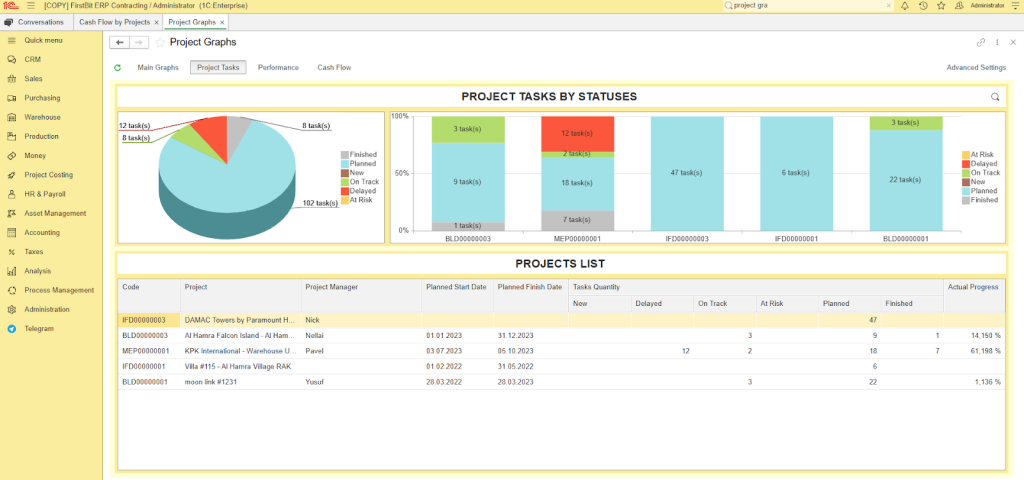
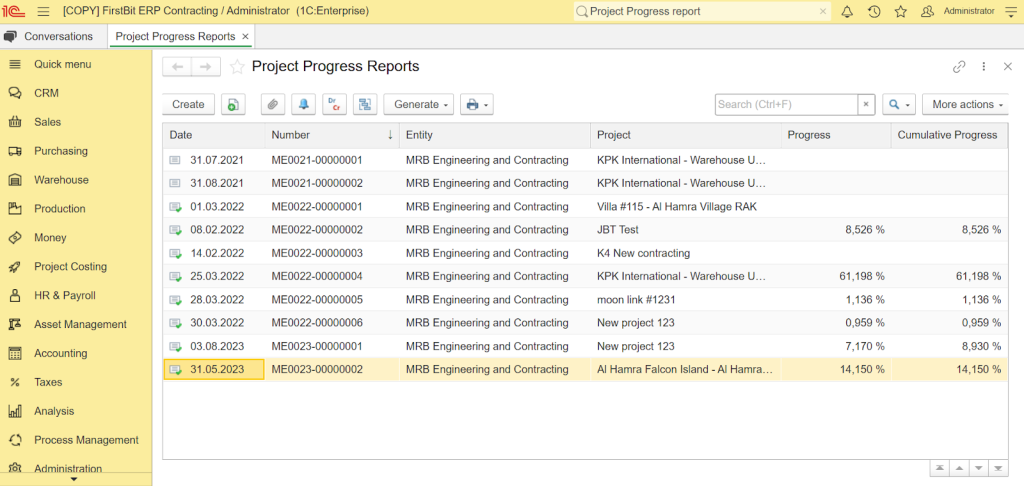
Construction projects need clear and timely information. The dashboard shows real-time updates on work, costs, and schedules. Detailed BOQ‑level reporting also gives stakeholders reliable evidence of progress. These tools help keep reports consistent, show issues early, and ensure the project stays on track.
Project tasks by statuses in FirstBit ERP
Project progress reports in FirstBit ERP
2. Resource Planning
Resources often make or break a schedule.
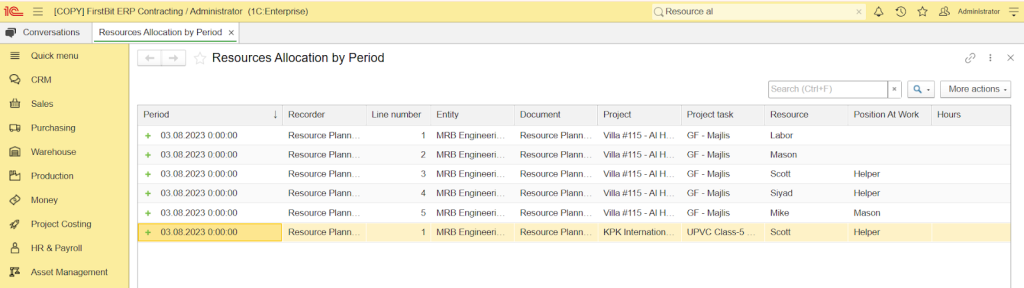
FirstBit helps allocate labor, equipment, and materials across multiple projects. This prevents shortages, reduces idle time, and ensures that resources are where they’re most needed.
Resource allocation by period
3. Cost Control and Cash Flow Monitoring
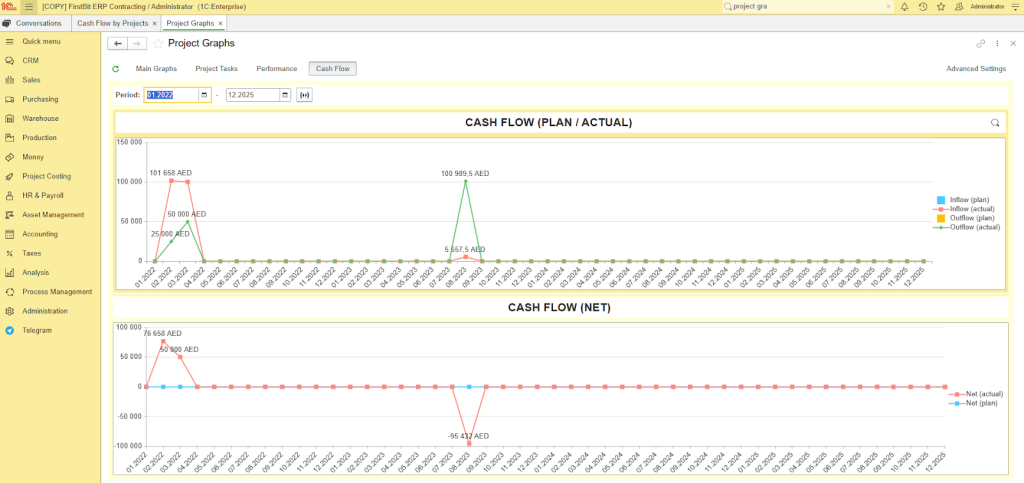
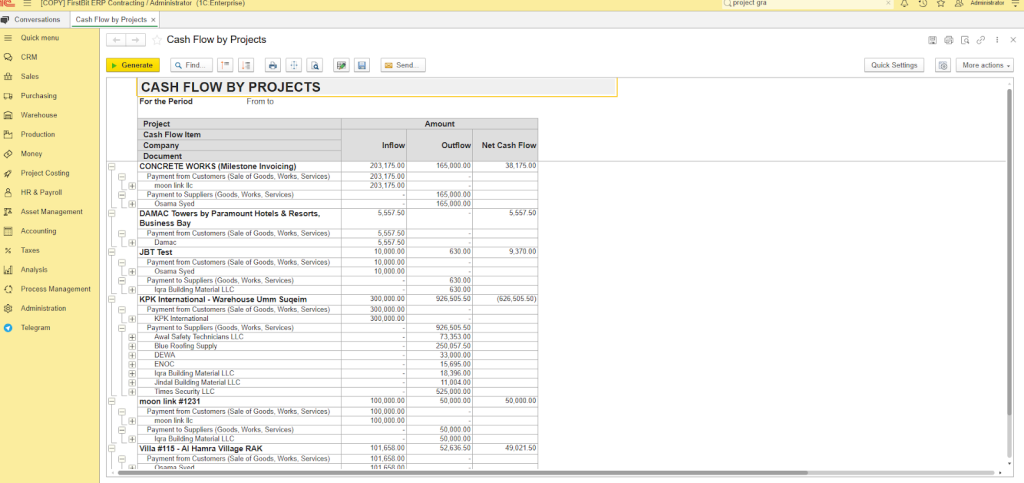
Keeping finances under control is just as critical as meeting schedules. This tool tracks actual spending against the approved budget while showing cash inflows and outflows per project. This gives managers a clearer picture of financial health, reducing the risk of overspending.
Cash flow (plan/actual) in FirstBit ERP
Cash flow by projects in FirstBit ERP
4. Procurement and Requisitions
With
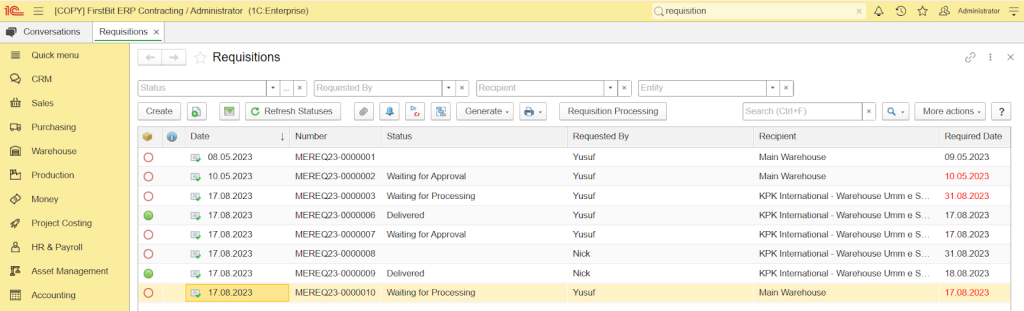
FirstBit ERP, teams can request materials, equipment, and manpower directly from the site. These requests go through stakeholder reviews for approval. Everyone can see the status of each request, making the process clear and easy to track.
Requisitions in FirstBit ERP
Conclusion
Being a construction manager is a big responsibility. You plan, lead, solve problems, and keep the project moving. It’s a role that requires technical skill and leadership finesse.
If you want to succeed, you need to communicate clearly, manage budgets tightly, and enforce safety without compromise. And when the pressure increases, you need systems that help you stay in control.
FirstBit ERP gives you that control. It helps you manage resources, track progress, and deliver results — on time and within budget. Whether you’re managing one site or ten, it keeps your projects organized and your team focused.
Keep projects running like clockwork
Schedule tasks in FirstBit
Request a demo
FAQ
What is a Construction Manager?
A construction manager oversees building projects from start to finish, ensuring everything runs smoothly, safely, and on schedule. They coordinate teams, manage budgets, and act as the main point of contact between clients, contractors, and suppliers.
What are the main responsibilities of a Construction Manager?
Construction managers plan the project, manage timelines, control costs, supervise workers, and ensure safety standards are met. They also handle communication between stakeholders and solve problems as they arise on-site.
What’s the difference between a Construction Manager and a General Contractor?
A construction manager works directly for the client to oversee the entire project. A general contractor is hired to execute the work and may manage subcontractors. The manager focuses on coordination and delivery; the contractor handles construction tasks.
What types of Construction Managers exist?
Construction managers can specialize in residential, commercial, industrial, or infrastructure projects. Some focus on areas like green building, healthcare facilities, or high-rise developments, depending on their experience and training.
How does a Construction Manager help control costs?
They monitor budgets, approve spending, and track procurement to prevent overruns. Tools like ERP systems can also help construction managers keep financial risks low and ensure resources are used efficiently.
Margaret Oboigbe
Contributing Author
Margaret Oboigbe combines industry knowledge with practical experience. She delivers content that empowers construction teams to improve performance, safety, and profitability across their projects.










'%3e%3cg%20clip-path='url(%23clip1_6548_6055)'%3e%3cpath%20d='M13.974%2015.6195C14.2724%2016.0185%2014.6532%2016.3487%2015.0905%2016.5876C15.5278%2016.8265%2016.0114%2016.9686%2016.5084%2017.0042C17.0055%2017.0398%2017.5043%2016.9681%2017.9712%2016.7939C18.4381%2016.6198%2018.8621%2016.3472%2019.2143%2015.9948L21.2994%2013.9098C21.9324%2013.2544%2022.2827%2012.3766%2022.2747%2011.4654C22.2668%2010.5543%2021.9014%209.68269%2021.257%209.03839C20.6127%208.39408%2019.7412%208.02862%2018.83%208.0207C17.9189%208.01278%2017.0411%208.36305%2016.3857%208.99606L15.1902%2010.1845M16.754%2014.2295C16.4555%2013.8305%2016.0747%2013.5003%2015.6374%2013.2614C15.2002%2013.0225%2014.7166%2012.8804%2014.2196%2012.8448C13.7225%2012.8092%2013.2237%2012.8809%2012.7568%2013.0551C12.2899%2013.2292%2011.8659%2013.5018%2011.5136%2013.8542L9.42861%2015.9392C8.7956%2016.5946%208.44534%2017.4724%208.45326%2018.3836C8.46117%2019.2947%208.82664%2020.1663%209.47094%2020.8106C10.1152%2021.4549%2010.9868%2021.8204%2011.898%2021.8283C12.8091%2021.8362%2013.6869%2021.4859%2014.3423%2020.8529L15.5308%2019.6645'%20stroke='%235F7896'%20stroke-width='1.39002'%20stroke-linecap='round'%20stroke-linejoin='round'/%3e%3c/g%3e%3c/g%3e%3crect%20x='0.438953'%20y='0.438953'%20width='28.9709'%20height='28.9709'%20rx='14.4855'%20stroke='%235F7896'%20stroke-width='0.877907'/%3e%3cdefs%3e%3cclipPath%20id='clip0_6548_6055'%3e%3crect%20width='29.8488'%20height='29.8488'%20rx='14.9244'%20fill='white'/%3e%3c/clipPath%3e%3cclipPath%20id='clip1_6548_6055'%3e%3crect%20width='16.6802'%20height='16.6802'%20fill='white'%20transform='translate(7.02344%206.58435)'/%3e%3c/clipPath%3e%3c/defs%3e%3c/svg%3e)