





Fit Out in Construction: Meaning, Process, and How to Manage It
06 Apr 2026 • 10 min read

Umme Aimon Shabbir
Editor at First Bit


A commercial space may look complete from the outside, but inside, it is often far from ready for use. Empty floors, exposed services, and unfinished interiors mean the space cannot function as an office, retail store, or workspace. This gap between structure and usability is where most project delays and cost overruns begin.
Many issues in projects are not due to construction itself, but how interior work is planned and executed. Poor coordination between design, approvals, and installation often leads to rework, missed deadlines, and budget pressure. This is especially common in interior fit out construction, where multiple trades must work in sequence.
This is where understanding fit out construction becomes critical. Knowing what does fit out mean in construction and how the process is managed helps ensure that a space is not just built, but fully functional and ready for use. A structured approach to fit out works in construction brings clarity, control, and better project outcomes.
Fit-out Meaning in Construction
The fit out meaning in construction refers to the process of making an interior space ready for use after the main structure is complete. It involves installing walls, ceilings, flooring, lighting, and all functional systems required for occupancy. In simple terms, it is the stage where an empty shell becomes a usable environment.
To understand what is fit out in construction, it helps to see it as the transition from structure to function. While the base building provides the framework, fit out construction focuses on usability, comfort, and purpose. This includes everything from mechanical and electrical systems to interior finishes and layouts.
The meaning of fit out in construction also depends on the level of completion required. Some projects require only basic setups, while others involve fully customized interiors tailored to business needs. Regardless of scope, interior fit out construction plays a key role in determining how effectively a space performs once occupied.
Process of Interior Fit Out Construction
The process of interior fit out construction follows a structured sequence that moves from planning to execution and final handover. Each stage builds on the previous one, ensuring the space is delivered in a functional and compliant way. Managing this process carefully helps reduce delays and improves overall project control.
A well-managed fit out construction process ensures that design intent, technical requirements, and execution timelines remain aligned. Since multiple trades and approvals are involved, coordination becomes critical at every stage. This is why a clear process is essential for managing fit out works in construction effectively.
Planning and Design
The planning stage defines how the space will function and what it needs to achieve. This includes identifying operational requirements, layout preferences, and aesthetic goals before execution begins. A clear design brief helps reduce changes during later stages.
Space planning and layout development are central to this phase. Designers create layouts that balance usability and technical feasibility while considering constraints. This stage sets the direction for the entire interior fit out construction process.
Technical and Compliance Preparations
Before execution begins, approvals and permits must be secured to meet local regulations. This ensures compliance with safety standards and avoids disruptions during construction. Delays at this stage often impact the overall timeline. That's why it's important for teams to rely on structured digital processes, often supported by ERP systems that centralize compliance tracking and documentation.
Coordination of engineering systems, such as mechanical, electrical, and plumbing, is also carried out here. Proper integration ensures that systems align with the design without requiring rework. This reduces risks during fit out construction.
To better understand how to implement and optimize these processes, you can refer to an ERP software guide that outlines best practices for managing complex construction workflows efficiently.
To better understand how to implement and optimize these processes, you can refer to an ERP software guide that outlines best practices for managing complex construction workflows efficiently.
Construction and Installation
This phase involves executing all physical work required to make the space functional. It includes installation of MEP systems, followed by finishes such as flooring, ceilings, partitions, and fixtures. Each activity must follow a defined sequence.
In fit out construction, coordination between trades is critical at this stage. Misalignment can lead to delays, rework, and increased costs. Proper supervision ensures that each task is completed efficiently and in the correct order.
Inspection and Handover
Once construction is complete, the project undergoes inspections to verify quality and compliance. Any issues are recorded and resolved through a structured punch list before final approval. This ensures the space meets both technical and client requirements.
The final handover includes documentation, testing reports, and approvals from relevant authorities. At this stage, the space is ready for use, marking the completion of fit out works in construction. Proper handover supports a smooth transition to occupancy.
Boost project performance
Assign the right people to the right tasks
Request a demo
Types of Fit Out Works in Construction

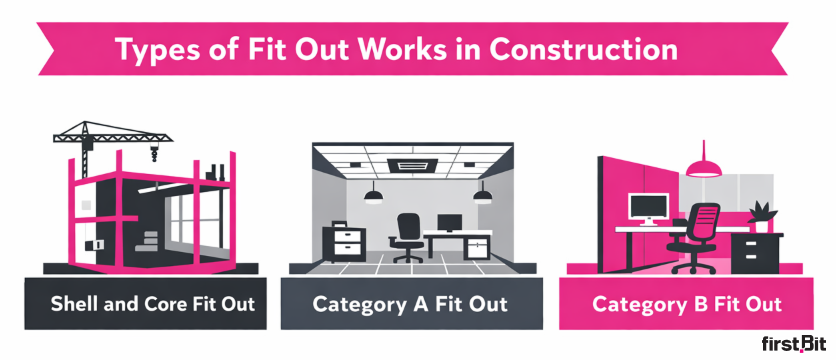
Types of fit out in construction
Fit out projects are not all the same. The scope of fit out works in construction depends on how complete the space is before interior work begins and how much customization is required. Understanding these types helps set clear expectations for cost, timeline, and execution complexity.
In fit out construction, work is generally categorized into different levels, ranging from basic structural readiness to fully customized interiors. These categories define what is included in the project and how much work is needed to make the space functional. This distinction is important when planning any interior fit out construction project.
According to JLL’s Global Office Fit-Out Cost Guide, the average office fit-out cost globally is around $1,950 per square meter, with significant variation depending on location and specification[?].
Shell and Core Fit Out Construction
Shell and core refers to a building that is structurally complete but lacks interior finishes. This includes the external structure, façade, and basic services brought to a connection point, but the internal space remains unfinished. At this stage, the building is not ready for occupancy.
In terms of fit out meaning in construction, shell and core represent the starting point of interior development. It provides a blank canvas where all interior systems, layouts, and finishes still need to be installed. This type of setup requires the most extensive fit out construction work.
Category A (Cat A) Fit Out Construction
Category A fit-out involves preparing the space to a basic functional level. This typically includes raised floors, suspended ceilings, lighting, HVAC systems, and basic finishes. The space becomes usable but remains generic without customization.
In interior fit out construction, Cat A provides a ready-to-use framework for tenants or businesses. It allows occupants to move forward with further customization based on their needs. This level bridges the gap between shell and core and fully finished interiors.
Category B (Cat B) Fit Out Construction
Category B fit-out focuses on customizing the space according to the tenant’s specific requirements. This includes partitions, furniture, branding elements, and specialized layouts. It transforms a functional space into a tailored working environment.
This stage represents the final level of fit out works in construction, where design intent meets practical use. In fit out construction, Cat B is where most user-driven decisions are implemented, making it critical for functionality and user experience.
This classification helps clarify the meaning of fit out in construction across different project stages. By understanding these types, contractors and clients can better define scope, manage expectations, and plan resources more effectively.
Key Considerations in Fit Out Works in Construction
Managing fit out works in construction requires careful attention to cost, timelines, compliance, and execution quality. Unlike core construction, fit-out projects involve multiple trades working within limited spaces, making coordination more complex. Without proper planning, even small issues can lead to delays and budget overruns.
A structured approach to fit out construction ensures that all elements are aligned before execution begins. This includes clear budgeting, realistic scheduling, regulatory approvals, and selecting the right contractor. These factors directly influence how smoothly an interior fit out construction project is delivered.
Studies show that 71% of construction projects experience cost or time overruns globally, highlighting how common planning and coordination issues are in project delivery[?].
Budget and Cost Management
Cost planning is one of the most critical aspects of fit out construction. It includes estimating materials, labor, design costs, and contingencies to avoid unexpected expenses. Without a detailed budget, projects can quickly exceed financial limits.
Tracking costs throughout the project helps maintain control and identify deviations early. In fit out works in construction, where customization is high, even small design changes can significantly impact the overall budget.
Time and Scheduling
Scheduling in interior fit out construction requires careful sequencing of tasks. Activities such as MEP installation, finishes, and furnishing must follow a logical order to avoid conflicts. Poor sequencing often results in delays and rework.
A well-defined timeline ensures that each stage is completed efficiently. Coordinating different trades and managing dependencies is essential for maintaining steady progress during fit out construction.
Regulatory Compliance and Permits
Compliance with local regulations is essential in fit out construction. This includes obtaining approvals, meeting safety standards, and adhering to building codes. Failure to comply can result in delays, penalties, or even project shutdowns.
Proper documentation and early approvals help avoid disruptions during execution. In regulated markets, compliance becomes a critical factor in ensuring the smooth delivery of fit out works in construction.
Choosing the Right Contractor
Selecting the right contractor plays a major role in the success of fit out construction. Experienced contractors understand sequencing, coordination, and technical requirements, reducing the risk of costly errors. Their expertise directly impacts both efficiency and quality.
A reliable contractor ensures that the project is delivered according to design, budget, and timeline. In interior fit out construction, this decision often determines whether the project runs smoothly or faces repeated setbacks.
Ensure timely and profitable project completion with FirstBit
Request a demo
Managing Fit Out Construction with FirstBit ERP: Best Tools for Project Execution
Managing fit out construction involves handling multiple moving parts at once, including budgets, procurement, timelines, and contractor coordination. Without a centralized system, it becomes difficult to track progress and ensure that each stage of the project is aligned with the plan. This is where a system like FirstBit ERP can support structured execution.
FirstBit ERP is designed to help construction teams manage financial and operational data in one place. In the context of interior fit out construction, this allows better visibility into costs, resource allocation, and project status. It supports teams in maintaining control over fit out works in construction by linking financial tracking with day-to-day project activities.
Key capabilities of FirstBit ERP in fit out construction:
- Centralized project and financial data. Consolidates budgets, expenses, and operational data into a single system, reducing reliance on disconnected spreadsheets.
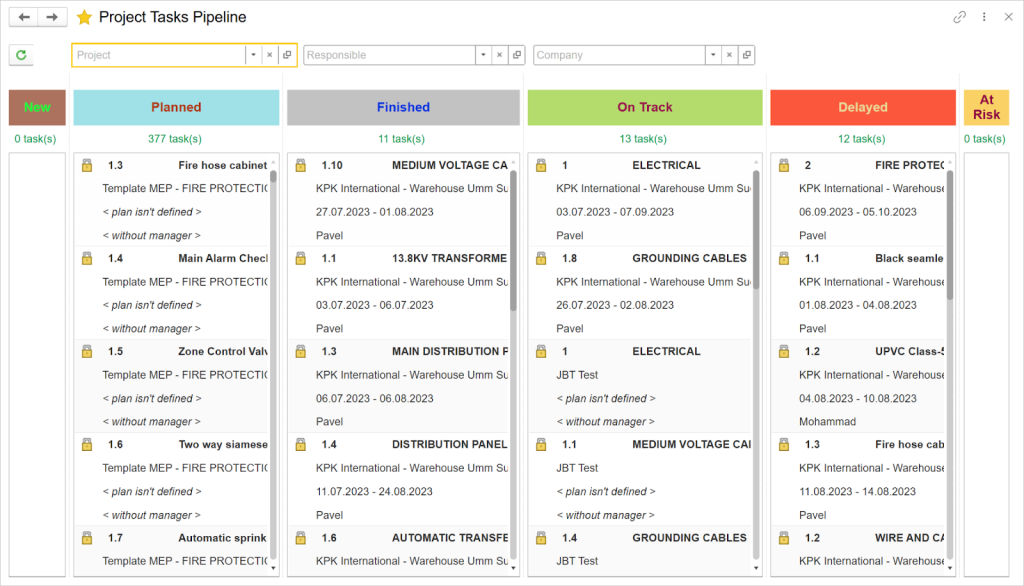
Projects task tab in FirstBit ERP
- Real-time cost tracking and monitoring. Enables teams to track actual costs against planned budgets, helping identify overruns early in the project lifecycle.
- Budget control and variance visibility. Provides insights into cost deviations, allowing teams to take corrective actions before issues escalate.
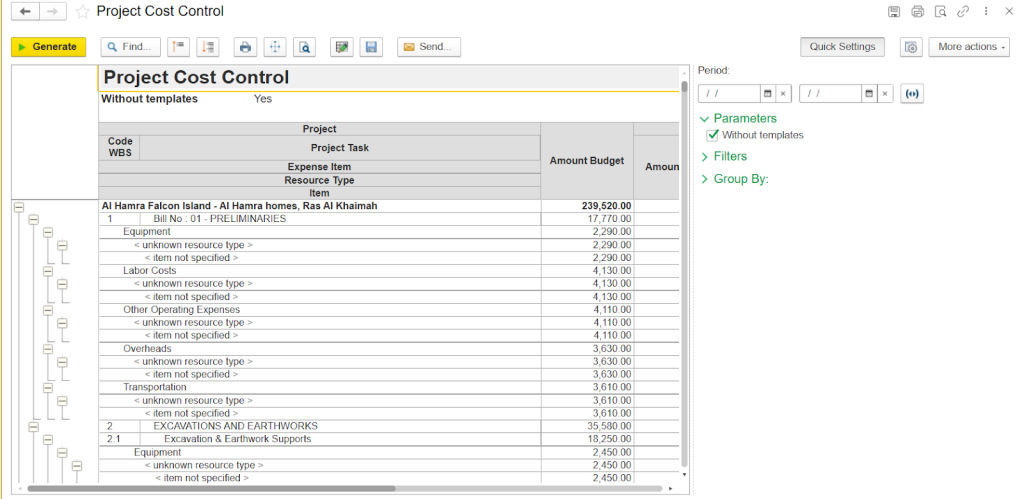
Cost control report in FirstBit ERP
- Procurement and material tracking. Helps monitor material orders and delivery status, reducing delays caused by missing or late supplies.
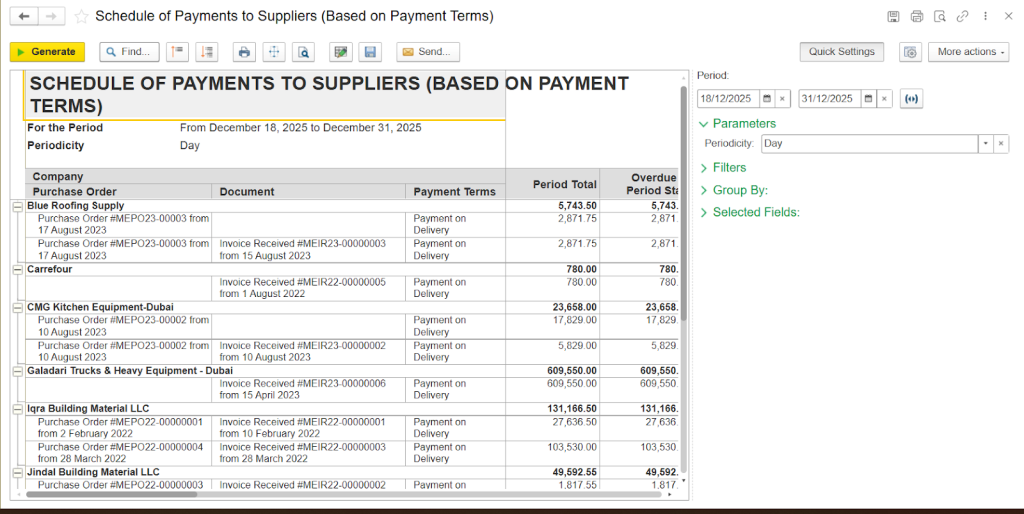
Payments schedule report in FirstBit ERP
- Integration with project workflows. Aligns financial data with project stages, supporting better coordination across planning, execution, and reporting.
- Structured reporting and insights. Generates reports that help teams review performance, track progress, and support decision-making during the project.
These capabilities support better execution control in fit out construction, where coordination between cost, time, and resources is critical. By improving visibility and data accuracy, FirstBit ERP helps teams manage each stage more effectively and reduce common project risks.
In practice, FirstBit ERP does not replace construction planning processes but strengthens them by improving how information is tracked and shared. This makes it easier to manage complex fit out works in construction and supports more consistent project outcomes.
Conclusion
Fit-out projects sit at the point where construction meets real-world use. This is where decisions made during planning are tested against practical requirements, timelines, and budgets. The difference between a smooth delivery and a delayed project often comes down to how well this transition is managed.
Understanding the fit out meaning in construction helps teams approach projects with clearer expectations and better control. It shifts the focus from simply completing tasks to delivering a space that is functional, compliant, and ready for use. This perspective is especially important in complex interior fit out construction projects where coordination is critical.
ERP that saves your money
Adopt FirstBit ERP to cut costs, boost ROI, and effectively plan future cash flows
Request a demo
FAQ
What is the difference between a fit out and a renovation?
What is a fit-out project in construction?
What is fitout in engineering?
What is the difference between interior design and interior fit out?

Umme Aimon Shabbir
Editor at First Bit
Share this article
'%3e%3cg%20clip-path='url(%23clip1_6548_6055)'%3e%3cpath%20d='M13.974%2015.6195C14.2724%2016.0185%2014.6532%2016.3487%2015.0905%2016.5876C15.5278%2016.8265%2016.0114%2016.9686%2016.5084%2017.0042C17.0055%2017.0398%2017.5043%2016.9681%2017.9712%2016.7939C18.4381%2016.6198%2018.8621%2016.3472%2019.2143%2015.9948L21.2994%2013.9098C21.9324%2013.2544%2022.2827%2012.3766%2022.2747%2011.4654C22.2668%2010.5543%2021.9014%209.68269%2021.257%209.03839C20.6127%208.39408%2019.7412%208.02862%2018.83%208.0207C17.9189%208.01278%2017.0411%208.36305%2016.3857%208.99606L15.1902%2010.1845M16.754%2014.2295C16.4555%2013.8305%2016.0747%2013.5003%2015.6374%2013.2614C15.2002%2013.0225%2014.7166%2012.8804%2014.2196%2012.8448C13.7225%2012.8092%2013.2237%2012.8809%2012.7568%2013.0551C12.2899%2013.2292%2011.8659%2013.5018%2011.5136%2013.8542L9.42861%2015.9392C8.7956%2016.5946%208.44534%2017.4724%208.45326%2018.3836C8.46117%2019.2947%208.82664%2020.1663%209.47094%2020.8106C10.1152%2021.4549%2010.9868%2021.8204%2011.898%2021.8283C12.8091%2021.8362%2013.6869%2021.4859%2014.3423%2020.8529L15.5308%2019.6645'%20stroke='%235F7896'%20stroke-width='1.39002'%20stroke-linecap='round'%20stroke-linejoin='round'/%3e%3c/g%3e%3c/g%3e%3crect%20x='0.438953'%20y='0.438953'%20width='28.9709'%20height='28.9709'%20rx='14.4855'%20stroke='%235F7896'%20stroke-width='0.877907'/%3e%3cdefs%3e%3cclipPath%20id='clip0_6548_6055'%3e%3crect%20width='29.8488'%20height='29.8488'%20rx='14.9244'%20fill='white'/%3e%3c/clipPath%3e%3cclipPath%20id='clip1_6548_6055'%3e%3crect%20width='16.6802'%20height='16.6802'%20fill='white'%20transform='translate(7.02344%206.58435)'/%3e%3c/clipPath%3e%3c/defs%3e%3c/svg%3e)


Related articles


See all







See FirstBit ERP solutions in action
Discover how our system solves the unique challenges of contractors in a personalized demo.
After the demo you will get a quotation for your company.
After the demo you will get a quotation for your company.