





Top 7 Infrastructure Projects in the UAE 2026
Publication date 10 Jun 2026 •
Updated 15 Jul 2026 •
15 min read

Anna Fischer
Construction Content Writer


Infrastructure plays a central role in the UAE’s long-term growth. As cities expand, tourism increases and trade routes become more complex, the country needs transport, energy and logistics systems that can keep pace. In 2026, many UAE infrastructure projects reflect this shift from rapid expansion to more connected, efficient and future-ready development.
In this article, we look at the biggest infrastructure projects in the UAE, their current status and the role they play in the country’s economic and urban development.
Trends in the Development of the UAE Infrastructure Projects
Infrastructure investment in the UAE is closely linked to several clear development trends. The first is the shift toward cleaner and more efficient infrastructure, supported by national plans such as the UAE Net Zero 2050 Strategy. This is pushing new projects toward renewable energy, sustainable transport, efficient buildings and stronger logistics networks.
Another major trend is infrastructure planning around fast population growth. As more people live and work in major cities, the UAE is expanding public transport, power capacity and connections between emirates. This growth also increases demand for ERP software in Dubai that can support large-scale infrastructure delivery and resource management.
Tourism and trade are also shaping the project pipeline. Airport expansion, rail links, highways and logistics corridors show a clear focus on handling higher passenger volumes and moving goods more efficiently between ports, industrial zones and neighboring markets. This has created many long-term growth opportunities for construction companies across the UAE.
Top 7 UAE Infrastructure Projects in 2026
These top 7 UAE infrastructure projects in 2026 were selected using a structured editorial methodology designed to identify the projects expected to have the greatest long-term impact on the UAE's economy, society, and built environment. Rather than relying on a single metric such as project cost, each project was assessed across multiple dimensions to ensure a balanced and objective comparison.
The evaluation considered the following criteria:
-
Strategic national importance. How closely the project aligns with the UAE's long-term development strategies, including the UAE Vision 2031, the Dubai 2040 Urban Master Plan, and the Net Zero 2050 initiative.
-
Investment scale. The total announced capital investment and financial commitment supporting the project.
-
Economic impact. The project's expected contribution to economic growth, employment, logistics, tourism, industrial development, and foreign investment.
-
Infrastructure transformation. The extent to which the project improves transportation, utilities, digital infrastructure, urban development, or public services.
-
Engineering innovation. The use of advanced construction methods, smart technologies, artificial intelligence, digital twins, automation, or other innovative engineering solutions.
-
Sustainability. Environmental performance, energy efficiency, resilience, carbon reduction, and contribution to sustainable urban development.
Projects are ordered from the highest overall score to the lowest based on their combined performance across these criteria.
This ranking is an editorial selection, not the result of a single independent academic or commercial study. It synthesizes information from official UAE government announcements, infrastructure authorities, industry reports, and reputable market analyses, applying a consistent scoring methodology to ensure transparency and comparability.
Succeed in the UAE market
Use real‑time dashboards to plan, adapt, and win
Request a demo
1. Al Maktoum International Airport Expansion
The Al Maktoum International Airport expansion is designed to turn Dubai World Central into Dubai’s main aviation hub. The project includes new terminals, concourses, aircraft stands, runway infrastructure, baggage systems, and links with other transport networks. When fully developed, the airport is planned to handle more than 260 million passengers a year and 12 million tonnes of cargo.
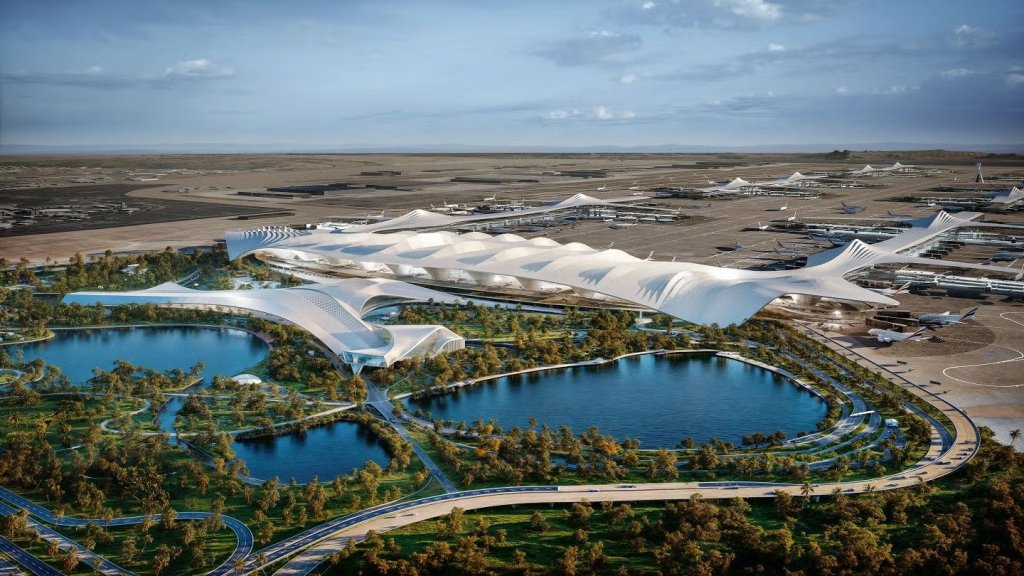
Dubai approved the new passenger terminal designs in April 2024. By June 2026, the project had entered a large-scale construction phase, with enabling works, runway infrastructure and early terminal foundations already progressing. Phase 1 is scheduled to begin operations in 2032. The final build-out will take longer, because the airport is being developed as a long-term aviation city rather than a single terminal project.
The expansion will give Dubai more capacity for future passenger and cargo growth. It will also support Dubai South as a major aviation, logistics and business district. That's why it stands out as one of the most significant Dubai infrastructure projects currently under development.
| Evaluation criterion | Assessment | Additional comment |
| Strategic national importance | 5/5 | Central to Dubai's long-term vision of becoming the world's leading aviation, logistics, and trade hub. It directly supports the Dubai 2040 Urban Master Plan and the UAE economic diversification strategy. |
| Investment scale | 5/5 | With an estimated investment of around AED 128 billion, it is the largest infrastructure project currently underway in the UAE. |
| Economic impact | 5/5 | According to the Corporate Group, it’s expected to generate hundreds of thousands of jobs, significantly expand tourism, cargo handling, and international investment, while supporting Dubai South as a global economic zone. |
| Infrastructure transformation | 5/5 | Creates an entirely new global aviation hub integrated with metro and national rail, fundamentally reshaping the UAE's transport network. |
| Engineering innovation | 5/5 | Incorporates next-generation airport technologies, smart terminals, AI-driven passenger processing, and multimodal transport integration. |
| Sustainability | 4/5 | Designed with energy-efficient systems and multimodal transport integration, although aviation infrastructure naturally has a larger environmental footprint than renewable-energy projects. |
2. Etihad Rail
Etihad Rail is the UAE’s national railway network, built to connect industrial zones, ports, logistics centres and major cities across the country. The 900km freight network is already complete and links Ghuwaifat in the west with Fujairah in the east. Passenger services are expected to start in phases in 2026, with the first routes focused on Abu Dhabi, Dubai and Fujairah.
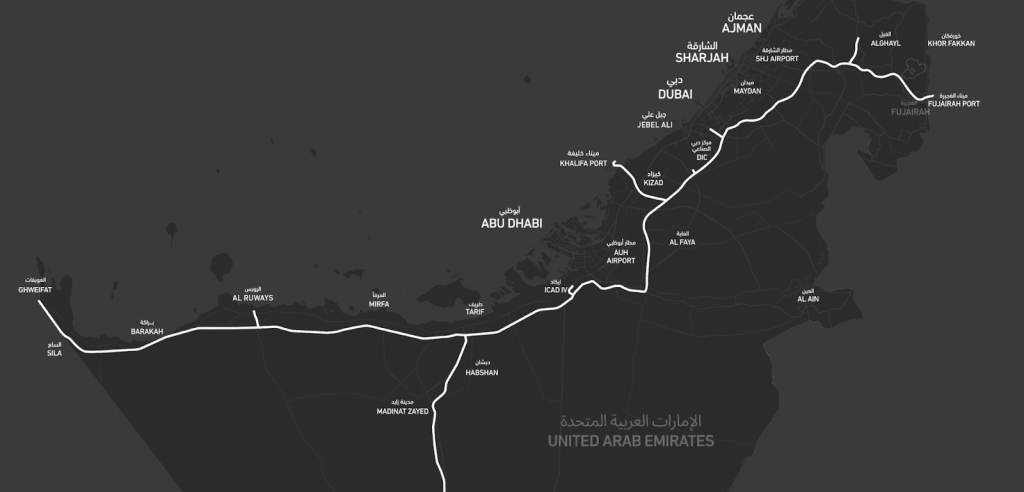
The project was established in 2009, while construction developed in stages. The first operational stage served freight movement between Shah, Habshan, and Ruwais, and later expansion connected the wider national network. The main freight network was completed before the passenger launch phase.
The project improves inter-emirate mobility by giving residents and businesses an alternative to highway travel. It also supports ports, factories, and logistics operators by moving cargo more efficiently across long distances. These factors highlight the economic value of large-scale infrastructure construction projects.
| Evaluation criterion | Assessment | Additional comment |
| Strategic national importance | 5/5 | The UAE's first national railway connects all seven emirates and forms the backbone of future GCC rail connectivity. |
| Investment scale | 5/5 | Represents one of the country's largest long-term transport investments spanning more than 900 km. |
| Economic impact | 5/5 | Will reduce logistics costs, improve freight efficiency, stimulate tourism, and connect major industrial zones and ports. |
| Infrastructure transformation | 5/5 | Introduces an entirely new mode of nationwide passenger and freight transportation to the UAE. |
| Engineering innovation | 4/5 | Uses advanced signalling and smart railway systems, but railway engineering is generally more mature than the cutting-edge technologies employed in the airport megaproject. |
| Sustainability | 5/5 | According to Reuters, it’s expected to remove millions of truck journeys from roads and significantly reduce CO₂ emissions over the coming decades. |
Why not #1? Although transformational, it does not match the airport project's unprecedented global aviation scale or its wider impact on international air travel.
3. Mohammed bin Rashid Al Maktoum Solar Park Expansion
The Mohammed bin Rashid Al Maktoum Solar Park is Dubai’s main utility-scale clean energy project. It is located in Seih Al-Dahal and is being developed in phases under the Independent Power Producer model. DEWA has already completed five phases and is implementing the sixth phase, while the seventh phase has moved through the tender process.
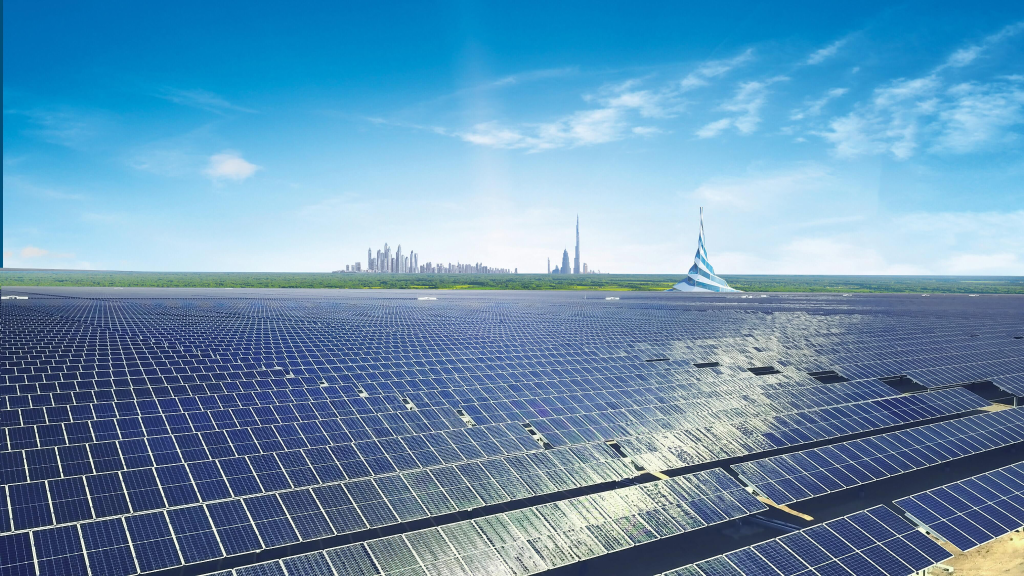
The solar park was launched in 2012. The sixth phase, with 1,800MW of photovoltaic capacity, is becoming operational in stages between 2024 and 2026. DEWA has stated that the remaining 800MW of the sixth phase is scheduled to come online by Q4 2026. The longer-term target has also been raised, with total capacity expected to exceed 8,000MW by 2030.
As one of the region’s leading mega infrastructure projects, this development adds large-scale clean power capacity to meet Dubai’s growing energy demand. It also supports a more stable electricity system and helps reduce reliance on gas-fired generation.
| Evaluation criterion | Assessment | Additional comment |
| Strategic national importance | 5/5 | A flagship project supporting the UAE Net Zero 2050 Strategy and national clean-energy transition. |
| Investment scale | 5/5 | Multi-phase, multi-billion-dirham investment that continues expanding renewable-energy capacity. |
| Economic impact | 4/5 | Strengthens long-term energy security and attracts green investment, although its direct employment impact is lower than that of major transport megaprojects. |
| Infrastructure transformation | 4/5 | Transforms the national electricity generation mix rather than physical transportation infrastructure. |
| Engineering innovation | 5/5 | Utilises concentrated solar power, photovoltaic technologies, energy storage, and smart grid integration. |
| Sustainability | 5/5 | The benchmark infrastructure project for environmental sustainability in the UAE, delivering substantial carbon-emission reductions. |
Why not higher? Its influence is concentrated within the energy sector, whereas the top two projects reshape multiple sectors simultaneously.
4. Dubai Metro Blue Line Project
The Dubai Metro Blue Line is a 30km metro extension with 14 stations. It will connect the existing Red and Green lines with areas such as Dubai Creek Harbour, Dubai Festival City, Ras Al Khor, International City, Dubai Silicon Oasis and Dubai Academic City. The route is designed for districts that are expected to see strong residential and student population growth.
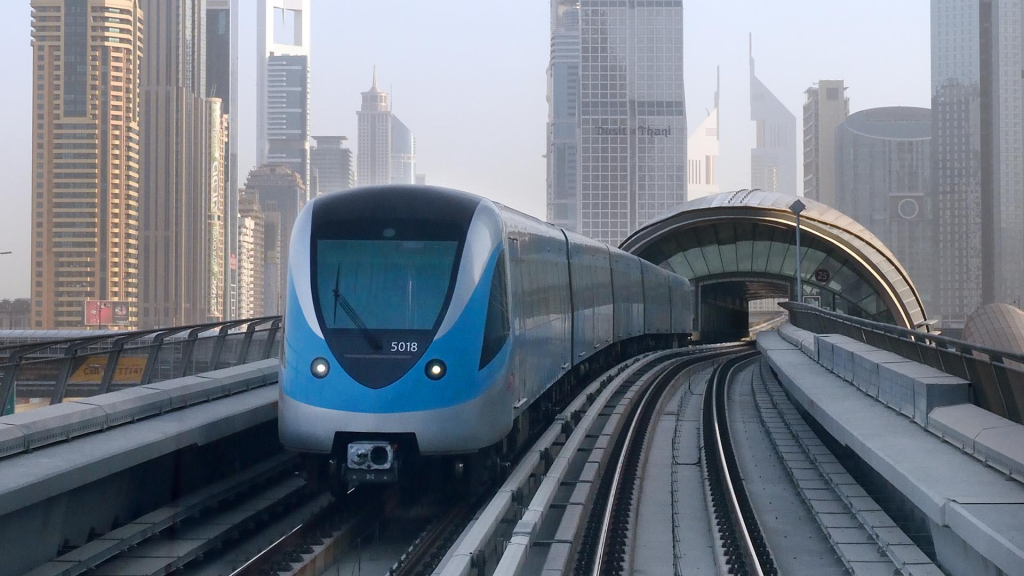
Construction started in June 2025. By November 2025, the project had reached 10% completion, and RTA targeted 30% completion by the end of 2026. The official opening target is 9 September 2029, matching the 20th anniversary of Dubai Metro.
The project will bring metro access to areas that rely heavily on roads. It should ease pressure on key corridors and improve daily travel for residents, students, and workers in eastern Dubai.
| Evaluation criterion | Assessment | Additional comment |
| Strategic national importance | 5/5 | Supports Dubai 2040 Urban Master Plan and future airport connectivity. |
| Investment scale | 4/5 | Valued at approximately AED 20.5 billion. Although substantial, its investment is significantly smaller than the airport expansion and the nationwide rail programme. |
| Economic impact | 4/5 | Improves productivity, accessibility, and property development. Its economic influence is primarily concentrated within Dubai rather than the entire UAE. |
| Infrastructure transformation | 5/5 | Extends metro coverage to major residential, educational, and commercial districts while integrating with Etihad Rail. |
| Engineering innovation | 5/5 | Includes iconic station architecture, underground construction, and advanced automated metro systems. |
| Sustainability | 4/5 | Encourages a shift from private vehicles to public transport. However, its environmental impact is smaller than that of the Solar Park and Etihad Rail because it serves a single metropolitan area. |
Why not higher? Its benefits are concentrated within Dubai rather than the entire UAE, and its investment scale is smaller than the top three projects.
5. Hafeet Rail
Hafeet Rail is the UAE–Oman railway link connecting the UAE national rail network with Sohar Port in Oman. The route is planned as a 238km cross-border railway for freight and future passenger movement. It will pass through challenging terrain and includes tunnels, bridges, earthworks and logistics facilities.
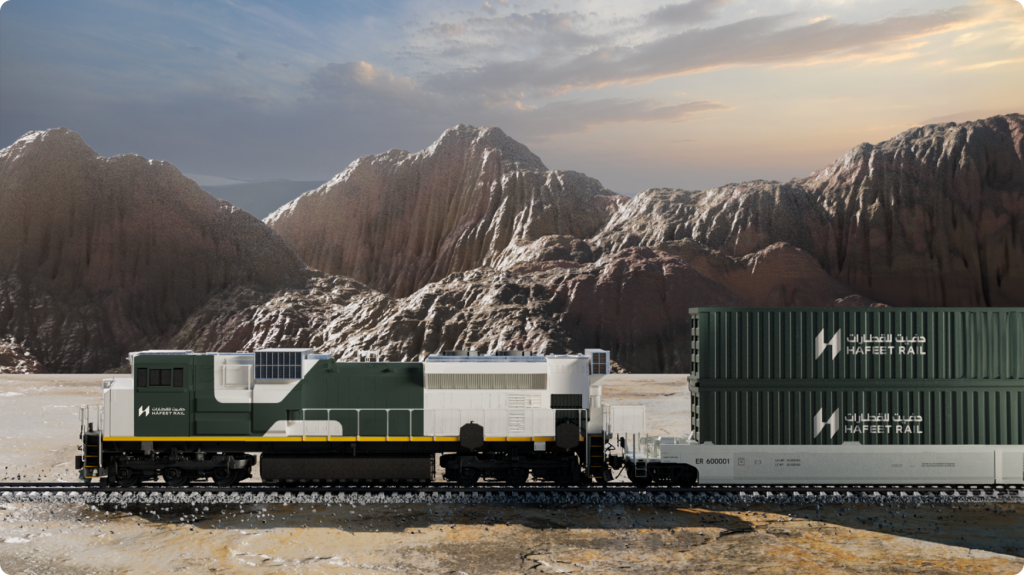
Construction began after the project moved forward in 2024. In April 2026, Hafeet Rail announced that 40% of the Oman–UAE railway link had been completed. The company reported major progress in excavation, concrete works, tunnelling, and engineering structures. However, an official final opening date has not been confirmed publicly.
This cross-border railway is among the most strategically important mega infrastructure projects in the Gulf. The project creates a direct rail link between the UAE and Oman, helping move freight between ports and industrial zones more efficiently. Once passenger services are introduced, it should also make cross-border travel faster and more predictable.
| Evaluation criterion | Assessment | Additional comment |
| Strategic national importance | 4/5 | Strengthens UAE–Oman connectivity and supports future GCC railway integration. Its strategic influence is regional rather than nationwide, like Etihad Rail. |
| Investment scale | 4/5 | Approximately US $1.5 billion. Its investment size is considerably smaller than the UAE's largest national megaprojects. |
| Economic impact | 5/5 | Expected to boost cross-border trade, freight efficiency, and tourism between the UAE and Oman. |
| Infrastructure transformation | 4/5 | Establishes the UAE's first international railway corridor. However, its geographic coverage is more limited than the domestic national railway network. |
| Engineering innovation | 4/5 | Includes mountain tunnels, bridges, and complex terrain engineering. Nevertheless, it primarily uses proven heavy-rail engineering rather than introducing new infrastructure technologies. |
| Sustainability | 4/5 | Rail transport offers lower emissions than long-distance road freight. Its environmental benefits remain smaller because its primary objective is transport rather than renewable energy generation. |
Why not higher? While strategically important, its scale and national impact are smaller than the UAE-wide infrastructure programmes ranked above it.
6. New 120km National Highway
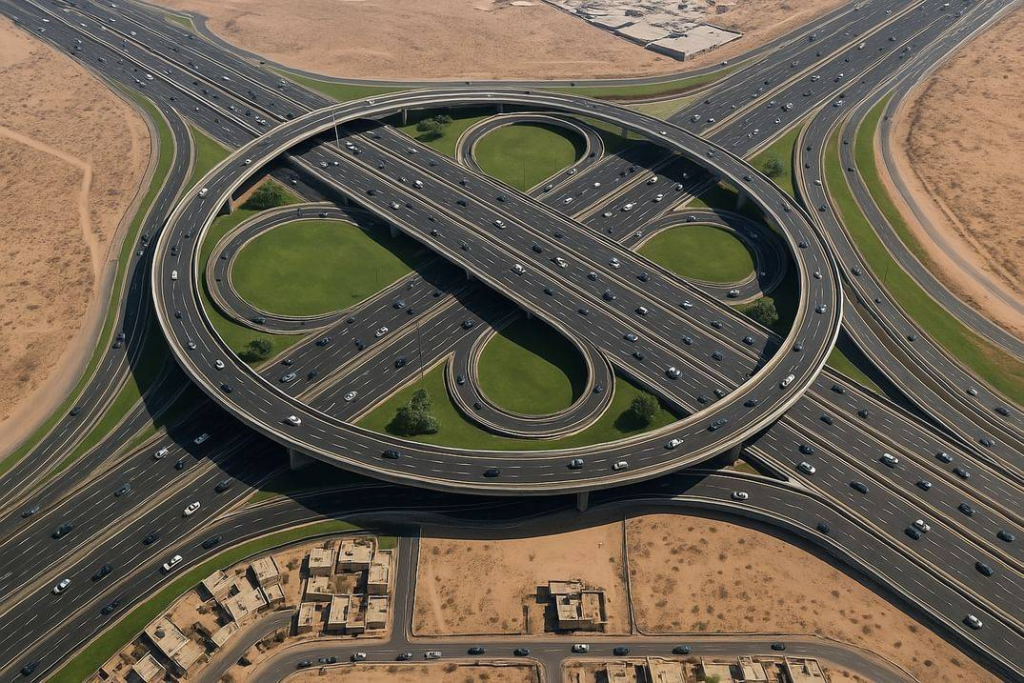
The new 120km national highway is a proposed fourth federal highway, planned as part of the UAE’s Dh170 billion roads and transport investment programme. The corridor is being studied as a 12-lane route with capacity for up to 360,000 trips per day. It would sit alongside major upgrades to Al Ittihad Road, Emirates Road, and Sheikh Mohammed bin Zayed Road.
The project is still at the study stage. WAM described it as a proposed fourth federal highway being studied under the national road and transport investment program, not as a highway already under construction. The wider road package is planned for implementation by 2030, but no confirmed construction start date or dedicated completion date for this specific highway has been announced.
The UAE’s main inter-emirate highways carry heavy commuter and logistics traffic, especially between Dubai, Sharjah, and the Northern Emirates. A new federal corridor would add capacity, reduce bottlenecks, and give transport planners more flexibility when existing routes are expanded or disrupted.
| Evaluation criterion | Assessment | Additional comment |
| Strategic national importance | 4/5 | Supports the UAE's national transport strategy by improving freight movement and relieving congestion. Does not introduce a new national transport mode. |
| Investment scale | 4/5 | Forms part of the UAE's wider Dh170 billion transport investment programme. The individual highway investment is smaller than the country's largest aviation and rail megaprojects. |
| Economic impact | 4/5 | Enhances logistics and regional connectivity. Its economic benefits are primarily indirect through improved road efficiency rather than creating entirely new economic ecosystems. |
| Infrastructure transformation | 5/5 | Significantly expands national road capacity and improves intercity mobility. |
| Engineering innovation | 4/5 | Uses modern highway engineering and intelligent transport systems. However, road construction generally is less technologically innovative than metro, rail, or airport megaprojects. |
| Sustainability | 3/5 | Incorporates modern safety and resilience standards. Despite these improvements, highways typically have a larger environmental footprint compared with rail-based transport systems. |
Why not higher? Roads remain essential infrastructure but generally provide less technological innovation and lower sustainability benefits than rail and renewable-energy projects.
7. Abu Dhabi Tram Line 4
Abu Dhabi Tram Line 4, also referred to as Abu Dhabi LRT4, is a planned light rail route led by Abu Dhabi Transport Company. The first phase is planned as a 19km line with 23 stations, connecting Zayed International Airport, Al Raha Beach and Yas Island. The project also includes a depot to support operations.
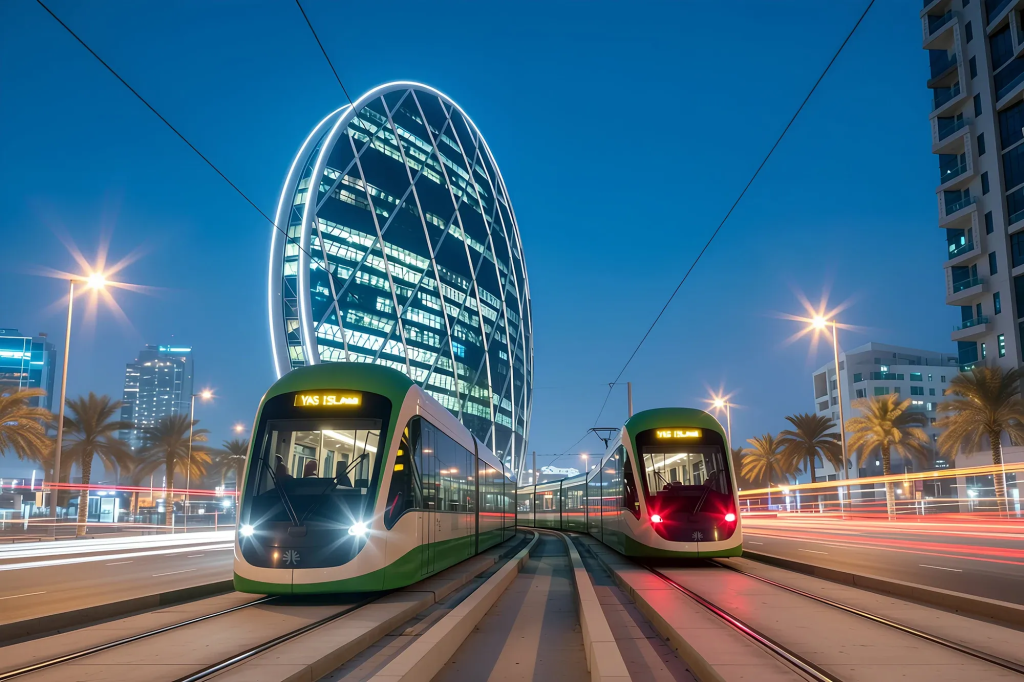
In October 2025, ADT launched the expression of interest process for the design and build of the line. This means the project is in procurement and preparation, rather than full public operation. Construction is expected to start in 2026, with operations targeted around 2030.
The line will strengthen public transport connectivity between the airport, Yas Island, and nearby communities. It should also reduce dependence on cars and taxis for travel between key destinations.
| Evaluation criterion | Assessment | Additional comment |
| Strategic national importance | 4/5 | Supports Abu Dhabi's sustainable urban mobility strategy. Its influence is largely city-focused rather than nationwide. |
| Investment scale | 3/5 | Represents a significant municipal investment. However, its funding level is considerably smaller than the UAE's flagship airport, railway, and metro projects. |
| Economic impact | 4/5 | Improves access to Yas Island, Zayed International Airport, and surrounding developments. Its economic impact is mainly regional rather than national. |
| Infrastructure transformation | 4/5 | Expands sustainable public transport across Abu Dhabi. Its geographic coverage is more limited than the nationwide transport infrastructure. |
| Engineering innovation | 4/5 | Incorporates modern tram technology and integrated mobility systems. The engineering complexity is lower than that of heavy rail, major airports, and fully automated metro systems. |
| Sustainability | 5/5 | Promotes low-carbon public transport, reduces dependence on private vehicles, and supports compact urban development. |
Why not higher? Its geographic coverage, investment scale, and economic influence are more limited than the nationwide airport, rail, and energy megaprojects ranked above it.
Why UAE Contractors Use FirstBit ERP for Digital Transformation
FirstBit ERP is designed for construction companies that need better control over complex UAE infrastructure projects. It supports:
-
Stronger cost control
-
Enhanced cash flow tracking
-
More accurate workforce and management
-
Better equipment and material management
-
Clearer procurement and subcontractor control

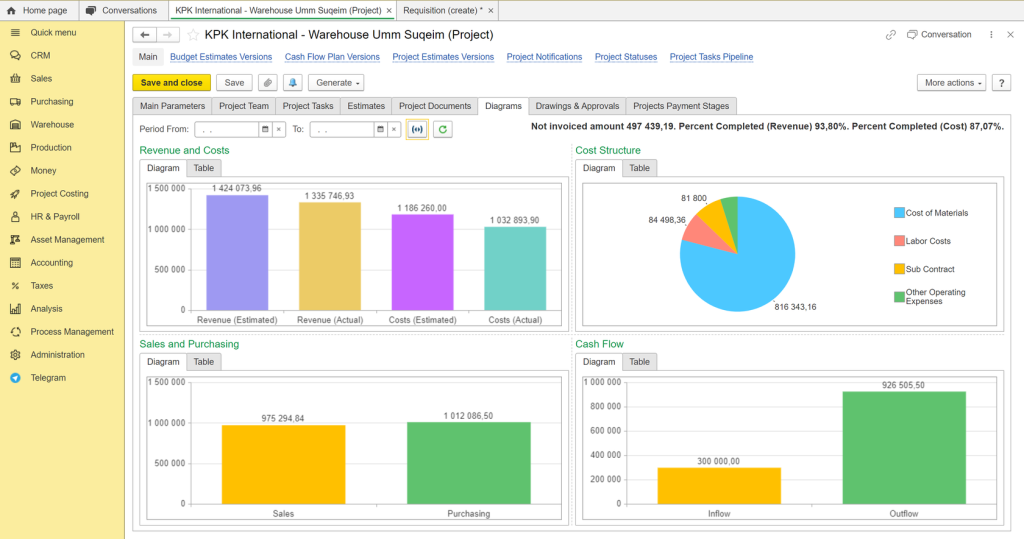
Project control in FirstBit ERP Contracting
When project data is spread across spreadsheets, reports and accounting files, cost overruns or delays can be noticed too late. FirstBit ERP supports overall project management by keeping key data in one system, helping contractors improve accuracy, reduce manual work and make faster decisions.
Deliver work that exceeds
the client’s expectations
Request a demo
Conclusion
The active development of the UAE infrastructure projects shows that the country is planning beyond immediate demand. Rail, metro, airport, road and energy projects are being used to shape how people move, how cities grow and how trade flows across the region.
For contractors, this creates both opportunity and pressure. Companies that can control costs, manage resources accurately and adapt to larger project requirements will be better prepared for the next stage of infrastructure growth in the UAE.
F.A.Q.
What is an example of an infrastructure project?
What are the 8 infrastructure sectors?
Is NEOM a mega project?
What are the biggest infrastructure projects in the UAE?
Why are Dubai infrastructure projects important?

Anna Fischer
Construction Content Writer
Share this article
'%3e%3cg%20clip-path='url(%23clip1_6548_6055)'%3e%3cpath%20d='M13.974%2015.6195C14.2724%2016.0185%2014.6532%2016.3487%2015.0905%2016.5876C15.5278%2016.8265%2016.0114%2016.9686%2016.5084%2017.0042C17.0055%2017.0398%2017.5043%2016.9681%2017.9712%2016.7939C18.4381%2016.6198%2018.8621%2016.3472%2019.2143%2015.9948L21.2994%2013.9098C21.9324%2013.2544%2022.2827%2012.3766%2022.2747%2011.4654C22.2668%2010.5543%2021.9014%209.68269%2021.257%209.03839C20.6127%208.39408%2019.7412%208.02862%2018.83%208.0207C17.9189%208.01278%2017.0411%208.36305%2016.3857%208.99606L15.1902%2010.1845M16.754%2014.2295C16.4555%2013.8305%2016.0747%2013.5003%2015.6374%2013.2614C15.2002%2013.0225%2014.7166%2012.8804%2014.2196%2012.8448C13.7225%2012.8092%2013.2237%2012.8809%2012.7568%2013.0551C12.2899%2013.2292%2011.8659%2013.5018%2011.5136%2013.8542L9.42861%2015.9392C8.7956%2016.5946%208.44534%2017.4724%208.45326%2018.3836C8.46117%2019.2947%208.82664%2020.1663%209.47094%2020.8106C10.1152%2021.4549%2010.9868%2021.8204%2011.898%2021.8283C12.8091%2021.8362%2013.6869%2021.4859%2014.3423%2020.8529L15.5308%2019.6645'%20stroke='%235F7896'%20stroke-width='1.39002'%20stroke-linecap='round'%20stroke-linejoin='round'/%3e%3c/g%3e%3c/g%3e%3crect%20x='0.438953'%20y='0.438953'%20width='28.9709'%20height='28.9709'%20rx='14.4855'%20stroke='%235F7896'%20stroke-width='0.877907'/%3e%3cdefs%3e%3cclipPath%20id='clip0_6548_6055'%3e%3crect%20width='29.8488'%20height='29.8488'%20rx='14.9244'%20fill='white'/%3e%3c/clipPath%3e%3cclipPath%20id='clip1_6548_6055'%3e%3crect%20width='16.6802'%20height='16.6802'%20fill='white'%20transform='translate(7.02344%206.58435)'/%3e%3c/clipPath%3e%3c/defs%3e%3c/svg%3e)


Related articles


See all








See FirstBit ERP solutions in action
Discover how our system solves the unique challenges of contractors in a personalized demo.
After the demo you will get a quotation for your company.
After the demo you will get a quotation for your company.