





The Hidden Profit Killer: How to Identify, Track, and Eliminate Idle Time in Construction



What is Idle Time in Construction?
Idle Time vs. Downtime
| Factor | Idle Time | Downtime |
| Resource status | Available and functional | Unavailable or non-functional |
| Primary cause | Waiting for work, materials, approvals, or scheduling gaps | Equipment breakdowns, maintenance, or system failures |
| Productivity impact | Temporary loss of efficiency | Complete interruption of operations |
| Preventability | Often reduced through better planning and coordination | Reduced through preventive maintenance and asset management |
| Example in construction | Crew waiting for concrete delivery | Excavator out of service due to hydraulic failure |
Two Types of Idle Time
- Scheduled lunch and rest breaks for workers
- Shift changes between crews
- Daily safety briefings
- Equipment warm-up procedures before the operation
- Routine equipment inspections
- Waiting for concrete curing or drying times
- Planned project coordination meetings
- Preventive maintenance activities
- Workers waiting for delayed material deliveries
- Equipment sitting unused due to scheduling conflicts
- Labour crews waiting for permit or inspection approvals
- Unexpected equipment breakdowns
- Missing tools or construction materials
- Design changes causing work stoppages
- Poor communication between subcontractors
- Weather-related delays beyond planned contingencies
- Delays caused by labor shortages
Manage teams, equipment, and materials in FirstBit ERP
UAE Construction Challenges That Lead to Idle Time
- Contractor-related issues (65% of respondents). The survey identified contractor-related issues as the leading cause of delays. Poor resource management, lack of experience, and inadequate workforce training reduce productivity and leave workers and equipment idle while construction activities are reorganized.
- Owner-related issues (57% of respondents). Frequent design changes, slow decision-making, regulatory changes, and inadequate planning interrupt project workflows. These delays force construction crews and heavy equipment to wait until revised designs and approvals are issued, increasing idle time.
- Material-related issues (56% of respondents). Material shortages, procurement delays, and supply chain disruptions prevent scheduled construction activities from starting on time. As a result, both labor and machinery remain unproductive until materials arrive.
- Financial constraints (45% of respondents). Delayed payments, insufficient funding, and budget overruns disrupt contractor operations and procurement activities, causing temporary work stoppages and increasing idle labor and equipment hours.
- Cost overruns. The survey reports that about 70% of construction projects exceed their planned budgets due to extended project durations and resource reallocations. As schedules slip, workers and equipment spend more time waiting between activities, reducing overall utilization.
- Quality issues and rework.Around 30% of projects experience quality problems caused by accelerated work following delays. Rework requires crews to stop planned activities and repeat completed work, creating additional idle periods for other trades waiting to continue.
Idle Time Formula: How to Calculate Idle Time with Examples
The standard idle time formula is:
Idle time = Scheduled working time – Actual productive time
- Scheduled working time = Total hours planned for work
- Actual productive time = Hours spent performing productive tasks
- Idle time = Lost time when resources are available but not working
Example 1: Construction Worker Idle Time
Example 2: Excavator Idle Time
Example 3: Concrete Pouring Crew Idle Time
How to Reduce Idle Time in Construction
- Improve project planning and scheduling. Develop detailed project schedules that clearly define tasks, dependencies, milestones, and resource requirements. Effective planning helps prevent delays and ensures that workers and equipment remain productive throughout the project lifecycle.
- Optimise resource allocation. Assign labour, equipment, and materials based on project requirements and workload forecasts. Proper resource allocation reduces waiting periods and prevents underutilization of valuable assets.
- Ensure timely material delivery. Material shortages are a common cause of idle time. Maintaining accurate procurement schedules and coordinating closely with suppliers helps ensure materials arrive when needed.
- Implement preventive equipment maintenance. Regular maintenance programs reduce the risk of unexpected equipment failures and downtime. Well-maintained machinery remains operational and supports continuous project progress.
- Improve communication and coordination. Clear communication between project managers, supervisors, subcontractors, and suppliers helps prevent misunderstandings and workflow disruptions. Real-time communication tools can improve coordination across project teams.
- Use construction project management software. Digital project management platforms help track schedules, resources, equipment utilisation, and project progress. These tools provide greater visibility and allow managers to identify potential bottlenecks early.
- Reduce approval and decision-making delays. Slow approval processes can halt project activities and create unnecessary waiting periods. Establishing clear approval workflows helps maintain project momentum and reduce inactivity.
How to Track Idle Time: KPIs and Tips
- Improved productivity by reducing unnecessary downtime
- Better resource allocation across employees and equipment
- Enhanced operational efficiency through the identification of bottlenecks
- Lower operating costs by minimising wasted time
- More informed decision-making based on performance data
Identify the Sources of Idle Time
- Equipment waiting for operators
- Labor waiting for materials
- Weather-related delays
- Equipment breakdowns
- Site access restrictions
- Scheduling conflicts
Pro tip: Create separate categories for operational, logistical, weather-related, and equipment-related downtime. This helps teams focus improvement efforts on the most frequent causes of lost productivity.
Track Equipment Utilization
- Operating hours
- Idle hours
- Fuel consumption
- Maintenance downtime
- Equipment availability
- Utilization percentage
Pro tip: Measure utilization at the equipment type level. Comparing utilization rates across excavators, loaders, cranes, and haul trucks often reveals hidden inefficiencies in resource planning.
Monitor Labor Productivity
- Productive work hours
- Waiting time
- Rework hours
- Crew utilization rates
- Task completion rates
Pro tip: Compare labor productivity data with project schedules. Repeated productivity losses often indicate planning or sequencing issues rather than workforce performance problems.
Use Daily Site Reports
- Equipment downtime
- Labor delays
- Material shortages
- Delivery disruptions
- Weather interruptions
- Safety-related stoppages
- Schedule deviations
Pro tip: Include estimated cost impacts alongside downtime records. Understanding the financial consequences of idle time helps justify process improvements and technology investments.
Coordinate roles and schedules through FirstBit ERP
New Technologies for Idle Time Tracking in the UAE
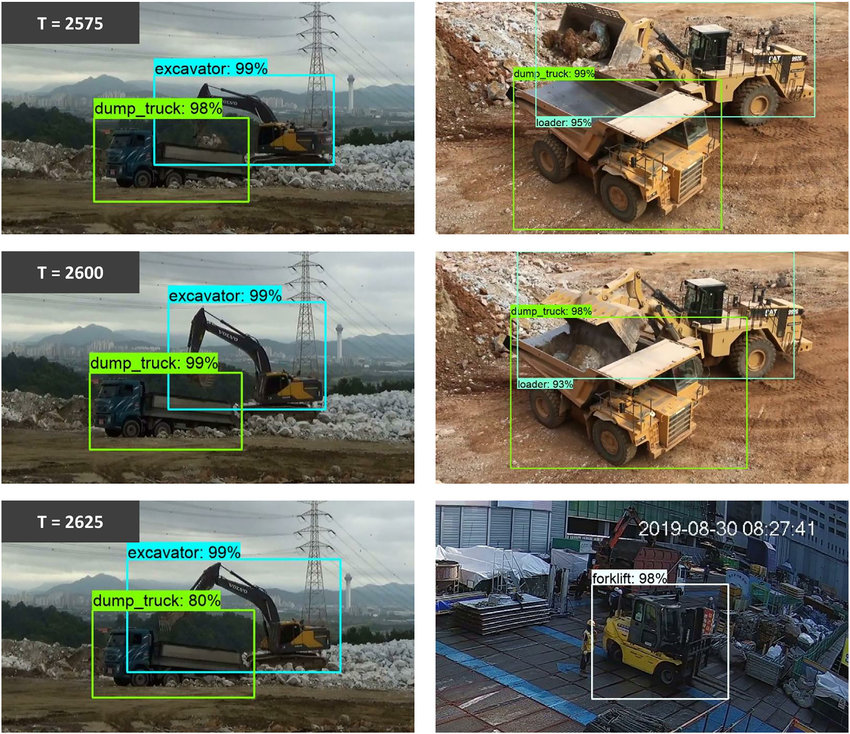
- AI-powered computer vision. Uses cameras and intelligent algorithms to continuously monitor equipment activity without requiring manual observation. This technology can automatically distinguish between productive work and idle periods, helping project teams improve utilisation rates.
- HSV colour space analysis. Unlike traditional RGB imaging, HSV (Hue, Saturation, Value) technology improves the identification of construction equipment in complex environments. It is particularly effective in separating machinery from backgrounds such as soil, concrete, and shadows[?].
- Automated image segmentation. Advanced software isolates equipment from the surrounding environment by removing visual noise and highlighting relevant objects. This process enables accurate tracking even on busy construction sites[?].
- Centroid-based movement tracking. Modern systems calculate the centre point (centroid) of a machine and compare its position across consecutive images. This allows software to determine whether equipment is moving, working, or remaining idle[?].
- Real-time video analytics. CCTV and site cameras can generate continuous streams of operational data, allowing project managers to monitor productivity trends and identify bottlenecks as they occur.
Case Study: Repetitive Projects Scheduling to Reduce Idle Time
- Problem: In repetitive linear projects crews often experience idle time while waiting for preceding activities to finish or for resources to become available. The challenge is to maintain continuous crew movement from one work location to the next without interruptions.
- Case study project: The researchers applied RSM to the Sirte–Houn 400 kV Transmission Line Project, a 287.4 km transmission line with 667 tower stations. The project consisted of 17 repetitive activities, including route selection, surveying, excavation, concrete works, tower erection, conductor installation, and project closeout.
- Important note: The RSM method is especially useful in UAE construction projects involving repetitive tasks carried out across multiple locations, such as transmission lines, pipelines, highways, rail corridors, utility networks, and large-scale housing developments.
- Breaked the project into repetitive units. The project was divided into 667 tower stations, where the same sequence of activities was repeated at each location. Examples of repeated activities included route selection, surveying, soil investigation, excavation and concrete works.
- Defined production rates and crews. For every activity, the researchers determined the quantity of work, crew assignment and production rate (e.g., km/day, m³/day). The duration of each activity was calculated from: Duration = Work Quantity ÷ Production Rate. This allowed them to predict how fast each crew would move from station to station.
- Applied scheduling constraints. The schedule was not created freely. Several constraints were enforced. Activities had to follow technical precedence. Crews could not start until predecessor activities were completed. A minimum one-day buffer was maintained between activities.
- Created a time–location schedule. Instead of a traditional Gantt chart or CPM network, the project was plotted on a time-location diagram. Horizontal axis = Time. Vertical axis = Location (tower stations). Each activity was represented as a line showing crew movement through locations. The slope of the line represented the crew's production rate.
- Adjusted start times to remove idle time. The researchers adjusted activity start times and buffers to ensure that crews could move continuously from one station to the next without waiting for predecessor activities.
Results
| Scenario | Contractors | Project duration | Idle time |
| Case 1 | 1 contractor | 574 days | 0 days |
| Case 2 | 2 contractors | 275 days | 0 days |
How Can FirstBit ERP Turn Idle Time into Productive Working Hours?

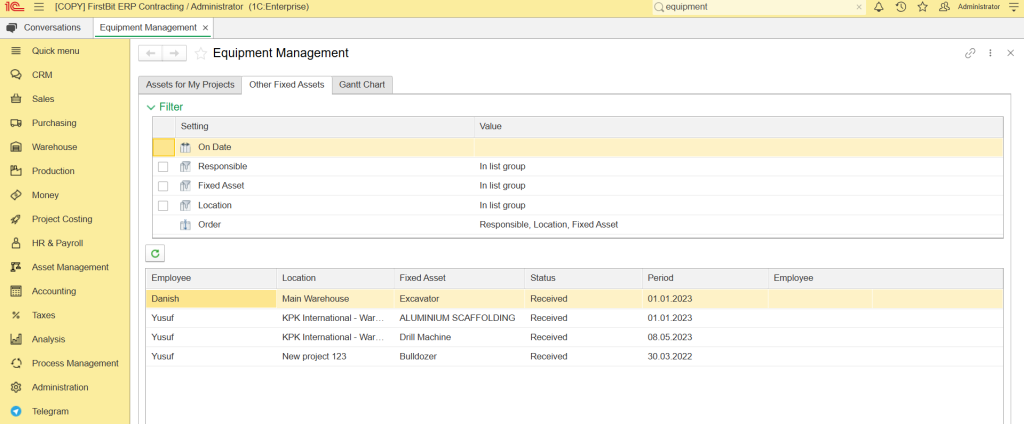
- Real-time workforce monitoring. FirstBit ERP enables managers to track employee attendance, working hours, task assignments, and productivity levels in real time. This visibility helps identify idle workers and reassign resources where they are needed most.
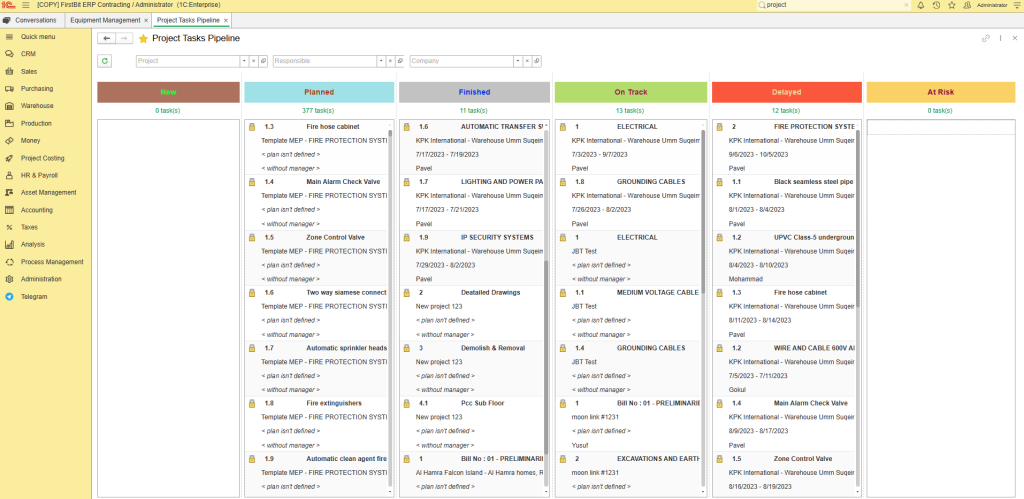
- Improved project scheduling. The system helps create detailed project schedules, allocate resources efficiently, and monitor project progress. Better planning reduces waiting periods and keeps teams productive throughout the project lifecycle.
- Efficient resource allocation. FirstBit ERP provides a centralised view of labour, equipment, and material availability. Managers can allocate resources more effectively and avoid situations where workers or machinery remain idle.
- Inventory and material management. Delays caused by material shortages can increase idle time significantly. FirstBit ERP tracks inventory levels, automates procurement processes, and helps ensure that materials are available when required.
- Equipment utilization tracking. The ERP system monitors equipment usage, maintenance schedules, and operational status. Preventive maintenance planning helps reduce unexpected breakdowns that can halt work activities.
Conclusion
Manage teams, equipment, and materials in FirstBit ERP
FAQ

'%3e%3cg%20clip-path='url(%23clip1_6548_6055)'%3e%3cpath%20d='M13.974%2015.6195C14.2724%2016.0185%2014.6532%2016.3487%2015.0905%2016.5876C15.5278%2016.8265%2016.0114%2016.9686%2016.5084%2017.0042C17.0055%2017.0398%2017.5043%2016.9681%2017.9712%2016.7939C18.4381%2016.6198%2018.8621%2016.3472%2019.2143%2015.9948L21.2994%2013.9098C21.9324%2013.2544%2022.2827%2012.3766%2022.2747%2011.4654C22.2668%2010.5543%2021.9014%209.68269%2021.257%209.03839C20.6127%208.39408%2019.7412%208.02862%2018.83%208.0207C17.9189%208.01278%2017.0411%208.36305%2016.3857%208.99606L15.1902%2010.1845M16.754%2014.2295C16.4555%2013.8305%2016.0747%2013.5003%2015.6374%2013.2614C15.2002%2013.0225%2014.7166%2012.8804%2014.2196%2012.8448C13.7225%2012.8092%2013.2237%2012.8809%2012.7568%2013.0551C12.2899%2013.2292%2011.8659%2013.5018%2011.5136%2013.8542L9.42861%2015.9392C8.7956%2016.5946%208.44534%2017.4724%208.45326%2018.3836C8.46117%2019.2947%208.82664%2020.1663%209.47094%2020.8106C10.1152%2021.4549%2010.9868%2021.8204%2011.898%2021.8283C12.8091%2021.8362%2013.6869%2021.4859%2014.3423%2020.8529L15.5308%2019.6645'%20stroke='%235F7896'%20stroke-width='1.39002'%20stroke-linecap='round'%20stroke-linejoin='round'/%3e%3c/g%3e%3c/g%3e%3crect%20x='0.438953'%20y='0.438953'%20width='28.9709'%20height='28.9709'%20rx='14.4855'%20stroke='%235F7896'%20stroke-width='0.877907'/%3e%3cdefs%3e%3cclipPath%20id='clip0_6548_6055'%3e%3crect%20width='29.8488'%20height='29.8488'%20rx='14.9244'%20fill='white'/%3e%3c/clipPath%3e%3cclipPath%20id='clip1_6548_6055'%3e%3crect%20width='16.6802'%20height='16.6802'%20fill='white'%20transform='translate(7.02344%206.58435)'/%3e%3c/clipPath%3e%3c/defs%3e%3c/svg%3e)









See FirstBit ERP solutions in action
After the demo you will get a quotation for your company.