Construction sites are full of specialized activities: a tower crane moving steel into place, sparks flying as welders finish a beam, HVAC technicians installing ductwork, and electricians setting up conduits below.
None of these activities would be possible without a subcontractor in construction. They bring in the skilled labor that makes construction faster and more achievable. Without them, even the best-planned
projects can face delays.
This guide explains the role of subcontractors and where they fit in the construction hierarchy. You’ll also learn about the common challenges in managing subcontractors and how to solve those problems with smart digital tools.
What Is a Subcontractor in Construction?
A subcontractor is a specialist hired to perform a specific task as part of a construction project. They specialize in a defined trade — like plumbing or tiling — and handle tasks that require technical expertise. Subcontractors work under the main contractor, not directly with the project owner.
They come in handy when construction managers or contractors need expertise or extra hands. For example, if a project requires complex HVAC installation, a contractor brings in a subcontractor who does only that. This
saves time, improves quality, and reduces risk.
The Difference between Contractors and Subcontractors
The difference is simple but important, as it helps prevent confusion during project planning.
|
Contractor
|
Subcontractor
|
|
Oversees the entire project and communicates directly with the owner.
|
Works for the contractor under a specific scope of work.
|
|
Coordinates all trades and manages site operations.
|
Focuses on one trade like HVAC, plumbing, or finishes.
|
|
Responsible for deadlines, budget, and overall quality. Issues work orders and pays subcontractors.
|
Responsible for completing assigned tasks safely and correctly. Submits invoices and reports progress to the contractor.
|
Keep labor costs under control
Track attendance and pay only for actual work hours
Request a demo
Where Subcontractors Fit in the Project Hierarchy
Every construction project follows a layered structure. Here’s how it typically looks:
Owner → Contractor → Subcontractor → Sub‑subcontractor.
More about their roles:
-
Owner. The person or company funding the project.
-
Contractor. The main party responsible for delivery.
-
Subcontractor. Hired by the contractor for specific trades.
-
Sub-subcontractor. Hired by the subcontractor for niche tasks or overflow labor.
Key Responsibilities of a Subcontractor in Construction
Every subcontractor in construction carries out specialized tasks that require skill and planning. Although their specific duties may differ, subcontractors share a standard set of key responsibilities. These include:
Managing Tools, Labor, and Scheduling
A subcontractor manages their crews, tools, and materials within their scope. They plan daily operations, track progress, and coordinate labor allocation. Mismanaged scheduling can easily delay dependent tasks, especially on large projects where multiple trades work simultaneously.
To stay organized, many subcontractors now rely on digital solutions to track attendance, manage timesheets, and align labor costs with actual on‑site performance.
As a subcontractor, you can use an ERP system to sync your team’s work hours with the main contractor’s schedule. It prevents delays and keeps every shift productive.
Delivering Trade-specific Tasks with Expertise
Subcontractors handle tasks such as electrical wiring, HVAC installation, or masonry. They provide the tools, techniques, and experience to complete each job correctly. A reliable subcontractor doesn’t just complete a task; they ensure that it meets project specifications and safety standards.
Complying with Safety and Quality Standards
Subcontractors must follow UAE site‑specific regulations, wear protective gear, and meet inspection requirements. Their work should pass quality checks without constant supervision.
If safety rules are not followed, accidents can occur. That’s why good subcontractors use clear checklists, hold safety talks, and keep records of all safety actions.
Coordinating with Contractors and Other Trades
Subcontractors must communicate with the contractor and other subcontractors to avoid delays or conflicts.
For example, electricians cannot start wiring until the framing is complete. HVAC teams must wait for structural and finishing crews to complete their tasks. If one team delays, it can affect other trades too. Good communication helps all teams work together and stay on schedule.
Track progress and report updates
A reliable subcontractor keeps the contractor informed. They share updates on completed tasks, flag issues early, and adjust plans when necessary.
Pro tip: Contractors should hold short daily coordination meetings. Ten focused minutes with all trade heads can save hours lost to confusion later.
Pay your teams accurately and on time
Request a demo
Benefits of Subcontractors in Construction
A subcontractor in construction has the special skills, tools, and workers required for complex projects. This means contractors do not need to hire large teams all year. Whether it’s wiring, welding, or waterproofing, their expertise fills the gaps that general crews may not always cover.
Let’s break down some of the biggest benefits subcontractors bring to a project:
-
Access to specialized skills. Subcontractors focus on one trade and bring experience that general crews often lack.
-
Flexibility and scalability. Large projects need more workers quickly, while smaller jobs may not need full-time crews. As the main contractor, hiring subcontractors lets you scale your workforce on a short-term basis.
-
Faster delivery. Multiple subcontractors can work simultaneously. For instance, one team can install plumbing while another puts up drywall. This overlap saves time and helps contractors complete the project faster.
-
Cost efficiency. Subcontractors already have the required equipment, trained crews, and necessary insurance. This minimizes fixed costs and reduces project risk. In essence, contractors only pay for what they need — when they need it.
Summary
Working with subcontractors can help contractors to:
-
Access rare, specialized technical skills
-
Scale up or down efficiently
-
Deliver projects faster through parallel trade work
-
Maintain quality and compliance while reducing overhead
Types of Subcontractors in Construction
Modern construction depends on a network of subcontractors. Each one has a special skill. If you are a construction manager or general contractor, it is important to know the role of each subcontractor. This helps you plan project schedules, allocate resources, and manage costs.
Here are some common types of subcontractors and what they do on a construction site:
Site Preparation Subcontractors
These subcontractors prepare the land before any foundation work begins.
Key tasks include:
-
Excavating and grading the site
-
Clearing vegetation or old structures
-
Preparing compacted foundations for slabs
Good site preparation provides a stable base for all other construction work.
Concrete and Rebar Subcontractors
Concrete and rebar subcontractors manage the structural foundations that carry all building loads.
Key tasks include:
-
Pouring slabs and beams
-
Installing rebar and reinforcement
-
Handling curing, testing, and finishing
Structural and Framing Subcontractors
These teams build the main structure of the building, which gives it shape and strength.
Key tasks include:
-
Erecting walls, columns, and beams
-
Assembling steel or timber frames
-
Installing trusses, decks, and supports
Delays at this stage can slow down subsequent trade. So, good planning is essential.
Roofing, Siding, and Sheet Metal Subcontractors
These subcontractors make sure the building is protected from the weather.
Key tasks include:
-
Installing insulation, membranes, and metal panels
-
Sealing joints and flashing
-
Managing roof drainage and waterproofing systems
Pro tip: Schedule roofers only after frame inspections to avoid rework. Planning with other teams prevents issues, even if framing details, mechanical layouts, or materials change later in the project.
Plumbing Subcontractors
A plumbing subcontractor in construction sets up water supply, drainage, and waste systems. If you are a subcontractor in this trade, you must adhere to strict code requirements.
Key tasks include:
-
Laying out pipelines and fixtures
-
Installing pumps, valves, and heaters
-
Testing pressure and ensuring code compliance
HVAC / Mechanical Subcontractors
HVAC and mechanical subcontractors keep buildings comfortable and safe. They install systems that control the temperature and air quality.
Key tasks include:
-
Setting up heating, ventilation, and cooling systems
-
Installing ducts, chillers, fans, and thermostats
-
Balancing airflow and ensuring maintenance access
Electrical Subcontractors
Electrical subcontractors ensure that every part of the building has power and is safe to use. They connect all the systems that need electricity, from lighting to equipment and everything in between.
Key tasks include:
-
Running conduits and wiring
-
Installing panels, sockets, and lighting fixtures
-
Ensuring compliance with voltage and fire‑safety codes
Carpentry and Interior Finishes Subcontractors
Carpentry and interior finish subcontractors handle the parts of a building that people see and use every day. Their work adds shape, style, and function to the finished space.
Key tasks include:
-
Fitting cabinets, trim, and doors
-
Installing flooring or decorative features
-
Building partitions and millwork components
Masonry and Stonework Subcontractors
Masonry and stonework subcontractors use quality materials that make any building look sturdy, classic, and timeless.
Key tasks include:
-
Constructing walls, pillars, and façades
-
Handling mortar mixes and alignment
-
Performing restoration or waterproofing for old structures
Drywall and Painting Subcontractors
Drywall and painting subcontractors turn rough interiors into clean, finished spaces. Their work helps give each room its final look.
Key tasks include:
-
Installing wallboards and ceilings
-
Patching joints and sanding surfaces
-
Applying primer, paint, texture, or wallpaper
Flooring and Tile Subcontractors
These suncontractors are responsible for durable, safe, and aesthetic flooring finishes.
Key tasks include:
-
Laying tiles, carpets, or vinyl planks
-
Leveling subfloors
-
Applying sealants and decorative textures
Landscaping and Paving Subcontractors
Landscaping and paving subcontractors handle the outdoor areas after construction is completed. They ensure the outside looks nice, too.
Key tasks include:
-
Installing irrigation and drainage lines
-
Planting trees, shrubs, and turf
-
Constructing walkways, curbs, and pavement
Structural Steel Subcontractors
A structural steel subcontractor in construction builds the steel frame that supports a building. They help ensure the entire structure stays safe and sturdy.
Key tasks include:
-
Fabricating and erecting beams, trusses, and columns
-
Performing welding and bolting operations
-
Coordinating with safety engineers for height work
Managing different subcontractors involves keeping track of schedules and coordinating tasks. An ERP system can help construction managers keep all parts of the project on track and avoid delays. With
FirstBit ERP, for instance, you can track subcontractor schedules, budgets, and progress — all in one place.
Challenges in Managing Subcontractors in Construction
Managing subcontractors can be one of the hardest parts of a project. Each team has its own contract, schedule, and budget, but what they do affects all the other teams.
If just one team falls behind or miscommunicates, the entire work sequence can be affected. That’s why you need to stay ahead of potential problems.
Here are the most common challenges that project managers and contractors face when coordinating multiple subcontractors:
Scheduling Conflicts and Coordination Issues
On construction sites, timing is everything. Each trade must finish before the next one starts. If one subcontractor delays — for example, if concrete pouring takes longer than planned — framing, electrical, and plumbing crews must wait. These issues worsen when communication happens through fragmented tools like phone calls or paper logs.
Pro tip: Use a shared digital schedule where all subcontractors can see their assigned slots, updates, and progress. FirstBit ERP, for instance, can help teams and managers collaborate in real time.
Quality Control and Risk of Rework
Poor workmanship or missed inspections can result in expensive rework. Even a small installation mistake can disrupt follow‑up trades. That means extra time, extra cost, and unhappy clients.
According to the Construction Industry Institute (CII), rework accounts for 2–20% of total cost across global projects[?]. Strong inspection routines reduce this percentage significantly.
Payment Disputes and Contract Clarity
Payment delays are one of the most common disputes between contractors and subcontractors. These usually occur from vague contract terms, undefined work deliverables, or incomplete documentation.
Without transparent cost tracking, either party might disagree about payments. Clear contracts and verified progress reports can help prevent these conflicts.
To avoid payment disputes:
-
Define measurable milestones for each trade
-
Use digital approval workflows for progress claims
-
Release payments only after verifiable inspections
-
Verify that subcontractors have valid insurance and licenses before they start: it protects you from legal and financial risks
Compliance with Licenses, Insurance, and Safety Standards
Every subcontractor in construction must hold valid trade licenses, insurance, and training certifications. Failing to meet local regulations can halt project progress or lead to penalties.
In the UAE, compliance with MOHRE and WPS standards is mandatory for paying workers and protecting their rights. Ensuring that subcontractors follow these laws protects both the contractor and the project owner.
Improve employee productivity
Manage schedules in real time with FirstBit
Request a demo
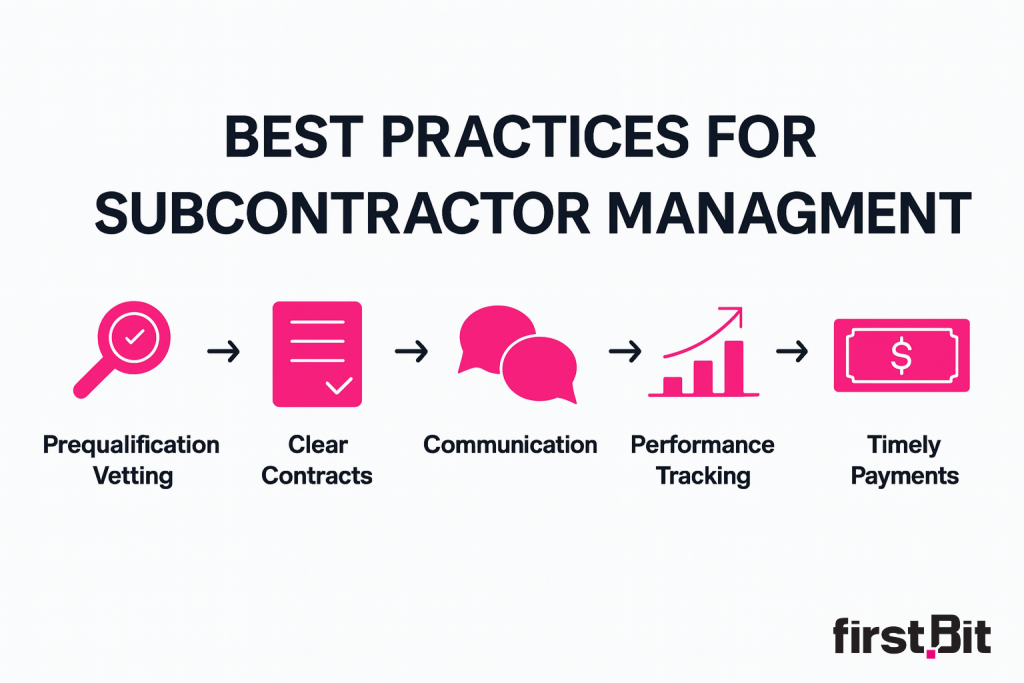
Best Practices for Subcontractor Management
Hiring skilled subcontractors is only half the job. Managing them properly keeps construction projects within budget and free from disputes. If you’re a construction manager, you already know how fast things can fall apart without clear communication and structure.
Here’s how to manage subcontractors effectively and reduce risks across all job phases:
5 best practices for subcontractor management
-
Prequalification and vetting. Before hiring a subcontractor, check safety records, financial stability, and past project references.
-
Clear contracts. Define scope, deliverables, milestones, payment terms, and compliance requirements. Vague contracts lead to disputes and delays.
-
Communication and collaboration. Clear communication prevents confusion and wasted work. Set up regular coordination meetings with lead trades and project dashboards to share real-time updates.
-
Performance tracking with KPIs. Monitor KPIs like defect rates, productivity, and schedule adherence. Use these metrics to evaluate subcontractor reliability.
-
Timely payments. Fast, accurate payment builds lasting relationships. Delays can strain trust and cause cash‑flow problems for subcontractors.
Pro tip: Create a subcontractor checklist before each project. Include license verification, insurance documents, scope of work, and payment terms. It helps you stay organized and avoid last-minute surprises.
FirstBit ERP: Streamlining Subcontractor Management from Start to Finish
Managing subcontractors as a construction manager can be demanding. You deal with contracts, compliance, payroll, and performance — all while trying to keep the project on track. But a smart ERP system integrates all those moving parts together into a single platform.
This is where
FirstBit ERP helps. Built specifically for the construction industry, it enables contractors to handle subcontractor operations efficiently, from onboarding to final settlement.
Here is how it makes subcontractor management easier:
Centralized Contract Tracking
Handling contracts across multiple projects can get complicated fast. The system keeps all subcontractor agreements in one system. It links them to tasks, payment stages, and timelines so nothing gets missed.
Employment contracts in FirstBit ERP
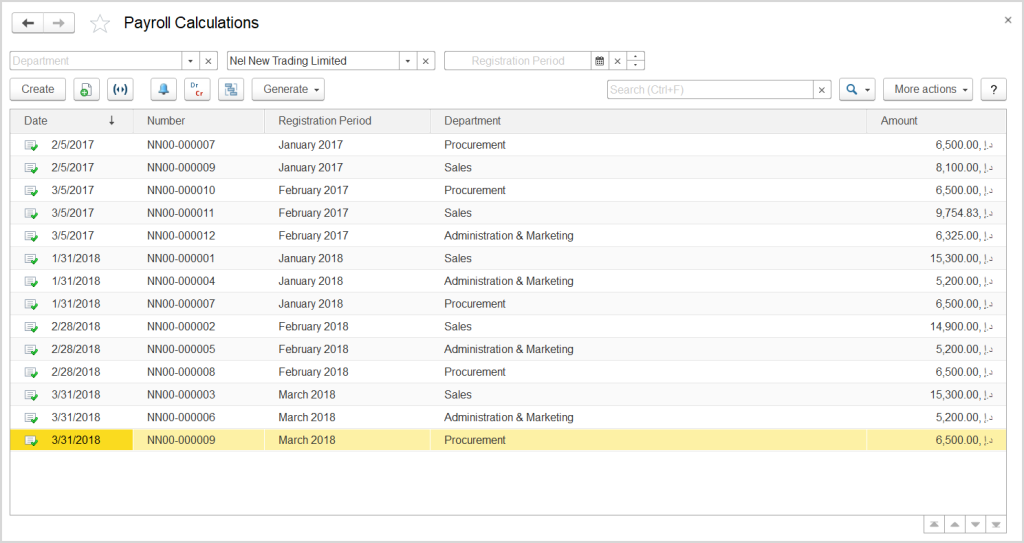
Automated Attendance and Payroll (WPS/MOHRE Compliance)
Record labor hours accurately using time cards synced to the payroll system. With
FirstBit, attendance records sync directly to payroll. It generates files that follow the UAE's MOHRE and WPS rules, so every worker gets paid on time.
Payroll calculations in FirstBit ERP
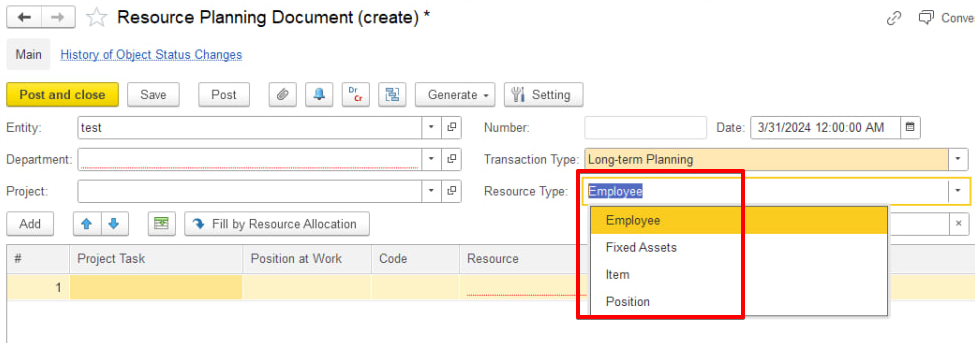
Integrated Resource Planning
Managing workers, materials, and equipment is easier when everything is coordinated through one platform.
FirstBit helps you give the right resources to the right crews, so there are no delays.
Resource planning document
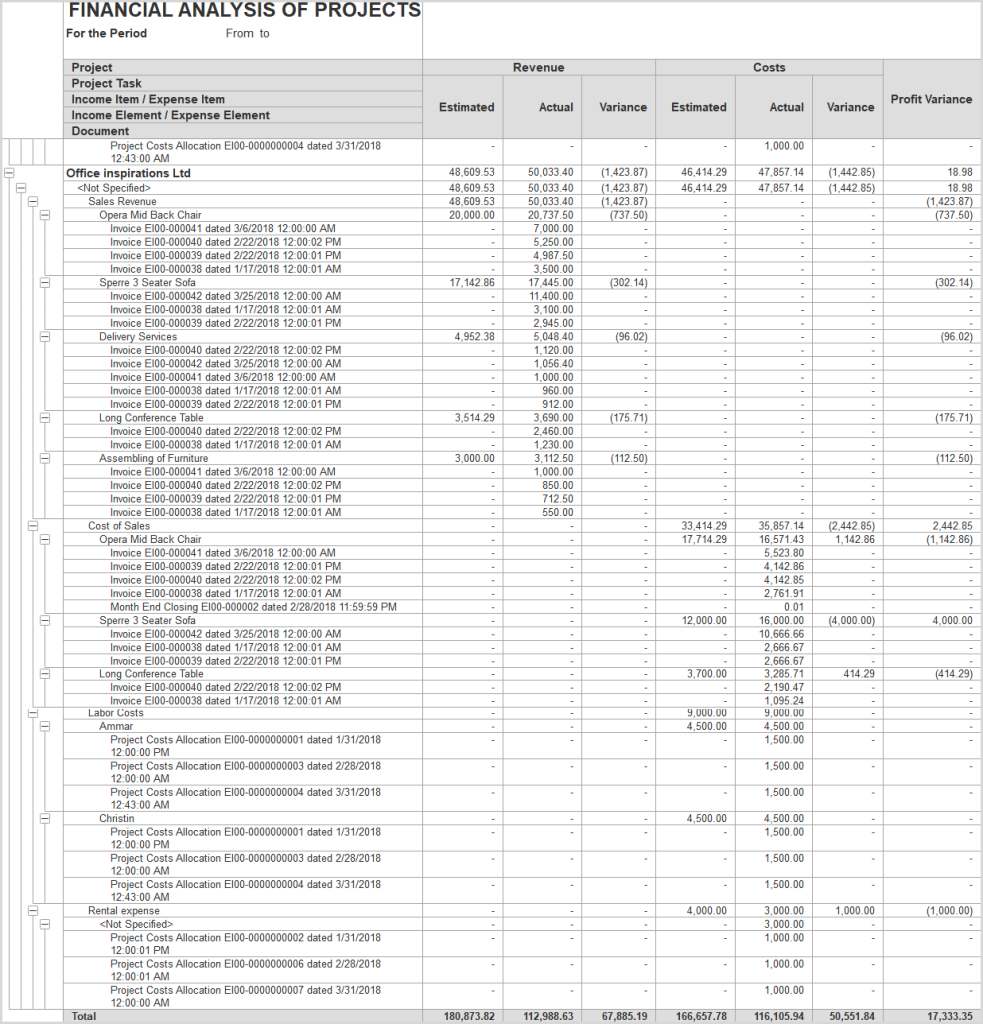
Project Financial Management
Control every expense linked to subcontractors.
FirstBit can track every cost — from initial quotations to final settlements — and updates reports automatically. This gives you a clear picture of your project budget.
Financial analysis in FirstBit ERP
Compliance and Document Management
Missing a compliance deadline can cause serious issues. The system safely stores all project documents in the cloud and sends reminders for renewals or approvals. This helps you stay organized and meet
UAE regulatory standards, without stress.
Control labor costs with FirstBit ERP
Request a demo
Conclusion
The work of the subcontractors in construction is important. They bring in the skills contractors and construction managers need to execute complex projects. However, even the best technical work can fail without proper coordination.
You need to coordinate them, monitor their work, and ensure that every trade fits into the main project plan. This requires good structure, clear communication, and the right tools.
FirstBit ERP offers exactly that. It automates several tasks that save hours of administrative work. It also connects all subcontractor data to core financial, HR, and project modules. This, in turn, helps you stay compliant with UAE labor laws, reduce paperwork, and build stronger, transparent relationships with every trade partner.
If you manage large or multi‑trade construction projects, now is the time to centralize subcontractor management.
Request a free demo and see how streamlined workflows turn coordination challenges into better project results.
FAQ
What is a subcontractor in construction?
A subcontractor in construction is a skilled worker or company hired to complete a specific part of a project, like plumbing, electrical work, or painting. They work under the main contractor and are responsible for delivering their assigned scope on time and to standard.
How is a subcontractor different from an employee?
Unlike employees who work directly for a company, a subcontractor in construction operates independently under a contract for a specific job or timeframe. They manage their own tools, schedule, and workforce.
Do subcontractors need a trade license in the UAE?
Yes, every subcontractor in construction must hold a valid UAE trade license to operate legally. This ensures compliance with local regulations.
How do you manage multiple subcontractors on one project?
Use clear contracts, structured communication, and performance tracking to manage multiple subcontractors efficiently. Tools like FirstBit ERP help coordinate schedules, monitor progress, and reduce conflicts between trades.
What documents are required to hire a subcontractor?
Important documents include a valid trade license, insurance certificates, labor approvals, safety credentials, and a signed subcontract agreement. These confirm that each subcontractor in construction is qualified, compliant, and ready to work on‑site.
Keep labor costs under control
Track attendance and pay only for actual work hours
Request a demo
Margaret Oboigbe
Contributing Author
Margaret Oboigbe combines industry knowledge with practical experience. She delivers content that empowers construction teams to improve performance, safety, and profitability across their projects.











'%3e%3cg%20clip-path='url(%23clip1_6548_6055)'%3e%3cpath%20d='M13.974%2015.6195C14.2724%2016.0185%2014.6532%2016.3487%2015.0905%2016.5876C15.5278%2016.8265%2016.0114%2016.9686%2016.5084%2017.0042C17.0055%2017.0398%2017.5043%2016.9681%2017.9712%2016.7939C18.4381%2016.6198%2018.8621%2016.3472%2019.2143%2015.9948L21.2994%2013.9098C21.9324%2013.2544%2022.2827%2012.3766%2022.2747%2011.4654C22.2668%2010.5543%2021.9014%209.68269%2021.257%209.03839C20.6127%208.39408%2019.7412%208.02862%2018.83%208.0207C17.9189%208.01278%2017.0411%208.36305%2016.3857%208.99606L15.1902%2010.1845M16.754%2014.2295C16.4555%2013.8305%2016.0747%2013.5003%2015.6374%2013.2614C15.2002%2013.0225%2014.7166%2012.8804%2014.2196%2012.8448C13.7225%2012.8092%2013.2237%2012.8809%2012.7568%2013.0551C12.2899%2013.2292%2011.8659%2013.5018%2011.5136%2013.8542L9.42861%2015.9392C8.7956%2016.5946%208.44534%2017.4724%208.45326%2018.3836C8.46117%2019.2947%208.82664%2020.1663%209.47094%2020.8106C10.1152%2021.4549%2010.9868%2021.8204%2011.898%2021.8283C12.8091%2021.8362%2013.6869%2021.4859%2014.3423%2020.8529L15.5308%2019.6645'%20stroke='%235F7896'%20stroke-width='1.39002'%20stroke-linecap='round'%20stroke-linejoin='round'/%3e%3c/g%3e%3c/g%3e%3crect%20x='0.438953'%20y='0.438953'%20width='28.9709'%20height='28.9709'%20rx='14.4855'%20stroke='%235F7896'%20stroke-width='0.877907'/%3e%3cdefs%3e%3cclipPath%20id='clip0_6548_6055'%3e%3crect%20width='29.8488'%20height='29.8488'%20rx='14.9244'%20fill='white'/%3e%3c/clipPath%3e%3cclipPath%20id='clip1_6548_6055'%3e%3crect%20width='16.6802'%20height='16.6802'%20fill='white'%20transform='translate(7.02344%206.58435)'/%3e%3c/clipPath%3e%3c/defs%3e%3c/svg%3e)