





According to McKinsey, 98% of construction megaprojects experience cost overruns, averaging 30% above the original budget[?].
What Is a BOQ in Construction
Miscommunication and poor project data account for 48% of all rework on construction jobsites[?].
Who Prepares a BOQ?
-
Review architectural and structural drawings. They evaluate all relevant dimensions, measurements, and quantities.
-
Measure quantities of materials and work. This task ensures accurate and consistent pricing across the board.
-
Describe items using standardized methods. This can include examples like SMM7 or NRM2.
-
Assign itemized costs or rates. These itemizations support competitive and transparent tendering.
Optimize procurement with FirstBit
When to Use a BOQ
-
Before tendering. This approach provides a more uniform basis for contractors to submit comparable bids.
-
During construction. A better strategy for progress measurement, interim payments, and evaluating variation orders.
-
At closeout. Works best for final account settlement and cost benchmarking.
Difference Between BOQ and BOM
| Aspect | BOQ | BOM |
| Scope | This will include materials, labor, and work descriptions. | This solely focuses on materials and components. |
| Usage | Tendering, cost control, and contract administration. | Mostly procurement and manufacturing. |
| Preparer | Quantity surveyors, architects, and engineers[?]. | Designers, engineers, and procurement teams. |
| Details | Detailed descriptions and measurements. | Material names, codes, and quantities. |
Pro Tip: A Bill of Materials (BOM) focuses only on the materials needed for a project, making it a valuable tool for forecasting procurement and cost control in a BOQ.
Different Types of BOQ
-
Firm BOQ. Fully priced and fixed, this is mainly used when drawings and specifications are complete. Contractors have their quote based on exact quantities, making it suitable for lump-sum contracts.
-
Detailed BOQ. This document breaks down each element with exact quantities and rates. It works best for complex projects where accuracy is hypercritical.
-
Approximate BOQ. This is more of an estimate based on preliminary designs or assumptions. It gives clients a cost prediction before final designs are available.
-
Preliminary BOQ. Used at the earliest stages of a project to set budgets before all details are known. It usually includes rough allowances and assumptions.
-
Elemental BOQ. This type organizes costs by building elements, such as foundations, walls, and roofs. It’s primarily useful for cost planning and benchmarking.
-
Provisional BOQ. This BOQ includes provisional sums for any work that can’t be precisely quantified at the tender stage (like rock excavation).
-
Trade BOQ. Organized by trade (for example, masonry or plumbing). This simplifies subcontracting and package management.
Pro Tip: Choose your BOQ type based on the project’s maturity and objectives. Starting with a preliminary BOQ secures early budget alignment, while switching to a detailed BOQ later locks in accurate costs and minimizes tender disputes.
Benefits of BOQ
-
Fair tendering. When all bidders price the same BOQ, comparisons are fairer and transparent. It levels the playing field by eliminating hidden costs and vague scopes.
-
Efficient planning. Linking quantities to timelines allows for more efficient resource planning and scheduling. Contractors can sequence more work with a higher level of precision.
-
Clarity and responsibility. BOQs define who is responsible, as well as what’s included and what’s not, reducing misunderstandings and avoiding disputes.
-
Budget oversight. By itemizing every component, a BOQ identifies high-cost areas early on. This helps to improve budgeting, cost tracking, and financial control throughout the project timeline.
-
Mitigating risk. A BOQ typically includes contingencies and provisional sums. This addition allows for more resilient project planning, reducing surprises and issues.
Streamline procurement with FirstBit
What To Include in a BOQ?
-
Tender form. For contractors to confirm their offer.
-
Total sum of all sections. Consolidates the project’s total value.
-
Preliminary items. Site establishment, temporary works, overheads.
-
Items of work. Detailed descriptions and quantities for each activity.
-
Cost of risk management. Contingencies and insurance provisions.
-
Provisional amount. For unknown or variable work.
-
Credits. For materials supplied by the client.
-
Daywork rates. For work outside normal scope, usually labor + materials.
-
Additional documents. Drawings, specifications, and appendices.
Why Contractors Choose FirstBit to Simplify BOQ Preparation
-
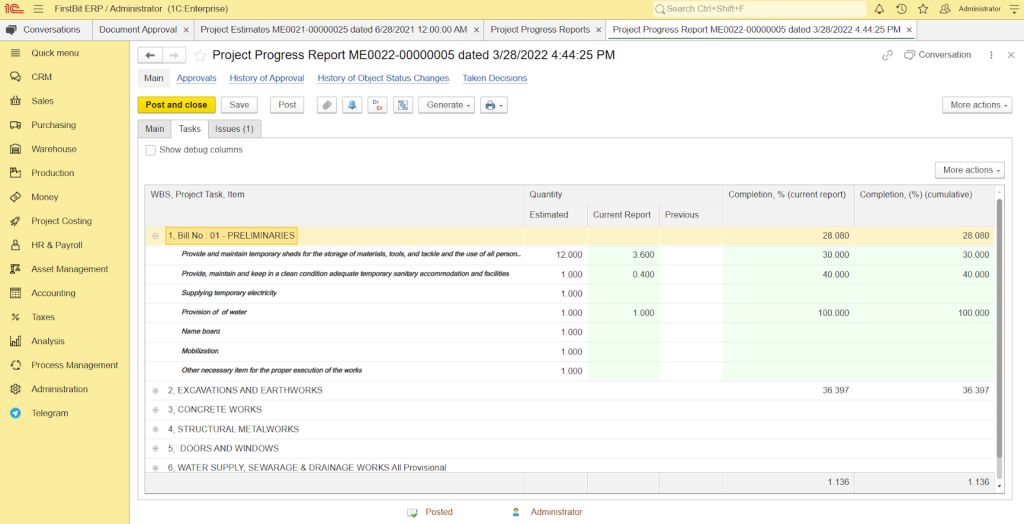
Centralized database. Store, access, and reuse across multiple jobs to ensure greater consistency and better version control.

-
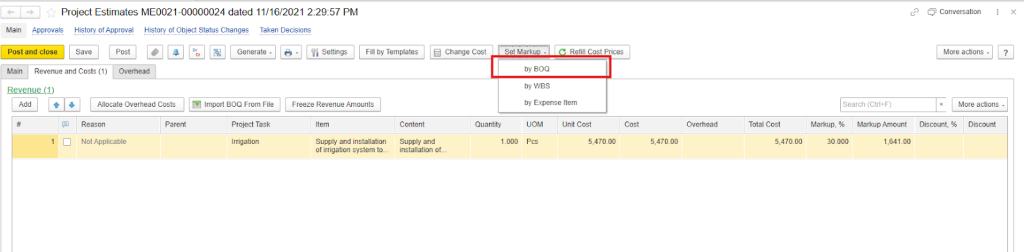
Automated calculations. Import data from design documents to generate BOQs with accurate measurements, minimizing human mistakes and errors.
-
Tender comparison tools. Easily compare bids based on the same BOQ structure, improving decision-making.
-
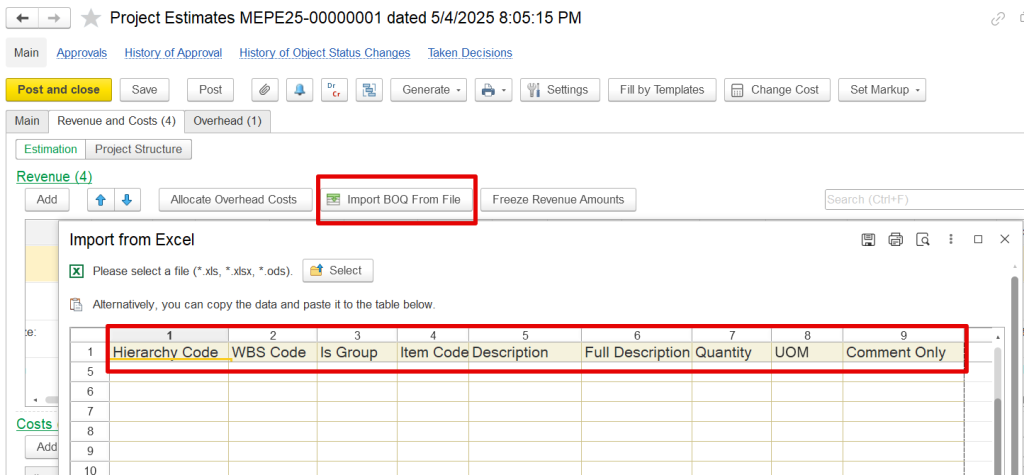
Integrated cost control. Link BOQs with budgets, timelines, and actuals to more effectively monitor performance throughout the project.
-
Customizable templates. Use predefined templates for different project types, making BOQ prep faster and more standardized.
Conclusion
FAQ
Optimize procurement with FirstBit

'%3e%3cg%20clip-path='url(%23clip1_6548_6055)'%3e%3cpath%20d='M13.974%2015.6195C14.2724%2016.0185%2014.6532%2016.3487%2015.0905%2016.5876C15.5278%2016.8265%2016.0114%2016.9686%2016.5084%2017.0042C17.0055%2017.0398%2017.5043%2016.9681%2017.9712%2016.7939C18.4381%2016.6198%2018.8621%2016.3472%2019.2143%2015.9948L21.2994%2013.9098C21.9324%2013.2544%2022.2827%2012.3766%2022.2747%2011.4654C22.2668%2010.5543%2021.9014%209.68269%2021.257%209.03839C20.6127%208.39408%2019.7412%208.02862%2018.83%208.0207C17.9189%208.01278%2017.0411%208.36305%2016.3857%208.99606L15.1902%2010.1845M16.754%2014.2295C16.4555%2013.8305%2016.0747%2013.5003%2015.6374%2013.2614C15.2002%2013.0225%2014.7166%2012.8804%2014.2196%2012.8448C13.7225%2012.8092%2013.2237%2012.8809%2012.7568%2013.0551C12.2899%2013.2292%2011.8659%2013.5018%2011.5136%2013.8542L9.42861%2015.9392C8.7956%2016.5946%208.44534%2017.4724%208.45326%2018.3836C8.46117%2019.2947%208.82664%2020.1663%209.47094%2020.8106C10.1152%2021.4549%2010.9868%2021.8204%2011.898%2021.8283C12.8091%2021.8362%2013.6869%2021.4859%2014.3423%2020.8529L15.5308%2019.6645'%20stroke='%235F7896'%20stroke-width='1.39002'%20stroke-linecap='round'%20stroke-linejoin='round'/%3e%3c/g%3e%3c/g%3e%3crect%20x='0.438953'%20y='0.438953'%20width='28.9709'%20height='28.9709'%20rx='14.4855'%20stroke='%235F7896'%20stroke-width='0.877907'/%3e%3cdefs%3e%3cclipPath%20id='clip0_6548_6055'%3e%3crect%20width='29.8488'%20height='29.8488'%20rx='14.9244'%20fill='white'/%3e%3c/clipPath%3e%3cclipPath%20id='clip1_6548_6055'%3e%3crect%20width='16.6802'%20height='16.6802'%20fill='white'%20transform='translate(7.02344%206.58435)'/%3e%3c/clipPath%3e%3c/defs%3e%3c/svg%3e)









See FirstBit ERP solutions in action
After the demo you will get a quotation for your company.