On a live jobsite, the plan changes before lunch. A delivery slips, an inspection fails, a crew arrives short, or weather wipes out a pour. The person who keeps that from turning into lost weeks is the superintendent, turning constant change into controlled progress.
If you’ve ever asked what is a construction superintendent, think of the role as the operational owner of the field. The construction superintendent coordinates the moving parts that drawings and schedules can’t fully predict, and the site superintendent makes sure today’s work sets up tomorrow’s work without creating rework or risk.
Safety is where that daily discipline shows up fastest. In 2023, the U.S. recorded 1,075 construction fatalities, including 421 fatal falls to a lower level, a reminder that prevention depends on what happens in the field each day [?] .
This article maps the role in practical terms: the core superintendent responsibilities on site, how daily decisions shape schedule, safety, and quality, and the real-world career path into the role. It also breaks down the skills, certifications, and habits that strengthen site superintendent duties as projects scale and documentation expectations rise.
What is a Construction Superintendent
A construction superintendent is the field lead responsible for running the jobsite day to day. The superintendent turns the project plan into daily execution by directing crews, coordinating trades, and removing constraints that slow production. If you’re asking what is a construction superintendent, it’s the person accountable for how the build actually happens on site.
A site superintendent manages the work environment as much as the work itself. That includes site access,
logistics, temporary facilities, and keeping workfaces ready so trades can stay productive
[?] . These site superintendent duties reduce idle time and help maintain a predictable flow of work across areas and phases.
Where the project manager owns contracts,
budget tracking, and client communication, the construction superintendent owns field execution, safety, and quality control in real time. Superintendent responsibilities center on aligning multiple subcontractors, verifying work against plans and specs, and ensuring the site stays inspection-ready.
How the superintendent role is different from nearby roles
Although all of these roles collaborate closely on a project, the superintendent position is distinct in its scope, authority, and responsibilities throughout the job site.
Let’s take a closer look at the differences in how each function contributes to project delivery:
Foreman leads one trade crew; focuses on task-level execution.
Assistant superintendent supports area control, punch lists, logistics, and daily reporting.
Construction superintendent/site superintendent coordinates the whole site across trades, sequence, safety, and quality.
Project manager manages commercial terms, cost control, client approvals, and overall project governance.
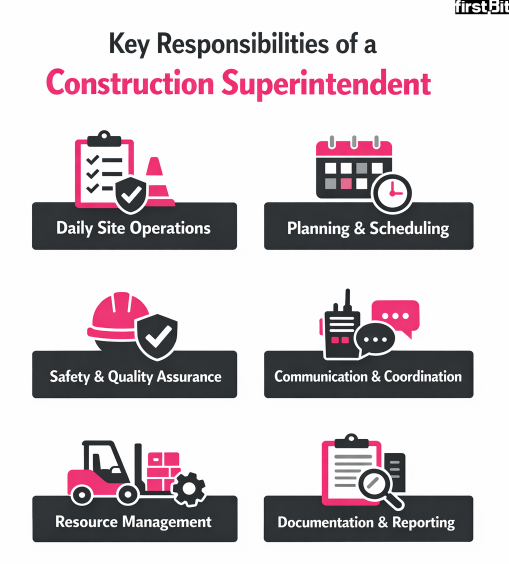
Key Responsibilities of a Construction Superintendent
Responsibilities of a construction superintendent
A construction superintendent owns the field execution that makes a schedule real. The superintendent aligns trades, verifies work quality, and keeps the site ready for inspections and next-step activities. These superintendent responsibilities are practical and repeatable, even on complex projects.
A site superintendent also acts as the early-warning system for delays, safety exposure, and rework risk. When a constraint appears to be missing information, late materials, or trade stacking, the construction superintendent is expected to correct it quickly, without creating downstream disruption.
In 2024, construction recorded 2.2 total recordable injury and illness cases per 100 full-time workers in the U.S. (BLS incidence rate). That baseline is why site superintendent duties often start with daily hazard control rather than end with paperwork [?] .
Daily Site Operations
Daily control is where the superintendent protects momentum. A good site superintendent verifies progress against the plan, checks workmanship in the active workface, and keeps logistics from blocking crews. This is the most visible part of the superintendent's responsibilities because it happens on the ground, every day.
Construction superintendents usually focus on several key daily tasks:
Planning and Scheduling
Planning turns “busy” into “productive” for the construction superintendent. The superintendent coordinates trade handoffs, sets realistic daily targets, and adjusts sequencing when constraints hit. Strong lookahead planning is one of the highest-value site superintendent duties on fast-moving projects.
Here is a brief list of tasks related to scheduling and coordination:
Coordinating tasks, crews, and subcontractors to maintain workflow
Adjusting schedules due to weather, delays, or material issues
Creating and managing lookahead schedules for upcoming work
Safety and Quality Assurance
Safety and quality enforcement depend on daily consistency, not occasional audits. The site superintendent makes expectations clear, verifies controls in the field, and corrects unsafe acts or poor workmanship immediately. These superintendent responsibilities reduce incidents and prevent defects from becoming rework.
To effectively carry out these safety and quality responsibilities, superintendents focus on several routine enforcement activities:
Communication and Coordination
A construction superintendent keeps information moving between field teams and project leadership. The superintendent coordinates with subcontractors, suppliers, and inspectors, and closes the loop on constraints like missing details or access issues. Clear updates are a core part of site superintendent duties, especially when priorities shift.
To ensure the smooth flow of information, superintendents engage in these regular communication activities:
Resource Management
Resource gaps show up as downtime, trade stacking, or rushed work. The superintendent tracks equipment readiness, delivery timing, and labor allocation so crews can stay productive. This is where superintendent responsibilities connect directly to schedule performance.
To manage these resource challenges effectively, superintendents focus on the following key tasks:
Tracking equipment, material deliveries, and labor allocation
Ensuring materials and tools are available as needed
Documentation and Reporting
Documentation protects the project when questions arise about progress, quality, or safety decisions. The site superintendent maintains daily logs and records that reflect what actually happened on site. Done well, this part of the site superintendent's duties supports claims prevention, smoother inspections, and cleaner closeout.
To keep records accurate and useful, superintendents regularly complete these tasks:
These responsibilities work best when they run as one system, not separate tasks. The construction superintendent uses daily control and lookahead planning to keep work flowing, then reinforces that plan through safety checks, quality verification, and tight communication. When one part slips, the impact shows up fast in schedule drift, rework, and missed inspections.
Stay ahead of delays
Monitor project progress with FirstBit
Request a demo
Daily Impact on Construction Projects
A site superintendent influences project results through daily field decisions that compound over weeks. The superintendent can’t eliminate every variable, but they can control how the site responds to change. That’s why superintendent responsibilities directly affect time, cost, safety exposure, and final quality.
A widely used industry benchmark estimates that rework can represent about 5% of total construction cost on many projects. That makes early detection and correction a direct financial lever for field leadership [?] .
Influence on Project Schedule
Schedule performance depends on daily sequencing, not the baseline plan. The construction superintendent protects critical activities by keeping prerequisites ready: access, materials, preceding trade completion, and inspection timing. When constraints appear, the superintendent re-sequences work to prevent downtime.
To implement these scheduling protections daily, superintendents engage in several targeted coordination activities:
Keeping workfaces ready for the next trade
Managing short-term constraints and daily priorities
Using lookahead plans to reduce stoppages
Contribution to Safety Culture
Safety culture becomes real through routine enforcement and visible leadership. A site superintendent sets expectations in daily briefings, corrects unsafe behavior immediately, and keeps controls in place as crews rotate. Consistency matters most during transitions like startups, handoffs, and end-of-day pushes.
To translate this commitment into everyday site behavior, superintendents focus on several visible safety actions:
Reinforcing safety routines and stop-work authority
Coordinating safe access, housekeeping, and site controls
Following up on corrective actions after observations
Quality Control Impact
Quality improves when verification happens before work gets covered or closed in. The superintendent confirms layout, embed locations, tolerances, and installation readiness, then checks completed work against plans and specs.
These site superintendent duties reduce rework by catching defects early:
Verifying readiness before critical installs
Inspecting completed work and closing punch items quickly
Aligning trade expectations on finishes and tolerances
Team and Crew Performance
Crew performance improves when the site runs predictably, and decisions arrive quickly. The construction superintendent reduces friction by clarifying priorities, preventing trade stacking, and resolving conflicts fast. That stability supports morale and productivity across multiple subcontractors.
To promote predictability and efficiency on-site, superintendents concentrate on these key performance-supporting actions:
Setting clear daily goals and coordinating handoffs
Removing blockers that waste labor hours
Managing conflicts without slowing production
Communication Bridge
Many delays start as information gaps between the field and the office. The superintendent connects site activity with project management, design clarification, and client expectations, so decisions match real conditions. Strong superintendent responsibilities here include timely RFIs and clear reporting.
To fulfill these communication and coordination responsibilities, superintendents engage in the following activities:
Keeping stakeholders aligned with real site conditions
Coordinating inspectors, approvals, and closeout requirements
Escalating risks early with options and impacts
How to Become a Construction Superintendent
Most people step into the superintendent role after proving they can run work in the field, not just understand it on paper. Contractors look for
judgment under pressure, trade coordination skills, and a track record of safe, on-spec execution. If you’re asking what is a construction superintendent from a career angle is, it’s often the first major “site-wide ownership” role.
Many construction superintendent career paths lead to Construction Manager roles. The U.S. Bureau of Labor Statistics reports a median annual wage of $106,980 (May 2024) for Construction Managers, with 9% projected job growth from 2024–2034 [?] .
Educational Pathways
A high school diploma or
GED can be enough to start in the field, especially through a trade route. Many superintendents add targeted coursework over time because superintendent responsibilities expand as projects grow. A bachelor’s degree in construction management, civil engineering, or a related field can accelerate promotion, but it’s not the only path.
Practical learning matters most early on: reading drawings, understanding means-and-methods, and learning how schedule decisions affect crews. A future site superintendent benefits from estimating basics and contract awareness, because field choices connect directly to cost and risk. This foundation supports real site superintendent duties like sequencing, inspections, and handoffs.
Experience and Career Paths
The most common route is field progression: laborer or apprentice → skilled trade → lead hand → foreman → assistant superintendent → construction superintendent. Each step increases scope, from one crew to multiple trades across zones, floors, or phases. The jump happens when you can plan tomorrow’s work while controlling today’s.
Another pathway runs through technical roles: project engineer, field engineer, or field coordinator roles that build strong documentation and coordination habits. People from this track often become an assistant site superintendent first, then take on larger areas. Either way, employers expect a clear grasp of superintendent responsibilities before handing over the full site.
Skills and Certifications
Hard skills for a construction superintendent include plan reading, QA/QC routines, scheduling logic, and safety standards. You also need basic fluency in field tech like RFIs, punch lists, and lookahead schedules, because these tools drive decisions. Strong site superintendent duties depend on disciplined follow-up, not just meetings.
Soft skills matter just as much: leadership, calm communication, conflict resolution, and fast problem-solving. Optional credentials can help you signal readiness, especially in safety and project controls. Common examples include OSHA training and other construction safety leadership programs aligned to your market and project type.
Moving from “experienced in the field” to an effective construction superintendent usually comes down to consistency. The superintendent role rewards people who can repeat good decisions daily: plan the next workface, document reality, enforce safety, and coordinate trade handoffs. Once you can deliver those site superintendent duties on larger scopes, advancement becomes a matter of scale.
Ensure timely and profitable project completion with FirstBit
Request a demo
Tips for Career Advancement as a Construction Superintendent
Career growth for a superintendent is rarely about one credential. It usually comes from expanding the size and complexity of work you can run without creating instability on site. The strongest promotions follow a track record of reliable delivery across core superintendent responsibilities.
BLS notes that construction managers need strong communication and leadership skills, and must coordinate with other workers and managers, the same capabilities contractors expect as a superintendent moves into larger scopes [?] .
Continuous Learning and Skill Development
Ongoing training helps a site superintendent stay effective as methods, codes, and field tools evolve. Prioritize learning that changes daily outcomes: lookahead planning, safety leadership, quality control routines, and modern scheduling methods. This makes site superintendent duties easier to execute under pressure.
Build technical range with topics that affect sequencing and risk. BIM coordination basics, prefabrication impacts, and sustainability requirements can change installation order and inspection readiness. A construction superintendent who connects design intent to field reality becomes more valuable on complex scopes.
Build Strong Leadership and Communication Skills
Leadership shows up in how you run mornings, handoffs, and conflicts on the jobsite. A strong superintendent sets clear expectations, corrects issues early, and keeps trade partners focused on the plan. This improves flow and protects the toughest superintendent responsibilities.
Documentation is also leadership because it protects decisions and clarifies facts. Clean daily logs, clear photo evidence, and disciplined follow-up build credibility with owners, inspectors, and project leadership. Strong writing supports the site superintendent's duties when disputes or scope questions appear.
Networking and Professional Connections
Networking matters because many opportunities come through trusted recommendations. Industry associations, safety councils, and peer groups help you stay current and visible to decision makers. This becomes useful when moving into senior superintendent roles or larger projects.
Mentorship can shorten the learning curve on higher-stakes work. An experienced construction superintendent or construction manager can help you anticipate sequencing traps, manpower swings, and client communication risks. That guidance improves field judgment and accelerates growth.
As projects scale, the biggest constraint for a superintendent is rarely effort; it’s time and clarity. When updates live in chats, paper notes, and separate files, the construction superintendent ends up reconciling versions instead of running the work. The goal of a system like an ERP is simple: reduce that coordination drag without adding admin load.
How FirstBit ERP Empowers Construction Superintendents to Drive Project Success
FirstBit ERP helps superintendents protect schedule and quality by reducing daily friction between site execution and office workflows. Instead of chasing updates across chats and spreadsheets, key needs can flow through one system: requisitions, purchasing, materials, subcontractors, progress reporting, equipment, attendance, and cost allocation. This improves clarity and response time when the plan changes mid-day.
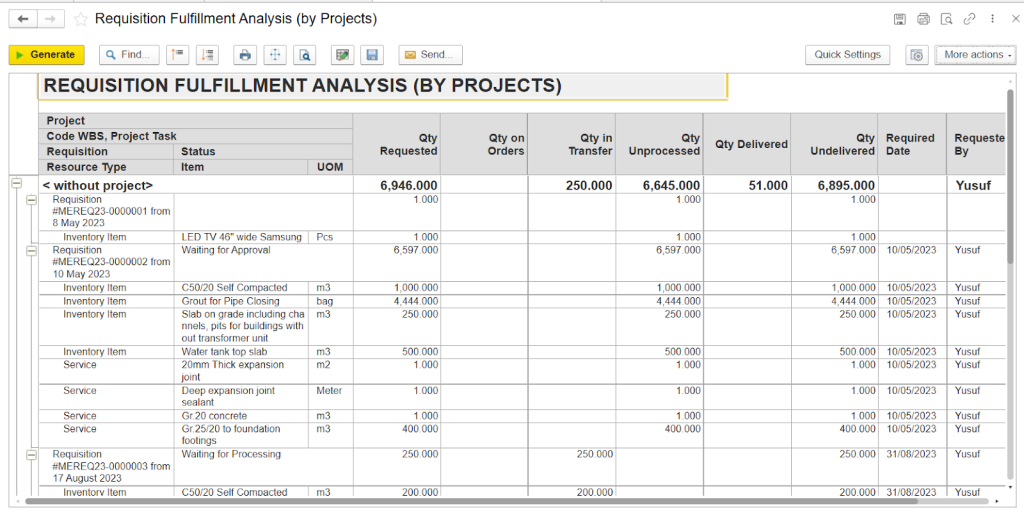
Requisition fulfillment in Firsbit ERP
Procurement control (RFQs → supplier comparison → purchase orders). Standardised procurement steps make order status clearer: what’s requested, approved, ordered, and delayed. That helps superintendents re-sequence work using facts and timelines, not assumptions.
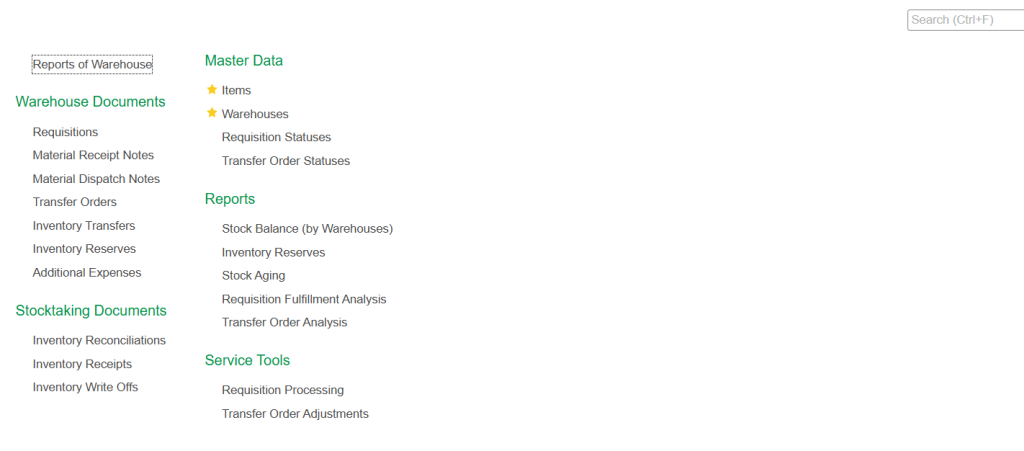
Materials and warehouse visibility that support workface readiness. Materials management and warehouse tracking reduce “it’s on-site but not available” situations. Better visibility supports cleaner trade handoffs and fewer stoppages caused by missing items.
Warehouse tab in FirstBit ERP
Subcontractor coordination is tied to project workflows. With subcontractor management inside the same system, coordination is less dependent on scattered chats. It supports clearer handoffs, fewer clashes, and faster alignment when priorities shift.
Progress reporting that reflects field reality. Structured project progress reporting helps superintendents communicate site status consistently to PMs and leadership. That reduces repeated status calls and supports earlier escalation when production drifts.
Equipment tracking that reduces productivity losses. Tracking equipment availability and usage helps avoid last-minute shortages that stall crews. Superintendents can plan work more reliably and reduce disruption from equipment conflicts.
Attendance tracking that improves daily planning. Reliable attendance tracking helps superintendents plan based on actual manpower, not expected headcount. It also strengthens accountability when productivity issues need quick diagnosis.
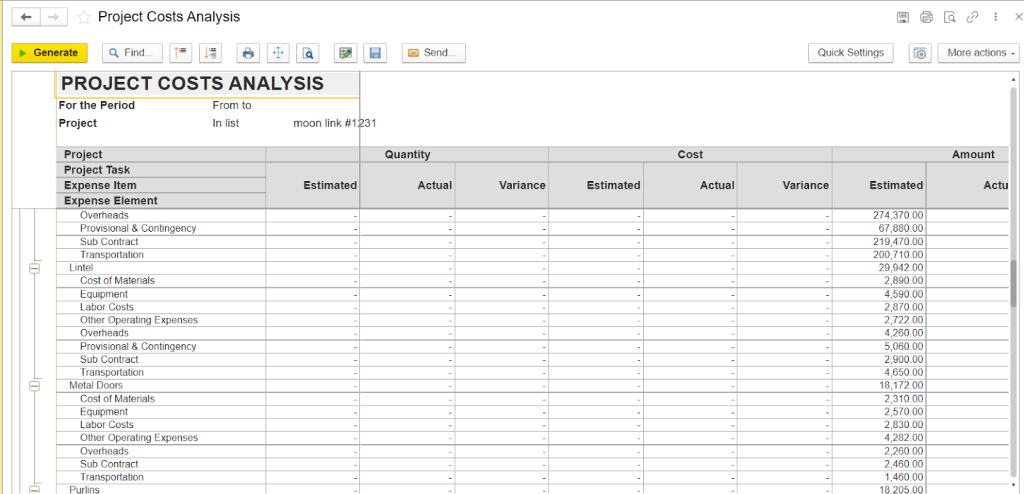
Project cost allocation that links field choices to outcomes. Project-level cost allocation helps the team see the cost impact of field changes sooner. It supports better decisions around sequencing, waste control, and rework prevention.
Project cost analysis in FirstBit ERP
For superintendents, the goal isn’t more admin, it’s fewer blind spots. When requisitions, materials, subcontractors, progress reporting, equipment, and attendance sit in one operational system, the site can respond faster and with less confusion. That means steadier workflow, fewer preventable delays, and stronger control over safety and quality as the project scales.
Achieve peak productivity on site
Manage teams, equipment, and materials in FirstBit
Request a demo
Conclusion
A strong construction superintendent brings order to a jobsite that changes by the hour. The superintendent doesn’t “finish” the work themselves, but they create the conditions where crews can finish it safely, correctly, and without avoidable delays. That practical control is what makes the role valuable across project types.
For contractors, the takeaway is simple: treat the site superintendent role as an operating system, not a personality. When superintendent responsibilities are supported with clear authority, reliable information, and disciplined routines, project performance becomes more predictable. That predictability is what owners notice, and what teams can repeat from one project to the next.
FAQ
What is a construction superintendent?
A construction superintendent oversees day-to-day jobsite execution. The superintendent coordinates crews and subcontractors, enforces safety and quality, and keeps work aligned with the schedule. In short, what is a construction superintendent: the person responsible for how the build runs on site.
Is a superintendent higher than a project manager?
Not typically. A construction superintendent usually reports to the project manager (or construction manager), who owns the commercial side, client coordination, and overall governance. The superintendent oversees field execution and leads site superintendent duties on the jobsite.
What is the difference between a site supervisor and a site superintendent?
Titles vary by contractor, but the scope is the key difference. A site supervisor often leads a specific crew or area, while a site superintendent coordinates the full site across trades, sequence, safety, and quality. The superintendent's responsibilities are broader and usually include site-wide planning and reporting.
What is the role of a site superintendent?
A site superintendent runs daily site operations to keep work safe, on track, and built to spec. Site superintendent duties include coordinating trades, managing logistics, verifying quality, and closing constraints that block progress. They also maintain daily records that support inspections and issue resolution.
Stay ahead of delays
Request a demo
Umme Aimon Shabbir
Editor at First Bit
Aimon brings a deep understanding of the modern construction business to her articles by providing practical content.












'%3e%3cg%20clip-path='url(%23clip1_6548_6055)'%3e%3cpath%20d='M13.974%2015.6195C14.2724%2016.0185%2014.6532%2016.3487%2015.0905%2016.5876C15.5278%2016.8265%2016.0114%2016.9686%2016.5084%2017.0042C17.0055%2017.0398%2017.5043%2016.9681%2017.9712%2016.7939C18.4381%2016.6198%2018.8621%2016.3472%2019.2143%2015.9948L21.2994%2013.9098C21.9324%2013.2544%2022.2827%2012.3766%2022.2747%2011.4654C22.2668%2010.5543%2021.9014%209.68269%2021.257%209.03839C20.6127%208.39408%2019.7412%208.02862%2018.83%208.0207C17.9189%208.01278%2017.0411%208.36305%2016.3857%208.99606L15.1902%2010.1845M16.754%2014.2295C16.4555%2013.8305%2016.0747%2013.5003%2015.6374%2013.2614C15.2002%2013.0225%2014.7166%2012.8804%2014.2196%2012.8448C13.7225%2012.8092%2013.2237%2012.8809%2012.7568%2013.0551C12.2899%2013.2292%2011.8659%2013.5018%2011.5136%2013.8542L9.42861%2015.9392C8.7956%2016.5946%208.44534%2017.4724%208.45326%2018.3836C8.46117%2019.2947%208.82664%2020.1663%209.47094%2020.8106C10.1152%2021.4549%2010.9868%2021.8204%2011.898%2021.8283C12.8091%2021.8362%2013.6869%2021.4859%2014.3423%2020.8529L15.5308%2019.6645'%20stroke='%235F7896'%20stroke-width='1.39002'%20stroke-linecap='round'%20stroke-linejoin='round'/%3e%3c/g%3e%3c/g%3e%3crect%20x='0.438953'%20y='0.438953'%20width='28.9709'%20height='28.9709'%20rx='14.4855'%20stroke='%235F7896'%20stroke-width='0.877907'/%3e%3cdefs%3e%3cclipPath%20id='clip0_6548_6055'%3e%3crect%20width='29.8488'%20height='29.8488'%20rx='14.9244'%20fill='white'/%3e%3c/clipPath%3e%3cclipPath%20id='clip1_6548_6055'%3e%3crect%20width='16.6802'%20height='16.6802'%20fill='white'%20transform='translate(7.02344%206.58435)'/%3e%3c/clipPath%3e%3c/defs%3e%3c/svg%3e)