





How to Select the Best FTA-Approved E-Invoicing Service Provider (ASP) in the UAE?
03 Mar 2026 • 13 min read

Umme Aimon Shabbir
Editor at First Bit


As electronic invoicing becomes mandatory under the evolving e-invoicing UAE FTA framework, selecting the right e-invoicing service provider is no longer a technical decision. It is a compliance strategy that directly affects reporting accuracy, operational continuity, and exposure to penalties under UAE e-invoicing.
From accreditation status to system reliability, the choice of an ASP for e-invoicing in the UAE will determine whether your business meets FTA requirements smoothly or faces avoidable delays and risk. With enforcement approaching, onboarding the wrong provider could result in operational disruption or even UAE e-invoicing fines in 2026.
This guide outlines how to evaluate, shortlist, and select an FTA-approved provider with clarity. The focus is practical: compliance filters, technical criteria, risk factors, and how each decision connects to long-term readiness under the national electronic invoicing framework.
Who is an E-Invoicing Service Provider in the UAE?
An e-invoicing service provider in the UAE is a third-party platform or system that facilitates the generation, validation, and transmission of structured electronic invoices. These providers support businesses in meeting e-invoicing UAE FTA standards.
Under the national framework, service providers must handle invoice data in structured formats such as XML or JSON. They validate compliance with technical rules before invoices are transmitted to buyers or reported to authorities.
For businesses affected by UAE e-invoicing penalties, choosing a provider with strong technical compliance reduces risk. A compliant service provider ensures that invoice data adheres to formatting, timing, and reporting requirements defined by the FTA.
Who is ASP for E-Invoicing in the UAE?
An ASP for e-invoicing in the UAE refers to an Accredited Service Provider authorized to transmit structured invoice data within the national electronic invoicing framework. These providers act as intermediaries between businesses, buyers, and government reporting systems.
Instead of sending invoices directly to customers, businesses transmit them through an ASP. The provider validates the invoice structure, ensures compliance with e-invoicing UAE FTA standards, and securely routes the invoice through the approved network.
For businesses subject to UAE e-invoicing penalties, the ASP becomes a critical compliance layer. Errors in formatting, transmission, or validation can expose companies to regulatory risk and potential UAE e-invoicing fines in 2026.
Pre-Approved vs Accredited Service Provider in the UAE
Under the UAE framework, service providers may initially appear as pre-approved before receiving full accreditation. Pre-approved providers have met early technical criteria but must complete further regulatory validation before operating fully within the system.
Accredited providers are officially recognized under FTA rules and listed by authorities as compliant participants in the national electronic invoicing network. Businesses should confirm this status before onboarding any e-invoicing service provider.
The UAE Ministry of Finance confirmed that the national e-invoicing system will follow a Peppol-based 5-corner model, a framework already used in multiple digital tax systems worldwide[?].
Because ASPs serve as the core connection point in this model, their accreditation status directly affects invoice validation and reporting. Choosing the correct ASP for e-invoicing in the UAE, therefore, becomes a foundational compliance decision.
ERP tailored to UAE legislation
Navigate UAE construction laws effortlessly
Request a demo
Core Evaluation Criteria for Selecting an E-Invoicing Service Provider

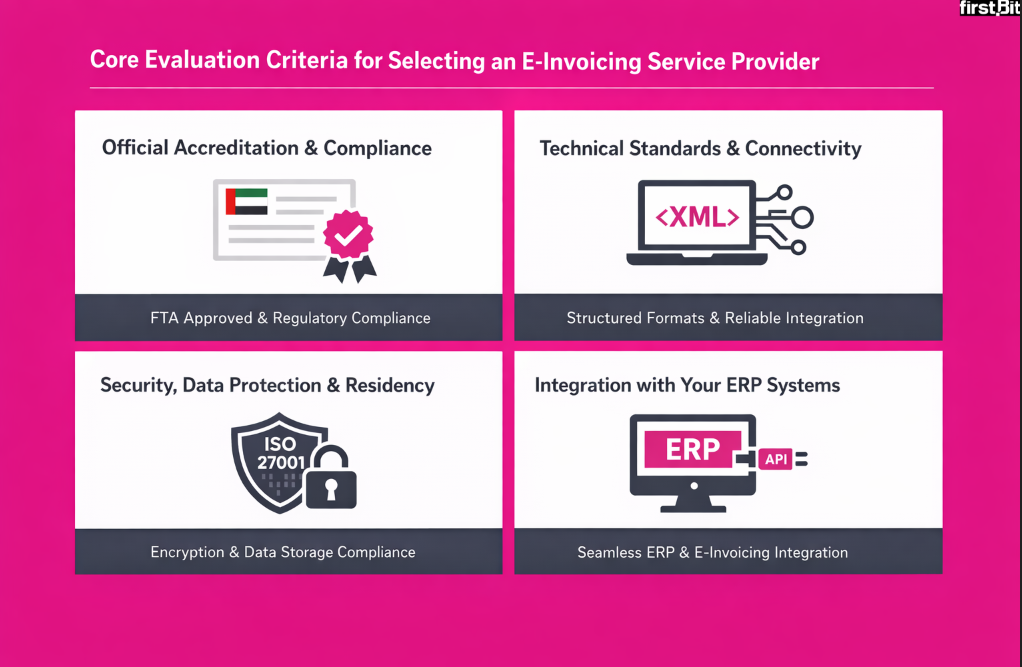
Evaluation criteria for selecting an e-invoicing service provider
Selecting an e-invoicing service provider is a strategic compliance decision under the e-invoicing UAE FTA framework. The right ASP ensures invoices are validated, transmitted, and reported according to official technical standards. This directly affects exposure to UAE e-invoicing penalties once enforcement begins.
Before comparing providers, businesses should evaluate a few critical factors. These include accreditation status, technical capability, data security, and ERP compatibility. Each of these elements determines how smoothly an organization can operate within the national electronic invoicing framework.
Understanding these criteria early helps businesses avoid operational disruption. It also reduces the likelihood of invoice transmission errors that could trigger UAE e-invoicing fines in 2026 once the system becomes mandatory.
Official Accreditation and Compliance
The first verification step is confirming that the provider appears on the official Ministry of Finance or FTA list. Accreditation confirms that the provider meets regulatory and technical standards under the e-invoicing UAE FTA framework.
Businesses relying on non-accredited providers may face compliance risks. If invoice data fails validation or transmission requirements, companies could become exposed to UAE e-invoicing penalties once enforcement begins.
Technical Standards and Connectivity
A reliable ASP for e-invoicing in the UAE must support the national electronic invoicing framework. This includes compatibility with structured invoice formats and secure data transmission protocols.
Providers should support standardized formats such as XML and ensure connectivity with the infrastructure used for electronic invoicing exchange. Strong technical compatibility reduces the risk of validation errors.
Security, Data Protection, and Residency
Because electronic invoicing involves sensitive financial data, security standards must be carefully reviewed. Encryption protocols and cybersecurity certifications, such as ISO 27001, help protect invoice data.
Businesses should also evaluate data storage policies and regulatory requirements. Proper controls ensure invoice records remain accessible for audits and regulatory verification.
Integration with Your ERP Systems
An e-invoicing service provider should integrate smoothly with existing ERP or accounting systems. Weak integration can create manual processes that increase the risk of reporting errors.
Providers offering APIs or plug-ins allow invoices to move directly from ERP systems into the electronic invoicing network. This improves efficiency and supports compliance with evolving FTA requirements.
Practical Selection Checklist for ASP for E-Invoicing in the UAE
Selecting an ASP for e-invoicing in the UAE should follow a structured evaluation process. Businesses that treat provider selection as a technical purchase often overlook compliance and workflow risks under the e-invoicing UAE FTA framework.
A practical checklist helps organizations assess internal readiness, compare providers objectively, and test operational compatibility. This reduces implementation delays and lowers the likelihood of future UAE e-invoicing penalties.
Pre-Selection Steps
Before engaging any e-invoicing service provider, companies should first review internal invoicing workflows. This includes identifying how invoices are created, approved, transmitted, and archived.
Key preparation steps include:
- Assess ERP readiness. Confirm that your ERP or accounting system can generate the structured invoice data required for electronic invoicing.
- Map invoicing workflows. Document approval chains, billing cycles, and data fields required for VAT reporting.
- Identify compliance gaps. Review whether current invoice formats align with FTA requirements for structured data.
Shortlisting Providers
Once internal readiness is assessed, businesses can begin evaluating potential e-invoicing service providers. Shortlisting should focus on regulatory credibility, technical capability, and operational support.
Key evaluation points include:
- Accreditation status. Confirm the provider appears on the official list under the e-invoicing UAE FTA framework.
- Technical compatibility. Ensure the provider supports structured invoice formats and secure transmission protocols.
- Support and onboarding services. Strong implementation support reduces delays that could eventually lead to UAE e-invoicing fines in 2026.
Testing and Pilot Implementation
Before committing to full deployment, businesses should conduct pilot integrations with shortlisted providers. A controlled test environment allows teams to verify invoice validation, transmission, and ERP connectivity.
Pilot testing also helps identify operational bottlenecks or workflow changes required for electronic invoicing adoption. Addressing these issues early helps reduce compliance risks and implementation delays.
A structured pilot phase ensures that the chosen e-invoicing service provider can operate reliably within existing financial systems. This step provides confidence that the provider can support compliance under the evolving e-invoicing UAE FTA framework.
Navigate UAE construction laws with an ERP built for the UAE market
Request a demo
UAE E-Invoicing Penalties for Non-Compliance
As electronic invoicing becomes mandatory, businesses that fail to comply with the e-invoicing UAE FTA framework may face regulatory consequences. These penalties are designed to ensure timely adoption and accurate reporting within the national digital tax system.
For companies selecting an ASP for e-invoicing in the UAE, understanding these penalties helps highlight the importance of system reliability and compliance support. Choosing the wrong provider can increase exposure to UAE e-invoicing penalties once enforcement begins.
The following table summarizes key UAE e-invoicing fines 2026 associated with delayed implementation or operational failures.
| Violation | Penalty |
| Delayed implementation of the e-invoicing system or failure to appoint an accredited ASP | AED 5,000 for each month (or part of a month) of delay |
| Failure to issue or transmit an e-invoice within the required timeframe | AED 100 per invoice or credit note, capped at AED 5,000 per month |
| Failure to notify the FTA or ASP of system outages or malfunctions | AED 1,000 per day |
| Failure to update registered data with ASP or FTA | AED 1,000 per day |
Understanding these potential penalties helps businesses evaluate ASP capabilities more carefully. Reliable validation, transmission, and reporting systems play an important role in avoiding UAE e-invoicing penalties once the framework becomes fully operational.
Key UAE E-Invoicing Fines in 2026 That Impact ASP Requirements
The penalties outlined above highlight how operational failures in the electronic invoicing process can quickly become financial risks. Delays in implementation, incorrect invoice transmission, or system outages may trigger UAE e-invoicing penalties under the FTA framework.
For businesses selecting an ASP for e-invoicing in the UAE, these fines emphasize the importance of provider reliability. A service provider that cannot validate or transmit invoices correctly could expose companies to recurring UAE e-invoicing fines in 2026.
Understanding how these penalties arise helps organizations evaluate ASP capabilities more carefully. Strong compliance controls within an e-invoicing service provider reduce the likelihood of system errors and reporting delays.
Why UAE E-Invoicing Penalties Matter When Choosing an ASP
Because several penalties relate to operational delays or system failures, provider capability becomes a key risk factor. Businesses should therefore evaluate ASP functionality not only for convenience but also for compliance reliability.
Key considerations include:
- Timely onboarding support. Delayed system implementation can lead to UAE e-invoicing fines in 2026, making structured onboarding support essential.
- Real-time compliance validation. Strong validation tools ensure invoices meet the e-invoicing UAE FTA formatting rules before transmission.
- System monitoring and outage management. Reliable providers monitor system health and support required notifications to the FTA when failures occur.
- Data management and update support. Effective data governance tools help businesses maintain accurate records required under electronic invoicing rules.
Selecting an ASP that supports these controls reduces operational risk under the national framework. For businesses transitioning to electronic invoicing, provider capability directly influences long-term compliance stability.
Stay fully compliant with the latest UAE laws and regulations
Request a demo
FirstBit ERP and FTA-Approved E-Invoicing: Aligning Your Business for Seamless Compliance
As the e-invoicing UAE FTA framework moves toward full implementation, businesses must ensure their internal systems can support structured invoice data and regulatory reporting. ERP readiness plays a central role in how smoothly companies connect with an ASP for e-invoicing in the UAE and comply with the national electronic invoicing framework.
For organizations evaluating an e-invoicing service provider, the ERP environment must support accurate invoice generation, VAT configuration, and reliable financial record management. These capabilities help businesses reduce operational risks associated with UAE e-invoicing penalties.
- Structured Invoice Data Management. FirstBit ERP supports configurable invoice fields that capture VAT, supplier, and transaction details required for structured electronic invoicing workflows.
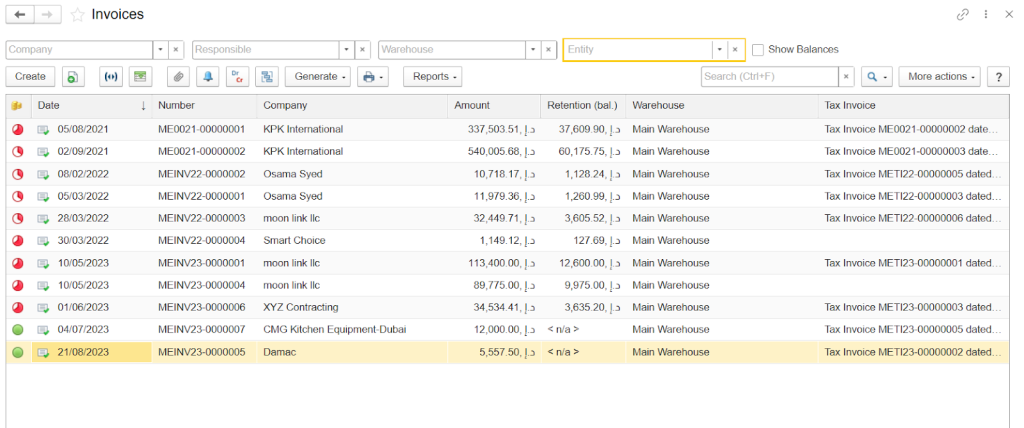
Invoices in FirstBit ERP
- VAT Configuration and Tax Reporting Controls. The system allows businesses to configure VAT rates and maintain tax-compliant reporting structures aligned with FTA requirements.
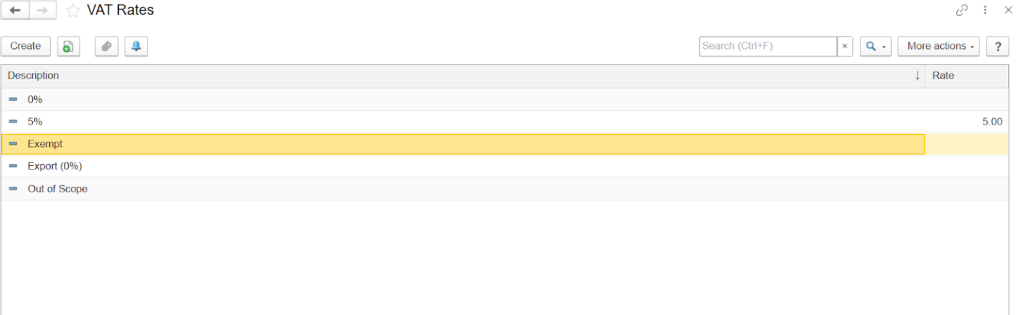
VAT rates in FirstBit ERP
- Financial Audit Trails and Record Tracking. Transaction histories and document logs are recorded within the system, supporting compliance documentation and audit readiness.
- ERP Integration Readiness with ASP Platforms. ERP environments can integrate with external service providers, allowing invoices to move from internal accounting systems into the electronic invoicing network.
Full e-invoicing functionality will be available in line with the July 2026 regulatory rollout. In the meantime, the system’s existing financial and reporting controls support structured data management and process alignment ahead of mandatory compliance.
Conclusion
The transition to electronic invoicing in the UAE introduces a new layer of operational discipline for businesses. As the regulatory framework evolves, selecting the right e-invoicing service provider becomes an important part of managing compliance and financial reporting processes.
For many organizations, the decision goes beyond technical features. Accreditation status, system reliability, and integration capability all influence how smoothly businesses can operate within the e-invoicing UAE FTA framework.
Companies that approach ASP selection with a structured evaluation process are better positioned to manage regulatory expectations. In an environment where UAE e-invoicing penalties and UAE e-invoicing fines 2026 may apply, careful provider selection becomes an important step toward maintaining stable and compliant financial operations.
Meet all of the UAE legal requirements with FirstBit ERP
Request a demo
FAQ
What is ASP in an e-invoice?
Who is the ASP for e-invoicing in the UAE?
Is e-invoicing mandatory in the UAE in 2026?
What is the penalty for e-invoicing?
How to invoice in the UAE?

Umme Aimon Shabbir
Editor at First Bit
Share this article
'%3e%3cg%20clip-path='url(%23clip1_6548_6055)'%3e%3cpath%20d='M13.974%2015.6195C14.2724%2016.0185%2014.6532%2016.3487%2015.0905%2016.5876C15.5278%2016.8265%2016.0114%2016.9686%2016.5084%2017.0042C17.0055%2017.0398%2017.5043%2016.9681%2017.9712%2016.7939C18.4381%2016.6198%2018.8621%2016.3472%2019.2143%2015.9948L21.2994%2013.9098C21.9324%2013.2544%2022.2827%2012.3766%2022.2747%2011.4654C22.2668%2010.5543%2021.9014%209.68269%2021.257%209.03839C20.6127%208.39408%2019.7412%208.02862%2018.83%208.0207C17.9189%208.01278%2017.0411%208.36305%2016.3857%208.99606L15.1902%2010.1845M16.754%2014.2295C16.4555%2013.8305%2016.0747%2013.5003%2015.6374%2013.2614C15.2002%2013.0225%2014.7166%2012.8804%2014.2196%2012.8448C13.7225%2012.8092%2013.2237%2012.8809%2012.7568%2013.0551C12.2899%2013.2292%2011.8659%2013.5018%2011.5136%2013.8542L9.42861%2015.9392C8.7956%2016.5946%208.44534%2017.4724%208.45326%2018.3836C8.46117%2019.2947%208.82664%2020.1663%209.47094%2020.8106C10.1152%2021.4549%2010.9868%2021.8204%2011.898%2021.8283C12.8091%2021.8362%2013.6869%2021.4859%2014.3423%2020.8529L15.5308%2019.6645'%20stroke='%235F7896'%20stroke-width='1.39002'%20stroke-linecap='round'%20stroke-linejoin='round'/%3e%3c/g%3e%3c/g%3e%3crect%20x='0.438953'%20y='0.438953'%20width='28.9709'%20height='28.9709'%20rx='14.4855'%20stroke='%235F7896'%20stroke-width='0.877907'/%3e%3cdefs%3e%3cclipPath%20id='clip0_6548_6055'%3e%3crect%20width='29.8488'%20height='29.8488'%20rx='14.9244'%20fill='white'/%3e%3c/clipPath%3e%3cclipPath%20id='clip1_6548_6055'%3e%3crect%20width='16.6802'%20height='16.6802'%20fill='white'%20transform='translate(7.02344%206.58435)'/%3e%3c/clipPath%3e%3c/defs%3e%3c/svg%3e)


Related articles


See all




Related articles

Regulatory Changes in the UAE in 2026 and How FirstBit ERP Helps Construction Companies Stay Compliant

E-Invoicing in the UAE: The Ultimate Guide to Key 2026 Requirements for Construction Companies

Construction Law in the UAE: 2026 Legal Framework, The Essentials of Contracts, and Dispute Resolution
See all

See FirstBit ERP solutions in action
Discover how our system solves the unique challenges of contractors in a personalized demo.
After the demo you will get a quotation for your company.
After the demo you will get a quotation for your company.