Facility management is increasingly central to how construction assets perform in the UAE. As projects become larger and more complex, structured FM practices help ensure buildings remain safe, efficient, and financially sustainable long after handover.
Facilities management in UAE construction has moved beyond routine upkeep. It now supports operational resilience, regulatory compliance, sustainability targets, and
long-term asset planning across residential, commercial, and mixed-use developments.
According to JLL’s Global State of Facilities Management Report 2025, 84% of FM leaders identify cost and operational pressures as key drivers behind the expanding strategic role of facility management [?] .
Quality facility management also reduces risk during post-handover phases. With tighter regulations and higher investor expectations, contractors and developers increasingly embed FM thinking earlier in the construction lifecycle.
What is Facility Management
Facility management refers to the structured coordination of people, processes, and physical assets to ensure buildings operate effectively throughout their lifecycle
[?] . When professionals ask what is facility management, the answer includes technical maintenance as well as operational planning, safety, and service delivery.
Facility management meaning extends beyond reactive repairs. It focuses on preventing failures, optimising asset performance, and aligning building operations with business objectives. Organisations increasingly prioritise FM early in the building lifecycle to improve long-term outcomes.
In practical terms, facilities management in UAE projects connects construction outcomes with long-term operational performance. It ensures that assets handed over by contractors remain functional, compliant, and financially sustainable over time.
Studies show that 60–80% of a building’s total life-cycle costs occur during operations and maintenance, highlighting why FM is crucial to long-term financial planning [?] .
Core Components of Facility Management
-
Hard FM. Management of physical infrastructure such as HVAC, MEP systems, elevators, and structural maintenance.
-
Soft FM. Services supporting occupants, including cleaning, security, waste management, and concierge functions.
-
Strategic FM. Lifecycle planning, compliance management, sustainability initiatives, energy optimisation, and performance reporting.
Facility Management Meaning in the UAE Construction
Facility management meaning in the UAE construction sector is shaped by the region’s climate, regulatory expectations, and large-scale development activity. Buildings operate in harsh conditions, which makes preventive maintenance and asset protection essential from the earliest stages of handover.
Facilities management in UAE projects also plays a central role during the transition from construction to operations. FM teams often participate early to validate asset data, review installation quality, and prepare maintenance plans that minimise defects during the post-handover period.
Facility management Dubai and other emirates emphasizes sustainability, energy optimisation, and strong user experience. These priorities push FM providers to integrate digital tools, performance monitoring, and compliance tracking to support long-term asset value.
Key UAE-specific drivers include:
-
Climate exposure. Extreme heat and humidity place continuous strain on HVAC, MEP, and façade systems.
-
Regulatory oversight. Dubai Municipality, Abu Dhabi Civil Defence, and other authorities require strict compliance with safety, hygiene, and building operations.
-
Market expectations. Owners focus on reliability, cost control, and occupant comfort across mixed-use, residential, and commercial assets.
Benefits of Facility Management in the Construction Industry
Facility management delivers measurable value across the construction lifecycle by improving reliability, cost control, and operational stability. For owners and contractors, the benefits of facility management extend beyond maintenance into long-term asset planning and risk reduction.
Facilities management in UAE construction supports smoother transitions after handover by reducing early-stage defects and stabilising building performance. This creates a more predictable operating environment for developers, owners, and tenants.
Quality facility management also strengthens decision-making through reliable operational data. Clear visibility into asset performance enables more accurate maintenance planning, budgeting, and lifecycle optimisation.
According to McKinsey, predictive maintenance can reduce machine downtime by 30–50% and increase equipment life by 20–40%, demonstrating its impact on operational efficiency [?] .
In many developments, facilities management in UAE relies on quality facility management practices to keep assets stable from handover through long-term operation.
Operational Efficiency & Cost Savings
Facility management improves efficiency by shifting maintenance from reactive to preventive and predictive models. This reduces unplanned downtime and helps stabilise operating costs across construction assets.
Facility management meaning here focuses on asset longevity and cost discipline. Predictive tools allow teams to intervene early, protect high-value equipment, and avoid emergency repairs.
Facility management companies in the UAE prioritise HVAC, MEP, and electrical systems due to harsh climate conditions. This targeted focus improves reliability and limits cost escalation.
Compliance & Safety Assurance
Facility management ensures buildings consistently meet UAE safety, hygiene, and regulatory requirements. This includes compliance with Dubai Municipality, Abu Dhabi Civil Defence, and other local authorities.
Facilities management in UAE construction reduces the risk of penalties, shutdowns, and safety incidents by embedding inspections and documentation into daily operations. Quality facility management strengthens resilience by making compliance routine rather than reactive, protecting both occupants and asset owners.
Enhanced Sustainability & ESG Outcomes
Facility management supports sustainability by optimising energy, water, and waste operations. These actions reduce operating costs while aligning with regulatory and investor expectations. Facilities management in UAE projects increasingly supports national sustainability agendas through energy monitoring and efficient HVAC operation.
According to the International Energy Agency, the operations of buildings account for about 30% of global final energy consumption and 26% of energy-related emissions, highlighting the importance of operational efficiency and sustainability [?] .
Improved Comfort and Experience
Facility management directly shapes occupant comfort and daily building experience. Stable indoor conditions and responsive service support productivity and satisfaction. Facilities management in UAE developments manages air quality, lighting, cleanliness, and thermal comfort in high-density assets.
Research summarised by the World Green Building Council shows that better indoor environmental quality, including air quality, lighting, and thermal comfort, is linked to measurable improvements in occupant health, wellbeing, and productivity. [?]
Keep projects running like clockwork
Schedule tasks in FirstBit
Request a demo
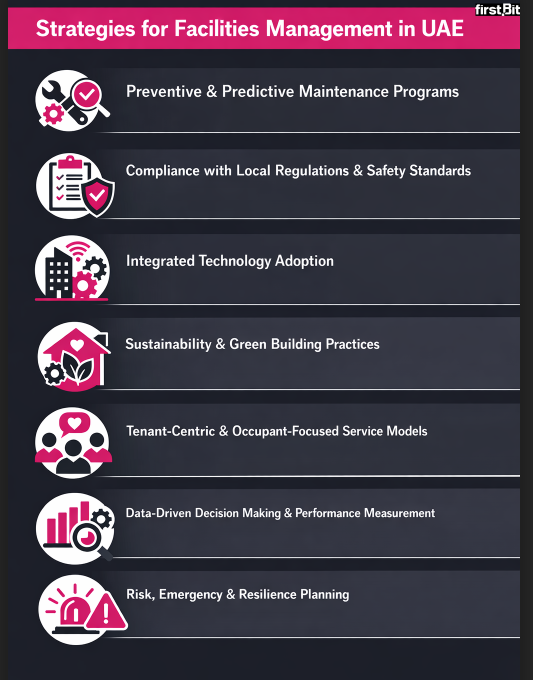
Strategies for Facilities Management in UAE
Strategies for facility management
Facility management strategies in the UAE must address climate pressure, regulatory oversight, and high expectations for building performance. A structured approach helps facilities management in UAE developments remain efficient and resilient throughout the asset lifecycle.
Quality facility management relies on consistent processes supported by data and technology. This reduces operational risk and improves coordination between contractors, FM teams, and asset owners. This is especially true for large mixed-use portfolios in facility management Dubai projects, where scale and climate conditions require consistent operational controls.
1. Preventive and Predictive Maintenance Programs
Facility management in UAE buildings prioritises preventive and predictive maintenance to protect climate-sensitive assets such as HVAC and MEP systems. Early intervention reduces downtime and extends equipment lifespan.
Facilities management in UAE construction embeds compliance into routine workflows to meet requirements set by municipalities and civil defence authorities. This minimises regulatory risk and improves operational stability.
Tip: Maintain a central compliance and maintenance calendar linked to critical assets to prevent missed inspections or servicing.
2. Compliance with Local Regulations and Safety Standards
Facility management Dubai and UAE-wide increasingly uses BMS, CAFM/IWMS platforms, and monitoring tools to centralise data and improve operational visibility. Phased adoption ensures systems support, rather than disrupt, daily operations.
Sustainability-focused FM optimises energy and resource use while supporting ESG reporting. Occupant-centric service models improve comfort, responsiveness, and long-term asset value.
Tip: Align FM KPIs with energy use, response times, and occupant feedback to keep performance measurable and relevant.
3. Integrated Technology Adoption
Facility management in UAE developments increasingly uses digital tools such as Building Management Systems and CAFM platforms to
centralise asset data and maintenance activities. This improves visibility and reduces manual coordination across complex facilities.
Technology supports facilities management in UAE by enabling better maintenance planning, monitoring energy use, and tracking service performance. When applied selectively, these systems help FM teams respond faster and operate more consistently.
Quality facility management adopts technology in phases rather than all at once. This ensures systems remain practical, usable, and aligned with day-to-day operational needs.
Tip: Start implementing digital tools in a single priority area, such as energy, HVAC, or maintenance scheduling, before expanding to the full asset portfolio.
4. Sustainability and Green Building Practices
Facility management supports sustainability in UAE buildings by improving energy efficiency, water use, and waste management during daily operations. These actions help assets meet local green building regulations and national sustainability targets.
Facilities management in UAE contributes to lower operating costs and improved environmental performance by ensuring systems operate efficiently. Consistent monitoring also supports ESG reporting without adding operational complexity.
Tip: Track energy and water consumption at system level rather than building level to identify inefficiencies faster and prioritise improvements.
5. Tenant-Centric and Occupant-Focused Service Models
Facility management increasingly prioritises occupant comfort, service reliability, and responsiveness. In commercial and residential developments, service quality directly influences satisfaction and asset reputation.
Facilities management in UAE buildings uses structured workflows and digital service requests to resolve issues more efficiently. This improves transparency and aligns service delivery with occupant expectations.
Tip: Review service request data monthly to identify recurring issues that can be solved through preventive action rather than repeated responses.
6. Data-Driven Decision Making and Performance Measurement
Facility management relies on operational data to monitor asset condition, service levels, and operating costs. Metrics such as response time, uptime, and energy use help teams identify issues early.
Facilities management in UAE uses this data to support budgeting, maintenance planning, and lifecycle decisions. Regular reviews ensure FM strategies remain aligned with actual building performance.
Tip: Limit KPIs to a small set that directly affects cost, uptime, and compliance to keep reporting actionable.
7. Risk, Emergency, and Resilience Planning
Facility management improves resilience by preparing buildings for system failures, safety incidents, and operational disruptions. Clear procedures help FM teams respond quickly and minimise downtime.
Facilities management in UAE integrates emergency planning into routine operations through risk assessments and response protocols. This strengthens occupant safety and protects asset value.
Tip: Create short, scenario-based response guides for common incidents so teams can act without relying on lengthy manuals.
Best Facility Management Companies in UAE
The UAE’s FM industry includes regional leaders and specialised providers that support residential, commercial, and mixed-use developments. These facility management companies in UAE are known for integrated services, strong compliance, and scalable operations.
Below are several of the most established FM providers in the market:
-
EFS Facilities Services Group is one of the region’s largest FM providers, offering technical, soft, and infrastructure services across commercial, hospitality, and institutional assets. The company focuses on standardised delivery, compliance, and long-term asset performance.
-
Imdaad LLC delivers hard services, waste management, energy management, and MEP support for residential, industrial, and public-sector clients. Its integrated service approach and digital platforms help improve operational visibility and reliability.
-
Farnek Services LLC is a long-standing FM operator in the UAE, providing cleaning, security, utilities management, and specialist technical services. The company is recognised for sustainability initiatives and energy-saving programmes.
-
Emrill Services LLC delivers hard and soft services for residential communities, commercial towers, and retail environments. Its operations prioritise preventive maintenance, safety compliance, and customer-focused FM models supported by digital tools.
Boost project performance
Request a demo
How FirstBit ERP Improves Asset and Equipment Management in UAE Construction Projects
FirstBit ERP helps construction and facility management teams maintain reliable asset performance by centralising equipment data, maintenance schedules, and operational records. This is especially valuable in the UAE, where HVAC, MEP, and site equipment operate under demanding environmental conditions and require consistent oversight.
The system improves quality facility management by standardising asset registers, tracking corrective actions, and connecting maintenance with inventory and cost controls. This reduces downtime, prevents missed servicing, and supports more accurate lifecycle planning for critical building systems.
-
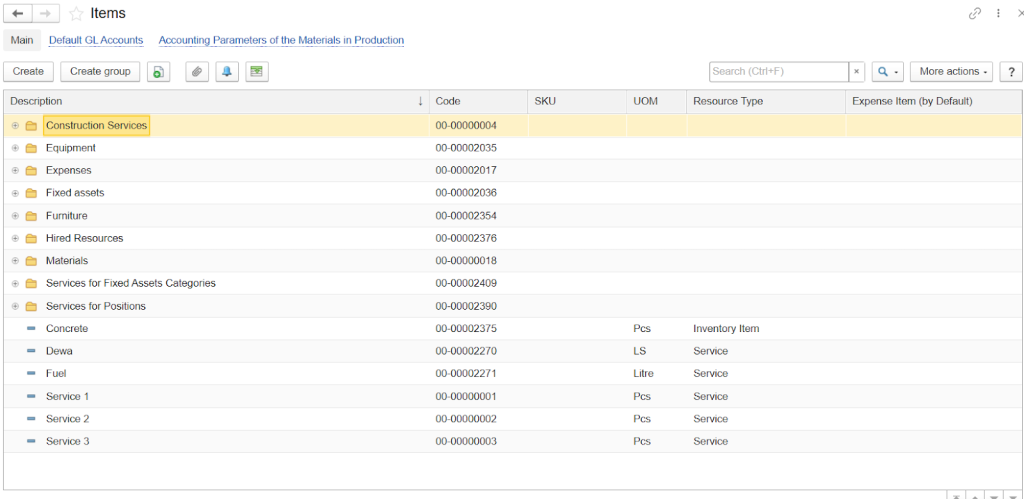
Centralised asset register. Maintains detailed records of machinery, tools, HVAC units, pumps, vehicles, and other construction or facility assets. Each record includes specifications, serial numbers, cost data, warranty details, and assigned locations.
Items inventory in FirstBit ERP
-
Planned & preventive maintenance scheduling. Allows FM and construction teams to create maintenance schedules with automated reminders. This supports preventive care for HVAC, generators, compressors, and other equipment common on UAE job sites.
-
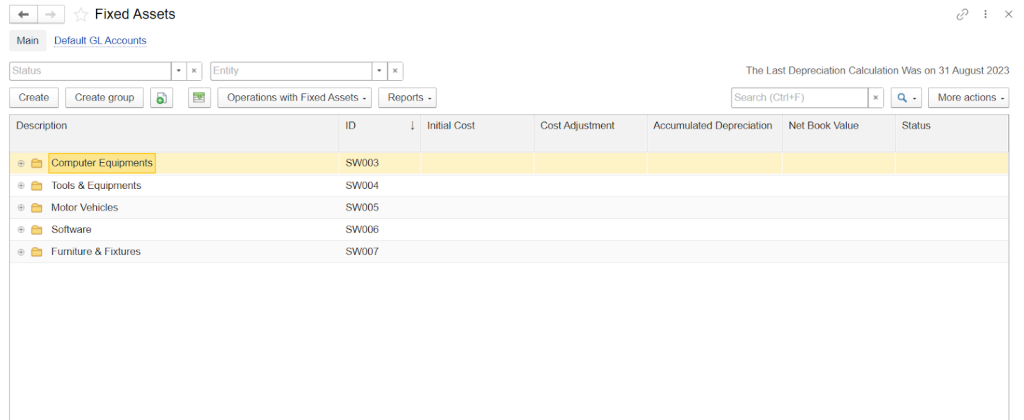
Breakdown & corrective maintenance tracking. Logs equipment failures, repair history, and technician actions. This helps teams identify recurring issues and plan replacements or upgrades based on actual performance data.
Fixed asset master data in FirstBit ERP
-
Spare parts & inventory management. Connects
asset management with stock control, ensuring critical spare parts for MEP, electrical, and mechanical systems are available when needed. This reduces downtime caused by procurement delays.
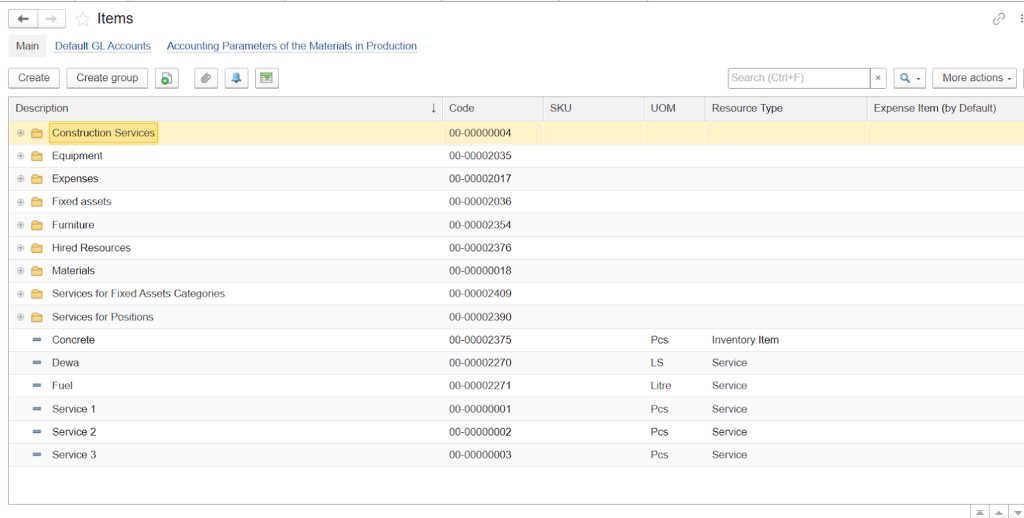
List of spare parts and inventory items tied to assets in firstBit ERP
-
Cost tracking & budget control. Links each asset to its maintenance costs, repair expenses, and lifecycle spend. This helps construction and FM managers monitor the total cost of ownership and plan more accurately.
-
Mobile access for field teams. Technicians can update asset status, submit inspection results, and close work orders from the field. This improves data accuracy and reduces delays in reporting.
-
Integration across FM & construction workflows. Aligns procurement, maintenance, budgeting, and warehouse operations. This is particularly useful for companies that handle both construction and post-handover facility management.
These capabilities are particularly relevant in the UAE, where climate-driven wear, strict handover expectations, and complex mixed-use developments require precise control over asset performance. By consolidating all maintenance, cost, and equipment data in one system,
FirstBit ERP supports more reliable operations and strengthens long-term asset value across both construction and FM environments.
Conclusion
Facility management now plays a defining role in how construction assets perform over time in the UAE. As buildings become more advanced and expectations rise, the focus is shifting from short-term delivery to long-term operational strength supported by clear processes and reliable data. Across major developments, facilities management in UAE continues to evolve as buildings become more connected and performance-driven.
Organisations that embed FM thinking early, invest in structured operations, and maintain consistent standards will be best positioned to operate efficient, compliant, and resilient assets. Treating facility management as a continuous discipline, not an afterthought, will ultimately shape which projects remain competitive and sustainable in the years ahead.
Keep your project on track
Manage every phase efficiently with ERP tools
Request a demo
FAQ
What is the role of facility management?
Facility management ensures buildings remain functional, safe, efficient, and comfortable. It manages maintenance, safety, daily operations, and services that support people and the built environment.
What are the four main functions of a facility manager?
The main functions are maintaining and improving facilities, supporting the people who use them, creating efficient operational processes, and integrating technology that aligns with organisational needs.
What are KPIs in facility management?
Facility management KPIs are performance indicators that measure how well buildings, teams, and vendors operate. They translate activities such as maintenance response times or energy use into results that help guide operational decisions.
What is hard FM and soft FM?
Hard FM covers technical services related to the physical infrastructure, such as HVAC, MEP systems, electrical works, and building maintenance. Soft FM focuses on services that support occupants, including cleaning, security, landscaping, and other people-oriented functions.
Umme Aimon Shabbir
Editor at First Bit
Aimon brings a deep understanding of the modern construction business to her articles by providing practical content.












'%3e%3cg%20clip-path='url(%23clip1_6548_6055)'%3e%3cpath%20d='M13.974%2015.6195C14.2724%2016.0185%2014.6532%2016.3487%2015.0905%2016.5876C15.5278%2016.8265%2016.0114%2016.9686%2016.5084%2017.0042C17.0055%2017.0398%2017.5043%2016.9681%2017.9712%2016.7939C18.4381%2016.6198%2018.8621%2016.3472%2019.2143%2015.9948L21.2994%2013.9098C21.9324%2013.2544%2022.2827%2012.3766%2022.2747%2011.4654C22.2668%2010.5543%2021.9014%209.68269%2021.257%209.03839C20.6127%208.39408%2019.7412%208.02862%2018.83%208.0207C17.9189%208.01278%2017.0411%208.36305%2016.3857%208.99606L15.1902%2010.1845M16.754%2014.2295C16.4555%2013.8305%2016.0747%2013.5003%2015.6374%2013.2614C15.2002%2013.0225%2014.7166%2012.8804%2014.2196%2012.8448C13.7225%2012.8092%2013.2237%2012.8809%2012.7568%2013.0551C12.2899%2013.2292%2011.8659%2013.5018%2011.5136%2013.8542L9.42861%2015.9392C8.7956%2016.5946%208.44534%2017.4724%208.45326%2018.3836C8.46117%2019.2947%208.82664%2020.1663%209.47094%2020.8106C10.1152%2021.4549%2010.9868%2021.8204%2011.898%2021.8283C12.8091%2021.8362%2013.6869%2021.4859%2014.3423%2020.8529L15.5308%2019.6645'%20stroke='%235F7896'%20stroke-width='1.39002'%20stroke-linecap='round'%20stroke-linejoin='round'/%3e%3c/g%3e%3c/g%3e%3crect%20x='0.438953'%20y='0.438953'%20width='28.9709'%20height='28.9709'%20rx='14.4855'%20stroke='%235F7896'%20stroke-width='0.877907'/%3e%3cdefs%3e%3cclipPath%20id='clip0_6548_6055'%3e%3crect%20width='29.8488'%20height='29.8488'%20rx='14.9244'%20fill='white'/%3e%3c/clipPath%3e%3cclipPath%20id='clip1_6548_6055'%3e%3crect%20width='16.6802'%20height='16.6802'%20fill='white'%20transform='translate(7.02344%206.58435)'/%3e%3c/clipPath%3e%3c/defs%3e%3c/svg%3e)